Department of Endocrinology and Nutrition, Clínica Universidad de Navarra, Pamplona, Spain.
IdiSNA (Instituto de Investigación en la Salud de Navarra), Pamplona, Spain.
Cardiovasc Diabetol. 2024 Aug 22;23(1):308. doi: 10.1186/s12933-024-02399-5.
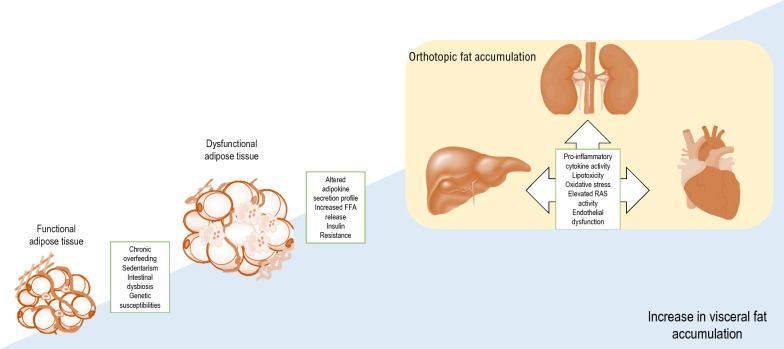
Albuminuria is considered an early and sensitive marker of kidney dysfunction, but also an independent cardiovascular risk factor. Considering the possible relationship among metabolic liver disease, cardiovascular disease and chronic kidney disease, we aimed to evaluate the risk of developing albuminuria regarding the presence of epicardial adipose tissue and the steatotic liver disease status.
A retrospective long-term longitudinal study including 181 patients was carried out. Epicardial adipose tissue and steatotic liver disease were assessed by computed tomography. The presence of albuminuria at follow-up was defined as the outcome.
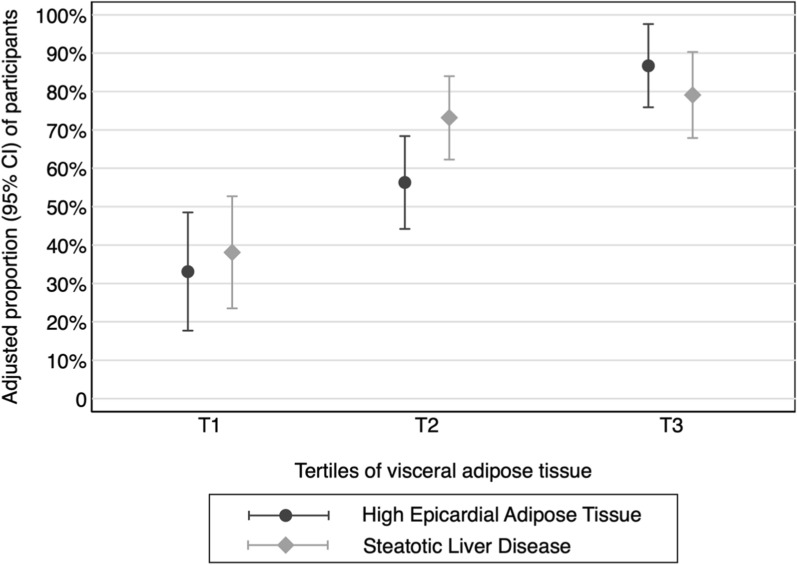
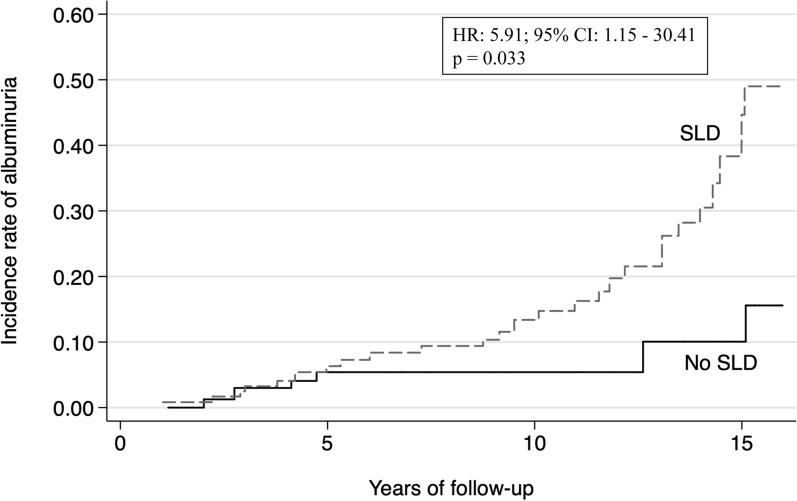
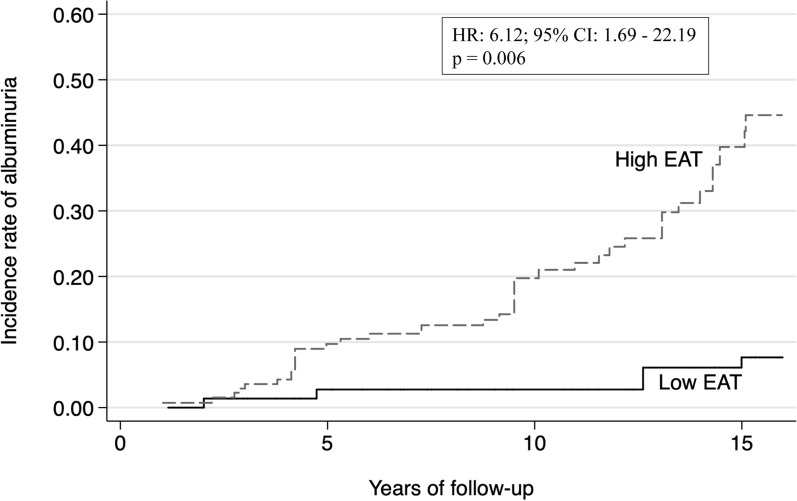
After a median follow up of 11.2 years, steatotic liver disease (HR 3.15; 95% CI, 1.20-8.26; p = 0.02) and excess amount of epicardial adipose tissue (HR 6.12; 95% CI, 1.69-22.19; p = 0.006) were associated with an increased risk of albuminuria after adjustment for visceral adipose tissue, sex, age, weight status, type 2 diabetes, prediabetes, hypertriglyceridemia, hypercholesterolemia, arterial hypertension, and cardiovascular prevention treatment at baseline. The presence of both conditions was associated with a higher risk of developing albuminuria compared to having steatotic liver disease alone (HR 5.91; 95% CI 1.15-30.41, p = 0.033). Compared with the first tertile of visceral adipose tissue, the proportion of subjects with liver steatosis and abnormal epicardial adipose tissue was significantly higher in the second and third tertile. We found a significant correlation between epicardial fat and steatotic liver disease (rho = 0.43 [p < 0.001]).
Identification and management/decrease of excess adiposity must be a target in the primary and secondary prevention of chronic kidney disease development and progression. Visceral adiposity assessment may be an adequate target in the daily clinical setting. Moreover, epicardial adipose tissue and steatotic liver disease assessment may aid in the primary prevention of renal dysfunction.
白蛋白尿被认为是肾功能障碍的早期和敏感标志物,但也是独立的心血管危险因素。考虑到代谢性肝病、心血管疾病和慢性肾脏病之间的可能关系,我们旨在评估存在心外膜脂肪组织和脂肪性肝病状态时发生白蛋白尿的风险。
进行了一项包括 181 例患者的回顾性长期纵向研究。通过计算机断层扫描评估心外膜脂肪组织和脂肪性肝病。随访时出现白蛋白尿定义为结局。
中位随访 11.2 年后,脂肪性肝病(HR 3.15;95%CI,1.20-8.26;p=0.02)和心外膜脂肪组织过多(HR 6.12;95%CI,1.69-22.19;p=0.006)与调整内脏脂肪组织、性别、年龄、体重状况、2 型糖尿病、糖尿病前期、高甘油三酯血症、高胆固醇血症、动脉高血压和心血管预防治疗后白蛋白尿风险增加相关。与单独存在脂肪性肝病相比,同时存在这两种情况与发生白蛋白尿的风险更高相关(HR 5.91;95%CI 1.15-30.41,p=0.033)。与内脏脂肪组织的第一三分位相比,第二和第三三分位的患者中存在肝脂肪变性和异常心外膜脂肪组织的比例显著更高。我们发现心外膜脂肪与脂肪性肝病之间存在显著相关性(rho=0.43 [p<0.001])。
识别和管理/减少多余的肥胖必须成为慢性肾脏病发生和进展的初级和二级预防的目标。内脏脂肪评估可能是日常临床环境中的一个适当目标。此外,心外膜脂肪组织和脂肪性肝病评估可能有助于肾功能障碍的初级预防。