GSK, 20 Avenue Fleming, 1300, Wavre, Belgium.
GSK, GSK House, 980 Great West Road, Brentford, Middlesex, TW8-9GS, UK.
Ther Innov Regul Sci. 2024 Nov;58(6):1094-1107. doi: 10.1007/s43441-024-00681-y. Epub 2024 Aug 23.
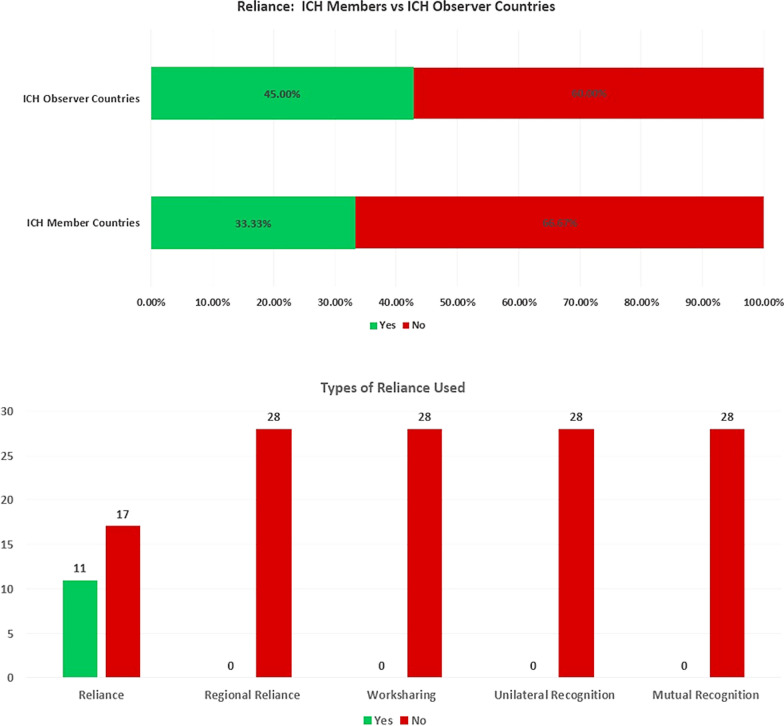
Post-approval changes (PACs) to the control and manufacturing processes of medicines and vaccines are routinely undertaken and critical to enable both innovation and secure sustained supply. In a world of global supply chains, the existence of divergent national PAC requirements (with additional countries introducing new requirements with potential differences) and other factors including document preparation and response timelines, can lead to long delays in approval (of up to 3-5 years) increasing the risk of disruption and shortages.We undertook an Industry survey in 2023 to assess implementation of ICH Q12, PAC procedures (change categorisation and review timelines) and use of reliance mechanisms across different countries (9 selected ICH Members and 19 Observers). Although this survey revealed limited implementation of Q12 in ICH Member countries, when comparing the data collected with those of a previous survey performed in 2020, we observed a broader adoption of risk-based approaches to variation categorisation (in all countries). This, however, was not reflected in improved timelines for approval.With regards to ICH Q12 adoption, the uptake of Post-Approval Change Management Protocols (PACMPs) was unchanged (with only one country reporting in-use) and implementation gaps were evident for Established Conditions (EC) and the Product Life Cycle Management document (PLCM). The survey found greater awareness of ICH Q12 and its tools compared to 2020, potentially illustrating the positive impact of training efforts. This illustrates the challenges being faced to broaden its implementation and use globally.In the same Industry survey, we also assessed PAC processes across different international countries. Long unpredictable timelines were the major concern across the countries surveyed together with limited capacity of the regulators. Four different CMC changes were selected and categorized by the respondents according to current knowledge of national classifications and timelines in the selected countries and compared with a reference classification and timeline from the European Medicines Agency and the World Health Organisation. This highlighted the lack of harmonisation of many countries with EU/WHO requirements, especially within the ICH Observer group.Last, this survey showed that some use of unilateral forms of reliance to Reference Authorities for PACs is starting. This is a mechanism all countries can employ, regardless of convergence of requirements and expertise, to enhance capacity building and reduce duplication of reviews, streamline variations approval, whilst accelerating patient access to innovation and securing supply.
药品和疫苗的批准后变更(PACs)是对其控制和生产工艺进行的常规变更,对于实现创新和确保持续供应至关重要。在全球供应链的世界中,不同国家的 PAC 要求存在差异(还有更多国家正在引入可能存在差异的新要求),以及文件编制和响应时间等其他因素,可能导致批准时间延长(长达 3-5 年),从而增加供应中断和短缺的风险。
我们在 2023 年进行了一次行业调查,以评估 ICH Q12、PAC 程序(变更分类和审查时间)的实施情况以及不同国家(9 个 ICH 成员国和 19 个观察员)之间依赖机制的使用情况。虽然这项调查显示 ICH 成员国对 Q12 的实施有限,但与 2020 年进行的上一次调查相比,我们观察到所有国家对基于风险的变更分类方法的更广泛采用(在所有国家)。然而,这并没有反映在批准时间的改善上。
关于 ICH Q12 的采用,批准后变更管理协议(PACMP)的采用率没有变化(只有一个国家报告在使用),并且在既定条件(EC)和产品生命周期管理文件(PLCM)方面存在实施差距。调查发现,与 2020 年相比,人们对 ICH Q12 及其工具的认识有所提高,这可能表明培训工作产生了积极影响。这说明了在全球范围内扩大其实施和使用所面临的挑战。
在同一次行业调查中,我们还评估了不同国际国家的 PAC 流程。调查的国家都对不可预测的长时间线表示严重关切,监管机构的能力也有限。根据选定国家当前的国家分类和时间线,受访者对四种不同的 CMC 变更进行了分类,并与欧洲药品管理局和世界卫生组织的参考分类和时间线进行了比较。这突显了许多国家与欧盟/世卫组织要求之间缺乏协调,特别是在观察员 ICH 国家集团中。
最后,这项调查表明,一些国家开始对 PAC 单方面依赖参考机构。这是所有国家都可以采用的一种机制,无论要求和专业知识的趋同如何,都可以用来加强能力建设、减少重复审查、简化变更批准,同时加速患者获得创新药物并确保供应。