Tavakkoly Marziyeh, Chalupsky Jaromir, Hajkova Vera, Hillert Wolfgang, Jelinek Simon, Juha Libor, Makita Mikako, Mazza Tommaso, Meyer Michael, Montano Jacobo, Sinn Harald, Vozda Vojtech, Vannoni Maurizio
Institute of Experimental Physics, Universitat Hamburg, Luruper Chaussee 149, 22761 Hamburg, Germany.
FZU - Institute of Physics, Czech Academy of Sciences, Na Slovance 2, 18221 Prague 8, Czechia.
J Synchrotron Radiat. 2024 Sep 1;31(Pt 5):1067-1070. doi: 10.1107/S1600577524007318. Epub 2024 Aug 25.
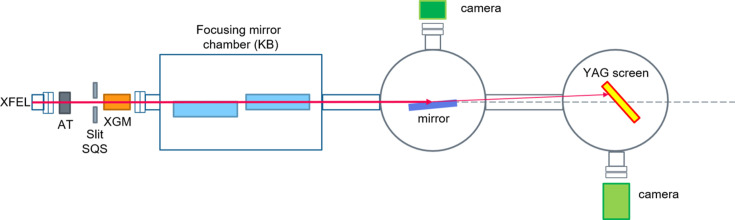
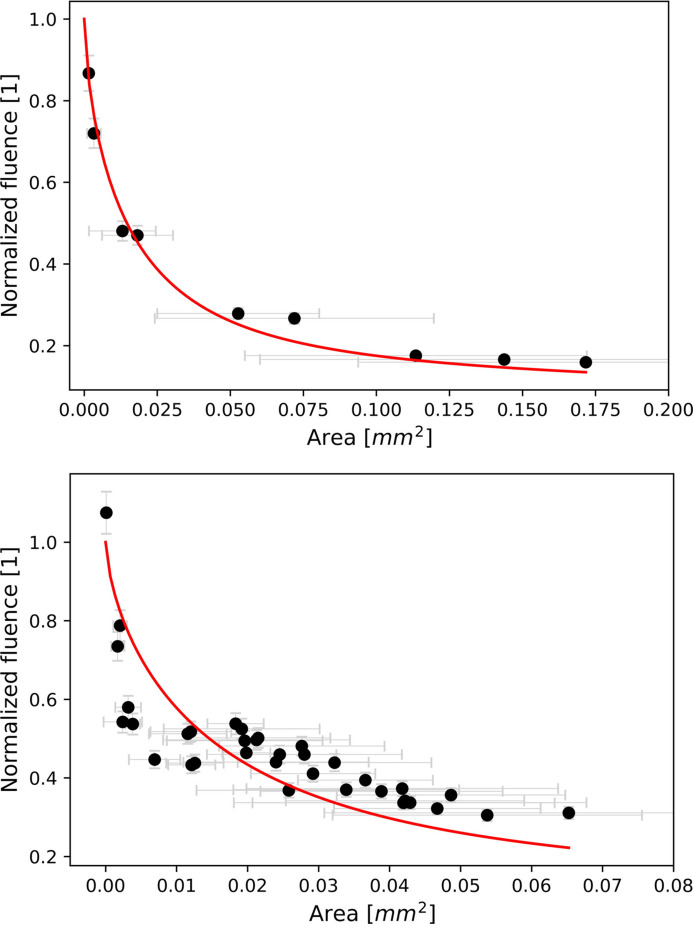
Xray free-electron lasers (XFELs) enable experiments that would have been impractical or impossible at conventional X-ray laser facilities. Indeed, more XFEL facilities are being built and planned, with their aim to deliver larger pulse energies and higher peak brilliance. While seeking to increase the pulse power, it is quintessential to consider the maximum pulse fluence that a grazing-incidence FEL mirror can withstand. To address this issue, several studies were conducted on grazing-incidence damage by soft X-ray FEL pulses at the European XFEL facility. Boron carbide (BC) coatings on polished silicon substrate were investigated using 1 keV photon energy, similar to the X-ray mirrors currently installed at the soft X-ray beamlines (SASE3). The purpose of this study is to compare the damage threshold of BC and Si to determine the advantages, tolerance and limits of using BC coatings.
X射线自由电子激光(XFEL)使一些在传统X射线激光设施中不切实际或无法进行的实验成为可能。事实上,越来越多的XFEL设施正在建设和规划中,其目标是提供更大的脉冲能量和更高的峰值亮度。在寻求提高脉冲功率时,至关重要的是要考虑掠入射FEL镜能够承受的最大脉冲注量。为了解决这个问题,在欧洲XFEL设施上对软X射线FEL脉冲的掠入射损伤进行了多项研究。使用1keV光子能量对抛光硅衬底上的碳化硼(BC)涂层进行了研究,这与目前安装在软X射线光束线(SASE3)上的X射线镜类似。本研究的目的是比较BC和Si的损伤阈值,以确定使用BC涂层的优势、耐受性和局限性。