Liaoning Provincial Key Laboratory for Research On the Pathogenic Mechanisms of Neurological Diseases, The First Affiliated Hospital, Dalian Medical University, Dalian, 116021, China.
Interdisciplinary Research Center On Biology and Chemistry, Shanghai Institute of Organic Chemistry, Chinese Academy of Sciences, Shanghai, China.
Mol Neurodegener. 2024 Aug 26;19(1):62. doi: 10.1186/s13024-024-00746-4.
Although WD repeat domain 45 (WDR45) mutations have been linked to -propeller protein-associated neurodegeneration (BPAN), the precise molecular and cellular mechanisms behind this disease remain elusive. This study aims to shed light on the impacts of WDR45-deficiency on neurodegeneration, specifically axonal degeneration, within the midbrain dopaminergic (DAergic) system. We hope to better understand the disease process by examining pathological and molecular alterations, especially within the DAergic system.
To investigate the impacts of WDR45 dysfunction on mouse behaviors and DAergic neurons, we developed a mouse model in which WDR45 was conditionally knocked out in the midbrain DAergic neurons (WDR45). Through a longitudinal study, we assessed alterations in the mouse behaviors using open field, rotarod, Y-maze, and 3-chamber social approach tests. We utilized a combination of immunofluorescence staining and transmission electron microscopy to examine the pathological changes in DAergic neuron soma and axons. Additionally, we performed proteomic and lipidomic analyses of the striatum from young and aged mice to identify the molecules and processes potentially involved in the striatal pathology during aging. Further more, primary midbrain neuronal culture was employed to explore the molecular mechanisms leading to axonal degeneration.
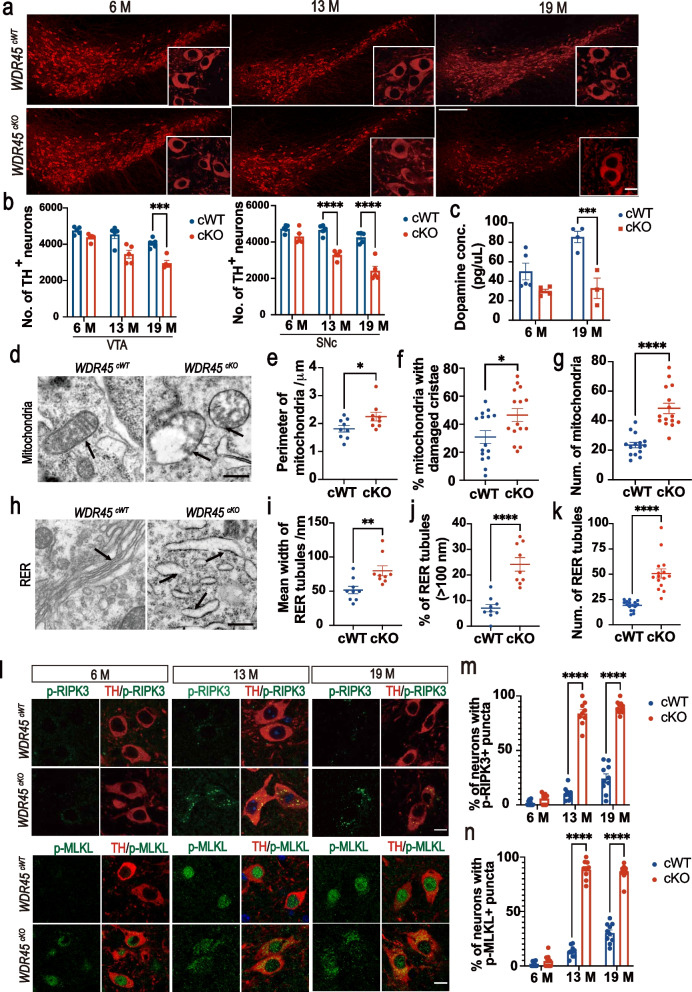
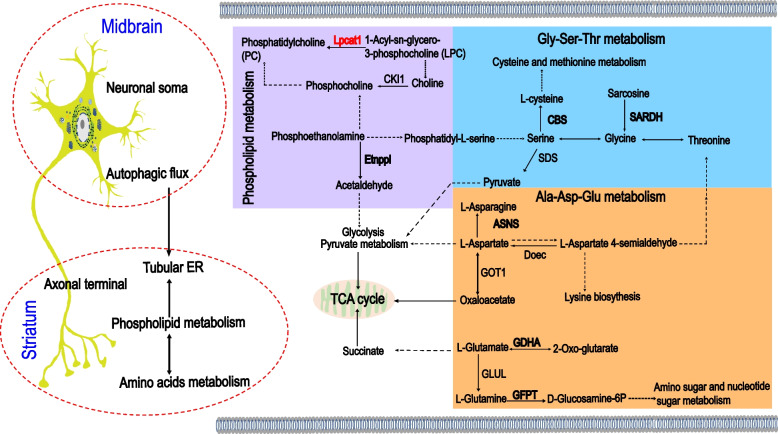
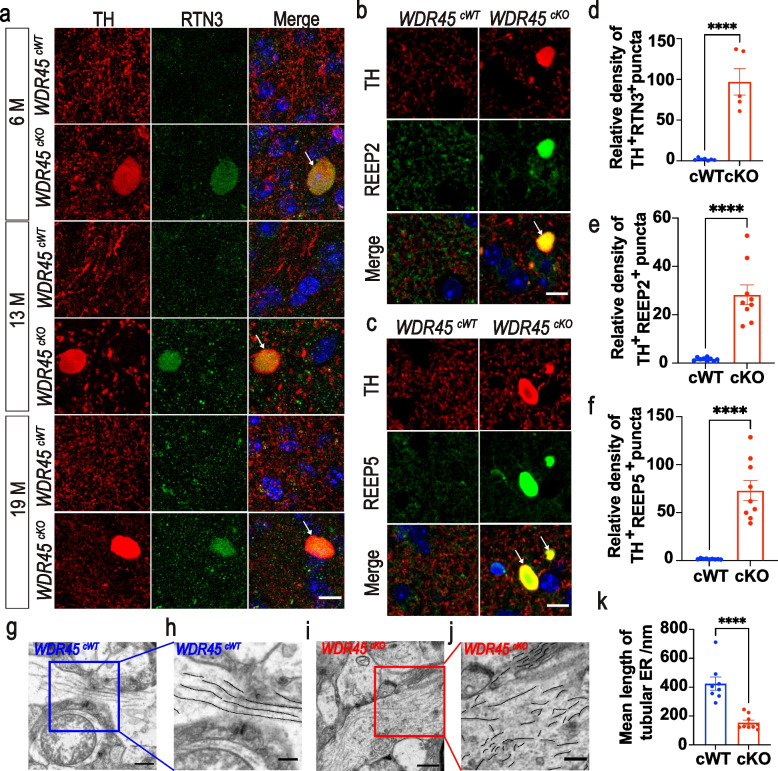
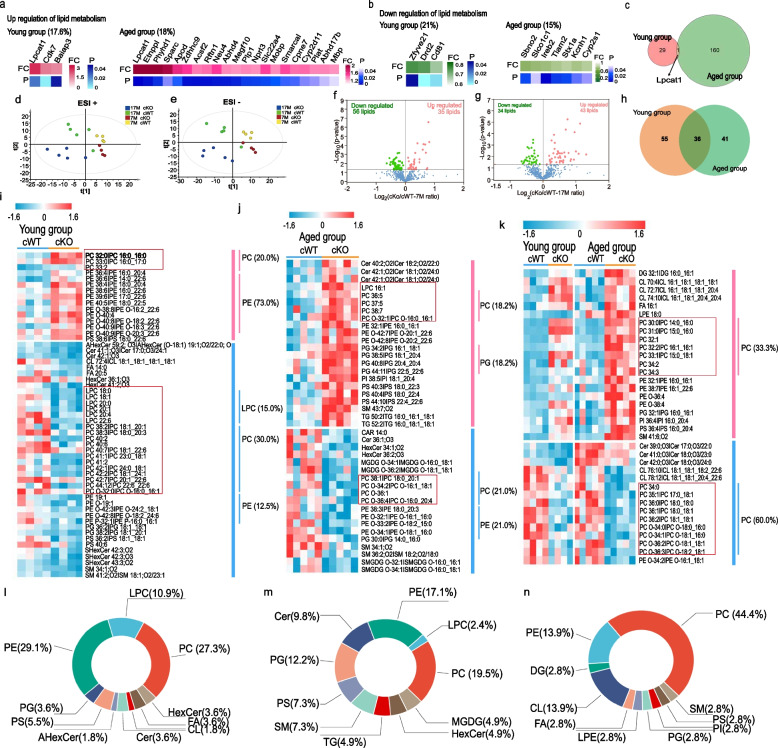
Our study of WDR45 mice revealed a range of deficits, including impaired motor function, emotional instability, and memory loss, coinciding with the profound reduction of midbrain DAergic neurons. The neuronal loss, we observed massive axonal enlargements in the dorsal and ventral striatum. These enlargements were characterized by the accumulation of extensively fragmented tubular endoplasmic reticulum (ER), a hallmark of axonal degeneration. Proteomic analysis of the striatum showed that the differentially expressed proteins were enriched in metabolic processes. The carbohydrate metabolic and protein catabolic processes appeared earlier, and amino acid, lipid, and tricarboxylic acid metabolisms were increased during aging. Of note, we observed a tremendous increase in the expression of lysophosphatidylcholine acyltransferase 1 (Lpcat1) that regulates phospholipid metabolism, specifically in the conversion of lysophosphatidylcholine (LPC) to phosphatidylcholine (PC) in the presence of acyl-CoA. The lipidomic results consistently suggested that differential lipids were concentrated on PC and LPC. Axonal degeneration was effectively ameliorated by interfering Lpcat1 expression in primary cultured WDR45-deficient DAergic neurons, proving that Lpcat1 and its regulated lipid metabolism, especially PC and LPC metabolism, participate in controlling the axonal degeneration induced by WDR45 deficits.
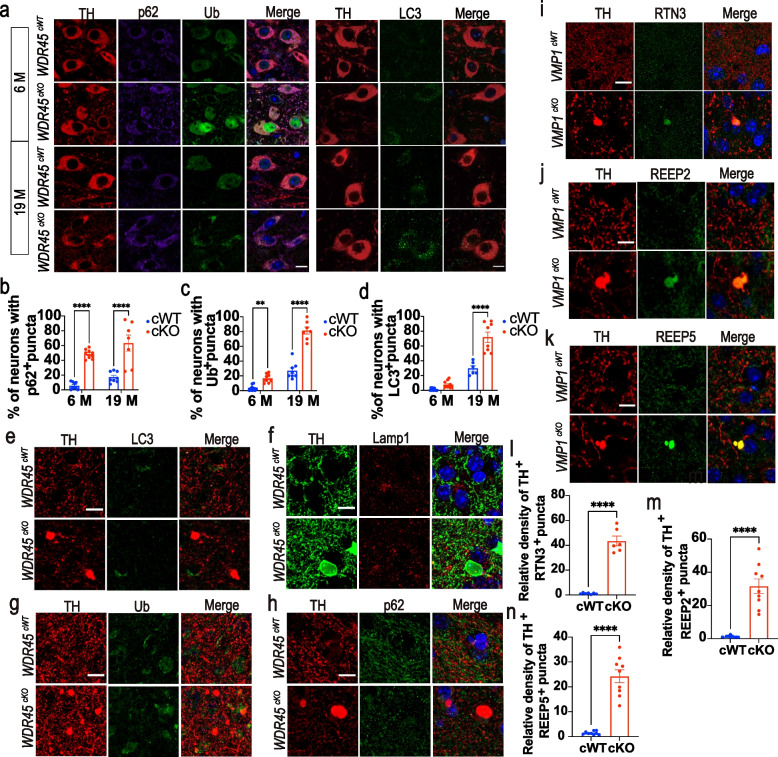
In this study, we uncovered the molecular mechanisms underlying the contribution of WDR45 deficiency to axonal degeneration, which involves complex relationships between phospholipid metabolism, autophagy, and tubular ER. These findings greatly advance our understanding of the fundamental molecular mechanisms driving axonal degeneration and may provide a foundation for developing novel mechanistically based therapeutic interventions for BPAN and other neurodegenerative diseases.
WD 重复结构域 45(WDR45)突变与 - 桨状蛋白相关的神经退行性变(BPAN)有关,但这种疾病背后的确切分子和细胞机制仍不清楚。本研究旨在阐明 WDR45 缺失对中脑多巴胺能(DAergic)系统神经退行性变,特别是轴突变性的影响。我们希望通过检查病理和分子改变,特别是在 DAergic 系统中,来更好地了解疾病过程。
为了研究 WDR45 功能障碍对小鼠行为和 DAergic 神经元的影响,我们在中脑 DAergic 神经元(WDR45)中条件性敲除 WDR45 构建了一个小鼠模型。通过纵向研究,我们使用旷场、旋转棒、Y 迷宫和三箱社交接近测试评估了小鼠行为的改变。我们使用免疫荧光染色和透射电子显微镜相结合的方法来检查 DAergic 神经元体和轴突的病理变化。此外,我们对年轻和老年小鼠纹状体进行了蛋白质组学和脂质组学分析,以鉴定在衰老过程中可能涉及纹状体病理学的分子和过程。此外,我们还使用原代中脑神经培养物来探索导致轴突变性的分子机制。
我们对 WDR45 小鼠的研究揭示了一系列缺陷,包括运动功能受损、情绪不稳定和记忆丧失,同时中脑 DAergic 神经元大量减少。我们观察到背侧和腹侧纹状体的大量轴突扩大。这些扩大的特征是广泛碎片化的管状内质网(ER)的积累,这是轴突变性的标志。纹状体的蛋白质组学分析表明,差异表达的蛋白质富集在代谢过程中。碳水化合物代谢和蛋白质分解代谢过程出现得更早,而在衰老过程中氨基酸、脂质和三羧酸循环代谢增加。值得注意的是,我们观察到参与磷脂代谢的溶血磷脂酰胆碱酰基转移酶 1(Lpcat1)的表达显著增加,特别是在酰基辅酶 A 存在下将溶血磷脂酰胆碱(LPC)转化为磷脂酰胆碱(PC)。脂质组学结果一致表明,差异脂质集中在 PC 和 LPC 上。在原代培养的 WDR45 缺陷型 DAergic 神经元中干扰 Lpcat1 表达可有效改善轴突变性,证明 Lpcat1 及其调节的脂质代谢,特别是 PC 和 LPC 代谢,参与控制 WDR45 缺陷引起的轴突变性。
在这项研究中,我们揭示了 WDR45 缺失导致轴突变性的分子机制,涉及磷脂代谢、自噬和管状 ER 之间的复杂关系。这些发现极大地提高了我们对驱动轴突变性的基本分子机制的理解,并可能为开发针对 BPAN 和其他神经退行性疾病的基于机制的新型治疗干预措施提供基础。