Patil Abhijeet, Garg Nishita, Pathivada Lumbini, Choudhary Rishika, Kaur Harsimran, Yeluri Ramakrishna
Department of Pedodontics & Preventive Dentistry, Teerthanker Mahaveer Dental College and Research Centre, Teerthanker Mahaveer University, Moradabad, Uttar Pradesh, India.
Department of Pedodontics and Preventive Dentistry, Dental Institute, Rajendra Institute of Medical Sciences (RIMS), Ranchi, Jharkhand, India.
Int J Clin Pediatr Dent. 2024 Apr;17(Suppl 1):S30-S36. doi: 10.5005/jp-journals-10005-2744.
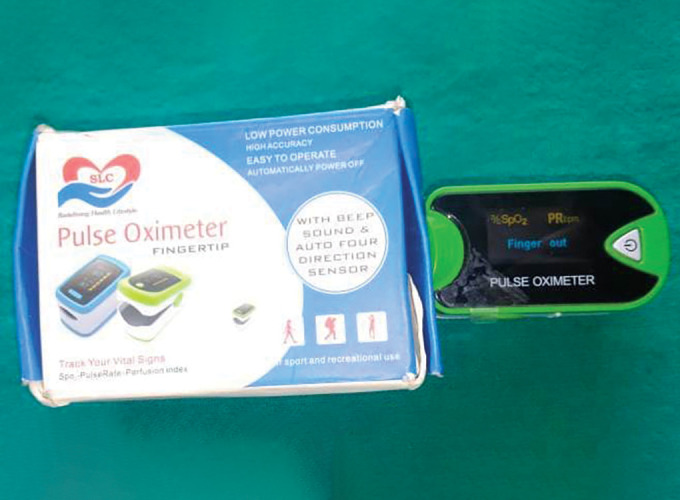
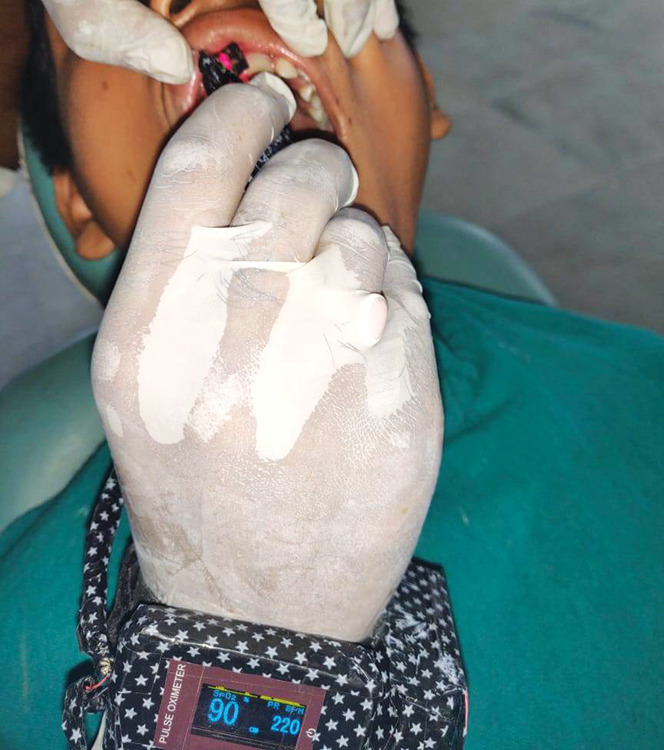
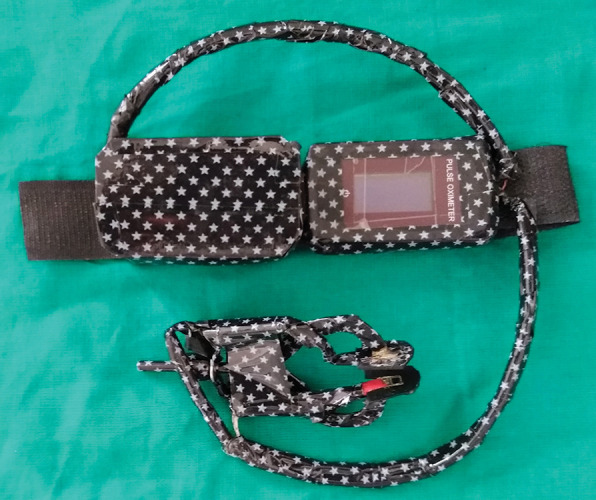
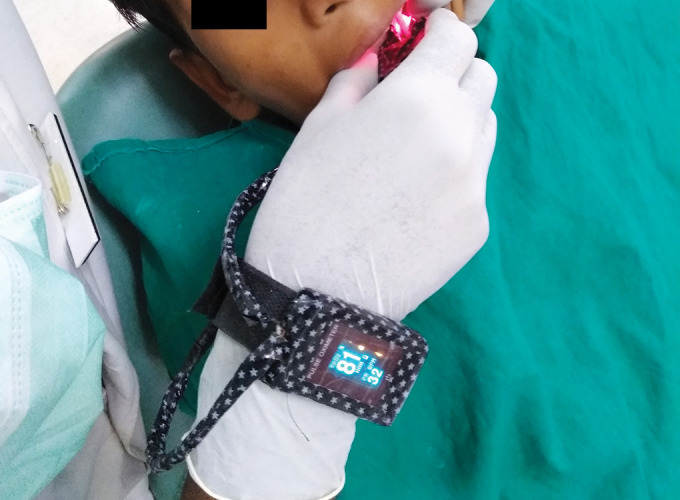
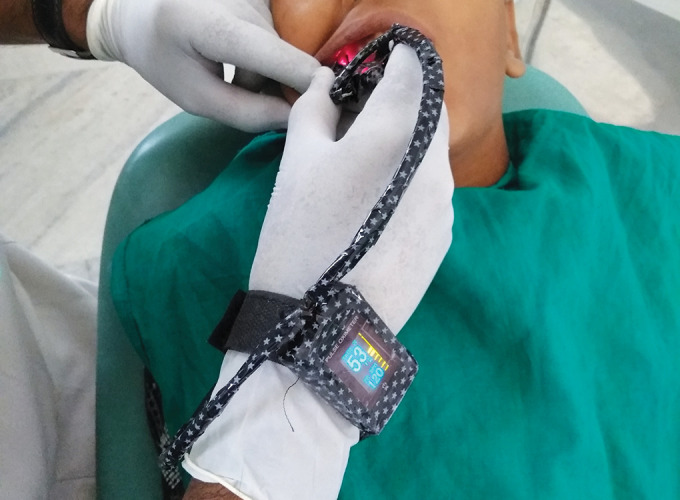
A major drawback of traditional pulp testing procedures is that they depend on neural responses rather than vascular circulation. Hence, this study aimed to develop a custom-modified dental sensor using a finger pulse oximeter (PO) that is applicable to any type of tooth so as to test its ability and accuracy in evaluating the oxygen saturation (SaO) values of teeth at different developmental stages as a measure of pulp vitality.
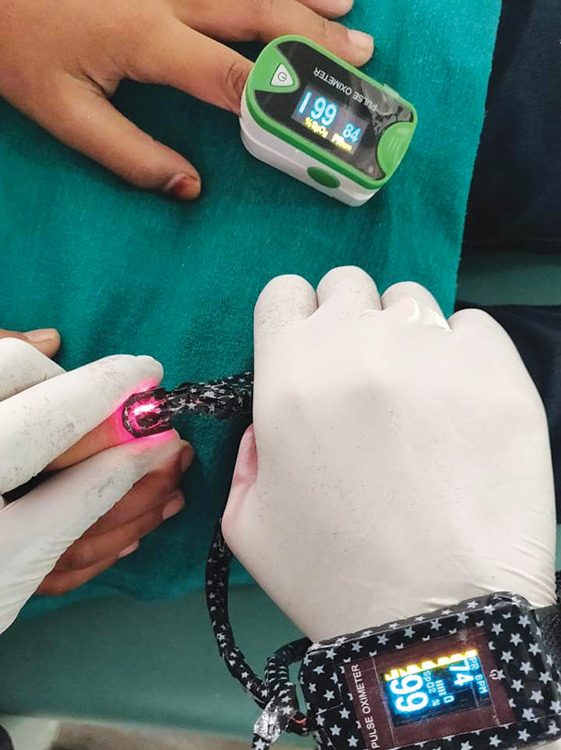
A customized finger PO was employed to determine the systemic and pulp SaO levels in 300 children. A total of 600 teeth (primary and permanent) were divided into group I (100 primary molars), group II (200 permanent molars), group III (200 permanent incisors), and 100 endodontically treated (primary and permanent) teeth were included in group IV. The mean SaO values thus obtained in various groups were compared.
Intragroup comparison of mean SaO% of the patient's finger (systemic), test teeth, and control teeth showed significant differences ( ≤ 0.001). Intergroup comparisons also revealed significant differences in most of the groups.
The modified PO probe can be applied to any type of tooth. It was found to be accurate and sensitive enough to detect changes in SaO levels in various clinical situations irrespective of developmental stage. It proved to be a direct method of evaluation of pulp vitality by objective means.
Patil A, Garg N, Pathivada L, Evaluation of Oxygen Saturation Levels Using a Custom-modified Finger Pulse Oximeter for Assessment of Pulp Vitality in Various Clinical Situations in Pediatric Dental Practice: An Study. Int J Clin Pediatr Dent 2024;17(S-1):S30-S36.
传统牙髓测试程序的一个主要缺点是它们依赖神经反应而非血管循环。因此,本研究旨在开发一种使用手指脉搏血氧仪(PO)的定制改良牙科传感器,该传感器适用于任何类型的牙齿,以测试其在评估不同发育阶段牙齿的氧饱和度(SaO)值作为牙髓活力指标方面的能力和准确性。
采用定制的手指PO来测定300名儿童的全身和牙髓SaO水平。总共600颗牙齿(乳牙和恒牙)被分为I组(100颗乳牙磨牙)、II组(200颗恒牙磨牙)、III组(200颗恒牙切牙),IV组纳入100颗接受过根管治疗的(乳牙和恒牙)牙齿。比较了各小组由此获得的平均SaO值。
患者手指(全身)、测试牙齿和对照牙齿的平均SaO%的组内比较显示出显著差异(≤0.001)。组间比较也显示大多数组存在显著差异。
改良后的PO探头可应用于任何类型的牙齿。结果发现,它在检测各种临床情况下的SaO水平变化方面足够准确和灵敏,无论发育阶段如何。它被证明是一种通过客观手段评估牙髓活力的直接方法。
帕蒂尔A、加尔格N、帕蒂瓦达L,使用定制改良手指脉搏血氧仪评估氧饱和度水平以评估儿童牙科实践中各种临床情况下的牙髓活力:一项研究。《国际临床儿科牙科学杂志》2024年;17(S-1):S30-S36。