Liu Linhua, Wang Bing, Ma Yibo, Sun Kunhui, Wang Ping, Li Meifang, Dong Junlin, Qin Meirong, Li Mingshun, Wei Chunshan, Tan Ying, He Jinsong, Guo Keying, Yu Xie-An
NMPA Key Laboratory for Quality Research and Evaluation of Traditional Chinese Medicine, Shenzhen Institute for Drug Control, Shenzhen, China.
State Key Laboratory of Chemical Oncogenomics, Institute of Biopharmaceutical and Health Engineering, Shenzhen lnternational Graduate School, Tsinghua University, Shenzhen, China.
Front Pharmacol. 2024 Aug 9;15:1443667. doi: 10.3389/fphar.2024.1443667. eCollection 2024.
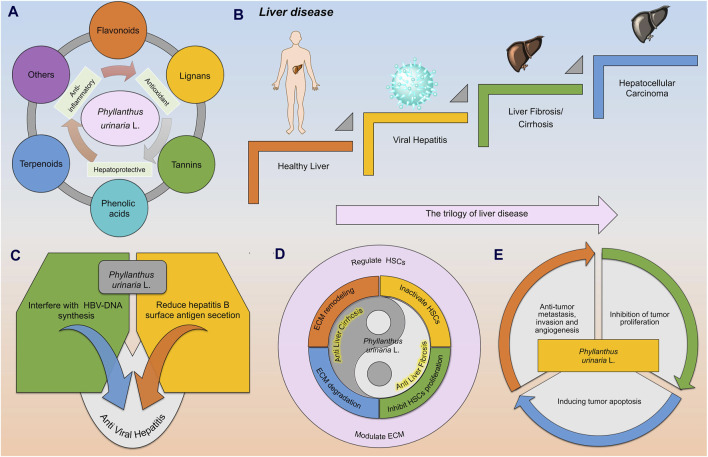
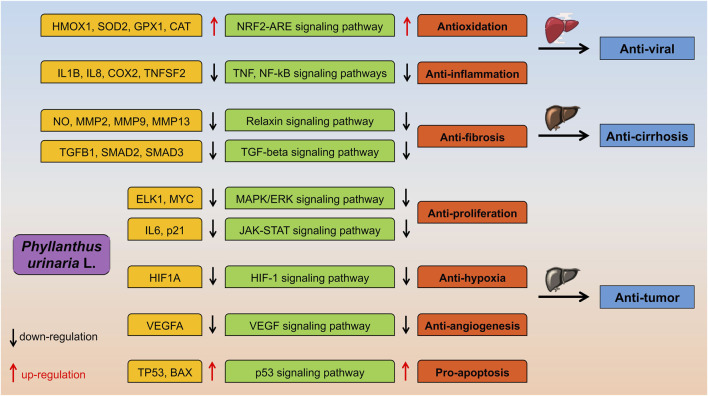
Due to the pathological production of liver disease in utility particularly complexity, the morbidity and mortality of liver disease including viral hepatitis, liver fibrosis/cirrhosis and hepatocellular carcinoma (HCC) are rapidly increasing worldwide. Considering its insidious onset, rapid progression and drug resistance, finding an effective therapy is particularly worthwhile. L. (), an ethnic medicine, can be applied at the stages of viral hepatitis, liver fibrosis/cirrhosis and HCC, which demonstrates great potential in the treatment of liver disease. Currently, there are numerous reports on the application of in treating liver diseases, but a detailed analysis of its metabolites and a complete summary of its pharmacological mechanism are still scarce. In this review, the phytochemical metabolites and ethnopharmacological applications of are summarized. Briefly, mainly contains flavonoids, lignans, tannins, phenolic acids, terpenoids and other metabolites. The mechanisms of are mainly reflected in reducing surface antigen secretion and interfering with DNA polymerase synthesis for anti-viral hepatitis activity, reducing hepatic stellate cells activity, inflammation and oxidative stress for anti-liver fibrosis/cirrhosis activity, as well as preventing tumor proliferation, invasion and angiogenesis for anti-HCC activity via relevant signaling pathways. Accordingly, this review provides insights into the future application of natural products in the trilogy of liver diseases and will provide a scientific basis for further research and rational utilization of .
由于肝病在临床上的病理表现尤其复杂,包括病毒性肝炎、肝纤维化/肝硬化和肝细胞癌(HCC)在内的肝病在全球范围内的发病率和死亡率正在迅速上升。鉴于其发病隐匿、进展迅速且具有耐药性,寻找有效的治疗方法尤为重要。民族药L.()可应用于病毒性肝炎、肝纤维化/肝硬化和HCC阶段,在肝病治疗中显示出巨大潜力。目前,关于L.()治疗肝病的应用已有众多报道,但对其代谢产物的详细分析及其药理机制的完整总结仍然匮乏。在本综述中,总结了L.()的植物化学代谢产物和民族药理学应用。简而言之,L.()主要含有黄酮类、木脂素类、单宁类、酚酸类、萜类等代谢产物。L.()的作用机制主要体现在通过减少表面抗原分泌和干扰DNA聚合酶合成来发挥抗病毒性肝炎活性,通过降低肝星状细胞活性、减轻炎症和氧化应激来发挥抗肝纤维化/肝硬化活性,以及通过相关信号通路阻止肿瘤增殖、侵袭和血管生成来发挥抗HCC活性。因此,本综述为天然产物在肝病三部曲中的未来应用提供了见解,并将为L.()的进一步研究和合理利用提供科学依据。