MOE Key Laboratory of Pediatric Rare Diseases, Hengyang Medical School, University of South China, Hengyang, China; Department of Neurosurgery, Xiangya Hospital, Central South University, 87 Xiangya Road, Changsha, China; Center for Medical Genetics and Hunan Key Laboratory of Medical Genetics, School of Life Sciences, Central South University, Changsha, China; Hypothalamic Pituitary Research Centre, Xiangya Hospital, Central South University, Changsha, China.
Department of Neurosurgery, Xiangya Hospital, Central South University, 87 Xiangya Road, Changsha, China.
EBioMedicine. 2024 Sep;107:105314. doi: 10.1016/j.ebiom.2024.105314. Epub 2024 Aug 26.
Medications prescribed for chronic diseases can lead to short-term neuropsychiatric symptoms, but their long-term effects on brain structures and psychiatric conditions remain unclear.
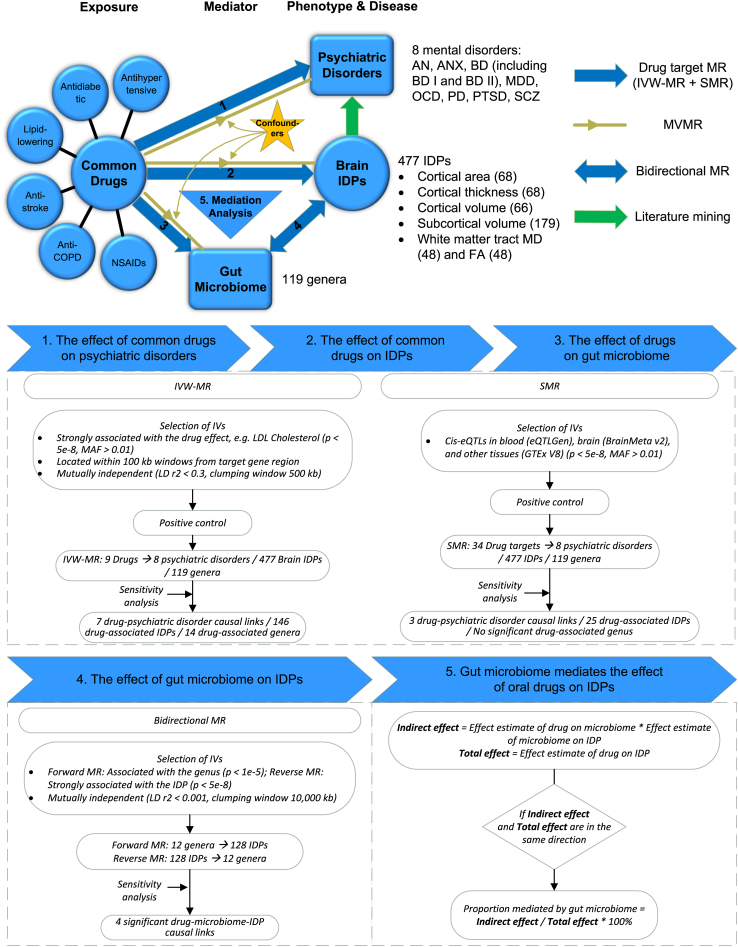
We comprehensively analyzed the FDA Adverse Event Reporting System database and conducted drug target Mendelian Randomization (MR) studies on six categories of common drugs, 477 brain imaging-derived phenotypes (IDPs) and eight psychiatric disorders. Genetic instruments were extracted from expression quantitative trait loci (eQTLs) in blood, brain, and other target tissues, protein quantitative trait loci (pQTLs) in blood, and genome-wide association studies (GWAS) of hemoglobin and cholesterol. Summary statistics for brain IDPs, psychiatric disorders, and gut microbiome were obtained from the BIG40, Psychiatric Genomics Consortium, and MiBioGen. A two-step MR and mediation analysis were employed to screen possible mediators of drug-IDP effects from 119 gut microbiota genera and identify their mediation proportions.
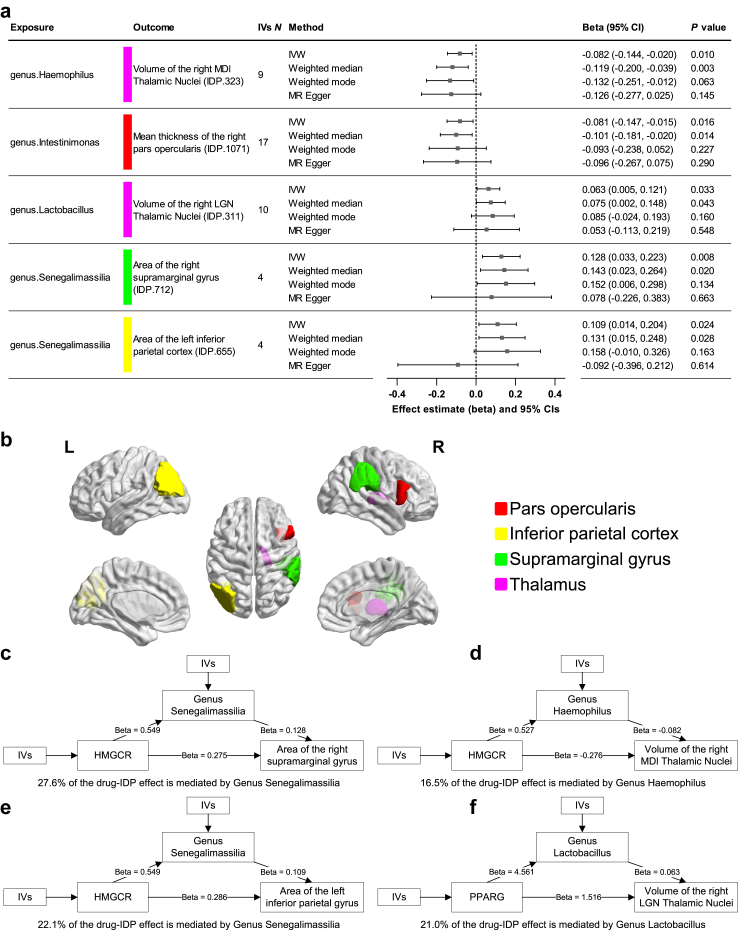
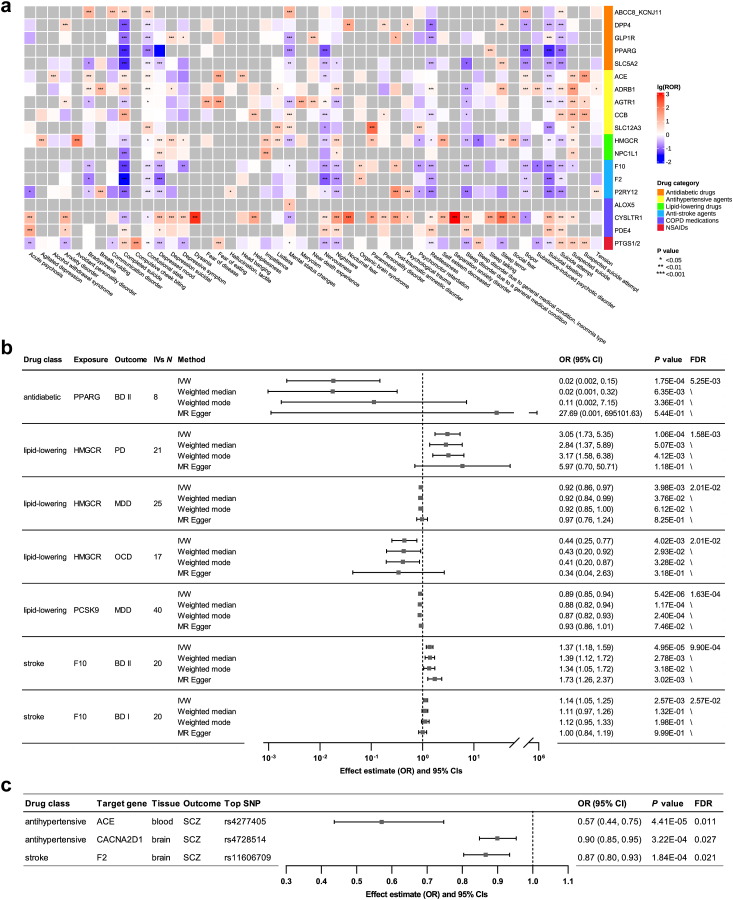
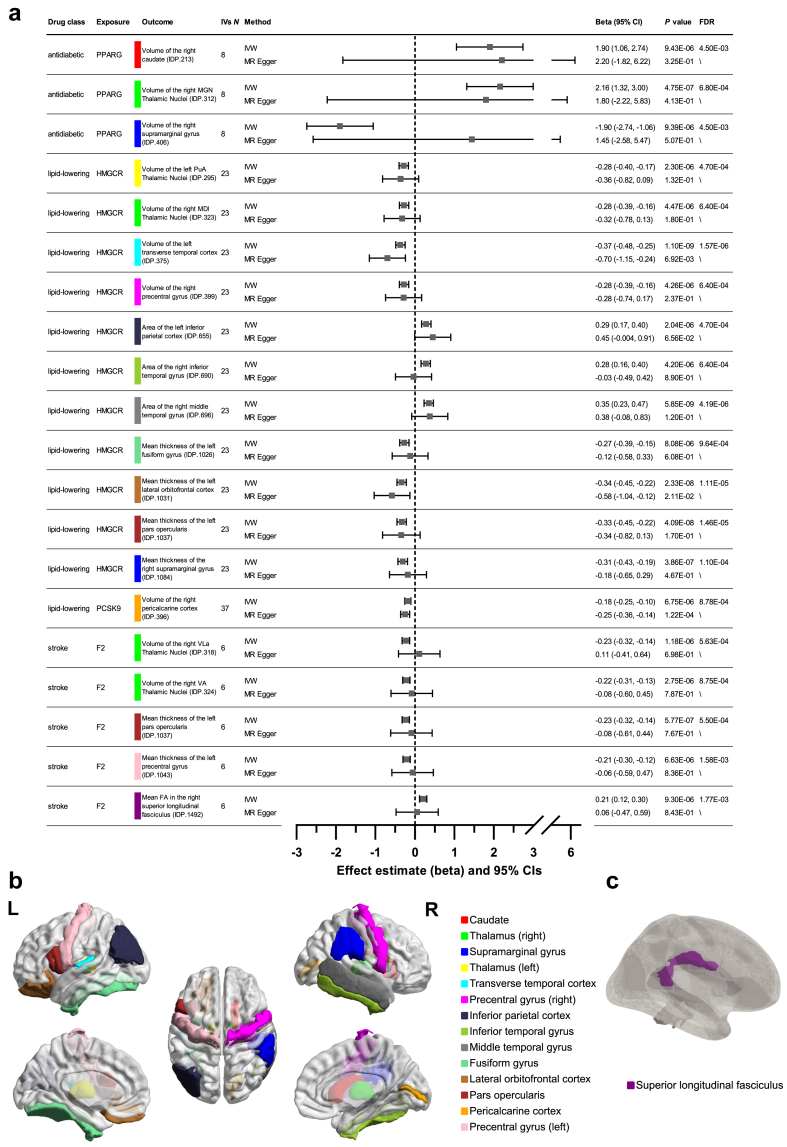
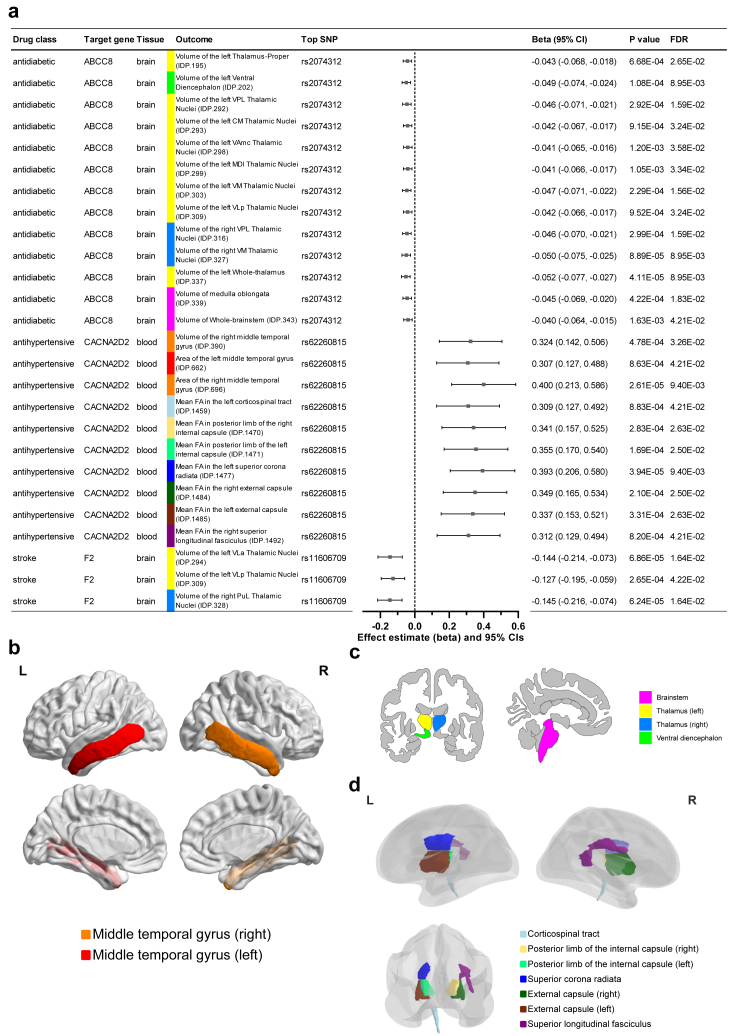
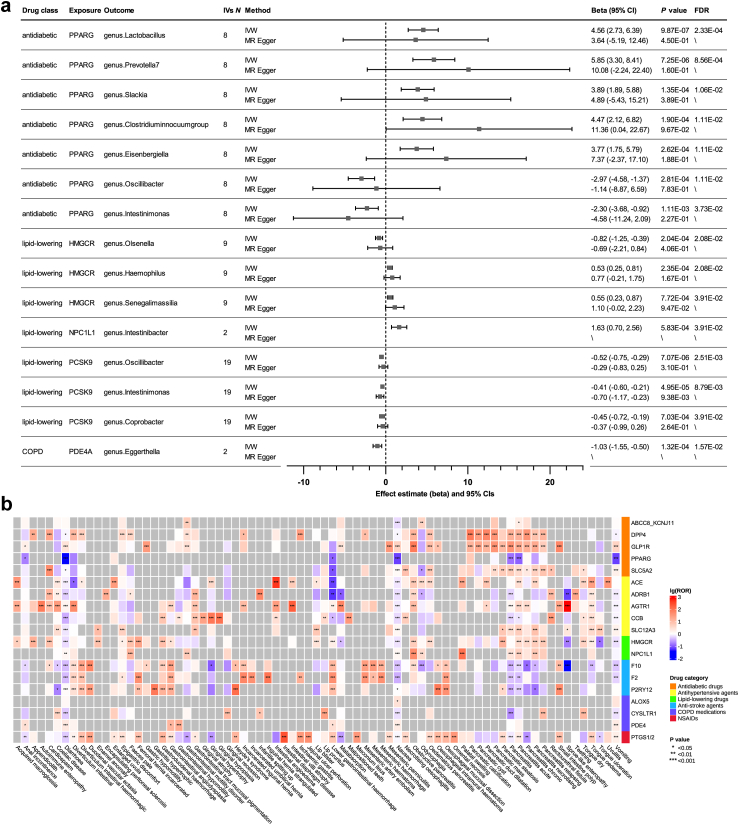
Among 19 drug classes, six drugs were found to be associated with higher risks of psychiatric adverse events, while 11 drugs were associated with higher risks of gastrointestinal adverse events in the FAERS analysis. We identified ten drug-psychiatric disorder associations, 202 drug-IDP associations, 16 drug-microbiota associations, and four drug-microbiota-IDP causal links. For example, PPARG activation mediated HbA1c reduction caused a higher risk of bipolar disorder (BD) II. Genetically proxied GLP-1R agonists were significantly associated with an increase in the volume of the CA3-head of the right hippocampus and the area of the left precuneus cortex, both of which have been shown to correlate with cognition in previous studies.
Common drugs may affect brain structure and risk of psychiatric disorder. Oral medications in particular may exert some of these effects by influencing gut microbiota. This study calls for greater attention to be paid to the neuropsychiatric adverse effects of drugs and encourages drug repurposing.
National Natural Science Foundation of China (grant No. 82330035, 82130043, 82172685, and 82001223), National Natural Science Foundation of Hunan Province (grant No. 2021SK1010), and the Science Foundation for Distinguished Young Scholars of Changsha (grant No. kq2209006).
治疗慢性病的药物可能会导致短期神经精神症状,但它们对大脑结构和精神疾病的长期影响仍不清楚。
我们全面分析了 FDA 不良事件报告系统数据库,并对六类常见药物、477 个脑成像衍生表型(IDP)和八种精神障碍进行了药物靶点 Mendelian Randomization(MR)研究。遗传工具从血液、大脑和其他靶组织中的表达数量性状基因座(eQTL)、血液中的蛋白质数量性状基因座(pQTL)以及血红蛋白和胆固醇的全基因组关联研究(GWAS)中提取。脑 IDP、精神障碍和肠道微生物组的汇总统计数据来自 BIG40、精神基因组学联盟和 MiBioGen。采用两步 MR 和中介分析,从 119 种肠道微生物属中筛选药物-IDP 效应的可能中介,并确定其中介比例。
在 19 种药物类别中,有 6 种药物与精神病不良事件风险增加相关,而 FAERS 分析中 11 种药物与胃肠道不良事件风险增加相关。我们确定了 10 种药物-精神障碍关联、202 种药物-IDP 关联、16 种药物-微生物组关联和 4 种药物-微生物组-IDP 因果关系。例如,PPARG 激活介导的 HbA1c 降低导致双相障碍(BD)II 风险增加。遗传上接近的 GLP-1R 激动剂与右侧海马 CA3-头体积增加和左侧楔前叶皮质面积增加显著相关,这两个区域在之前的研究中都与认知相关。
常见药物可能会影响大脑结构和精神障碍的风险。特别是口服药物可能通过影响肠道微生物群发挥其中一些作用。这项研究呼吁更多关注药物的神经精神不良影响,并鼓励药物再利用。
国家自然科学基金(批准号:82330035、82130043、82172685 和 82001223)、湖南省自然科学基金(批准号:2021SK1010)和长沙市杰出青年科学基金(批准号:kq2209006)。