Callaway Clifton W, Flickinger Katharyn L, Weissman Alexandra, Guyette Francis X, DeMaio Ryann, Jonsson Andrea, Wu Victor, Monteleone Jenna L, Prescott Peter, Birabaharan Jonathan, Buysse Daniel J, Empey Philip E, Nolin Thomas D, West Raymond E
Department of Emergency Medicine, University of Pittsburgh School of Medicine, Pittsburgh, PA, USA.
Center for Clinical Pharmaceutical Sciences, Department of Pharmacy and Therapeutics, University of Pittsburgh School of Pharmacy, Pittsburgh, PA, USA.
Temperature (Austin). 2024 Apr 21;11(3):280-298. doi: 10.1080/23328940.2024.2339781. eCollection 2024.
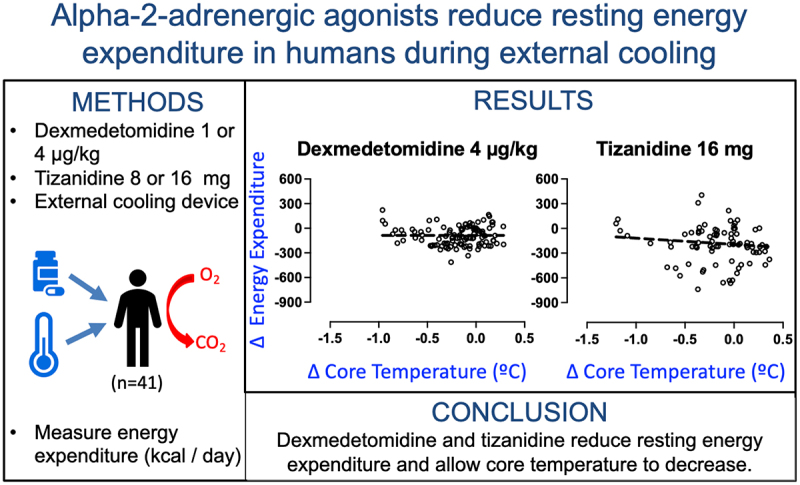
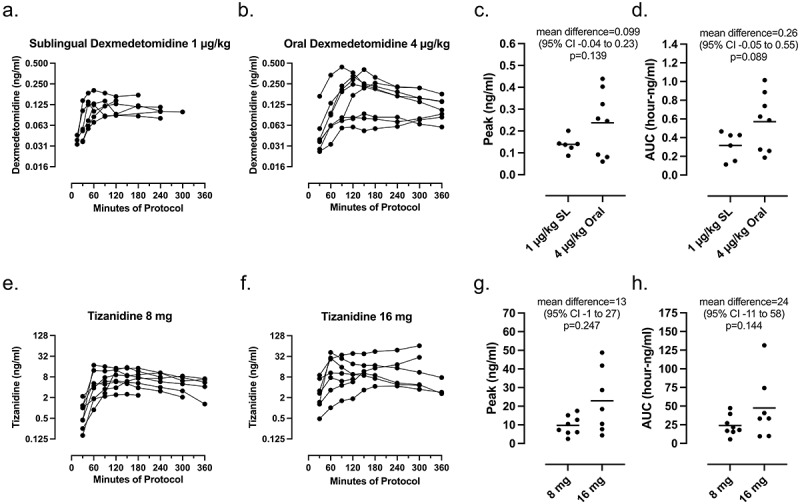
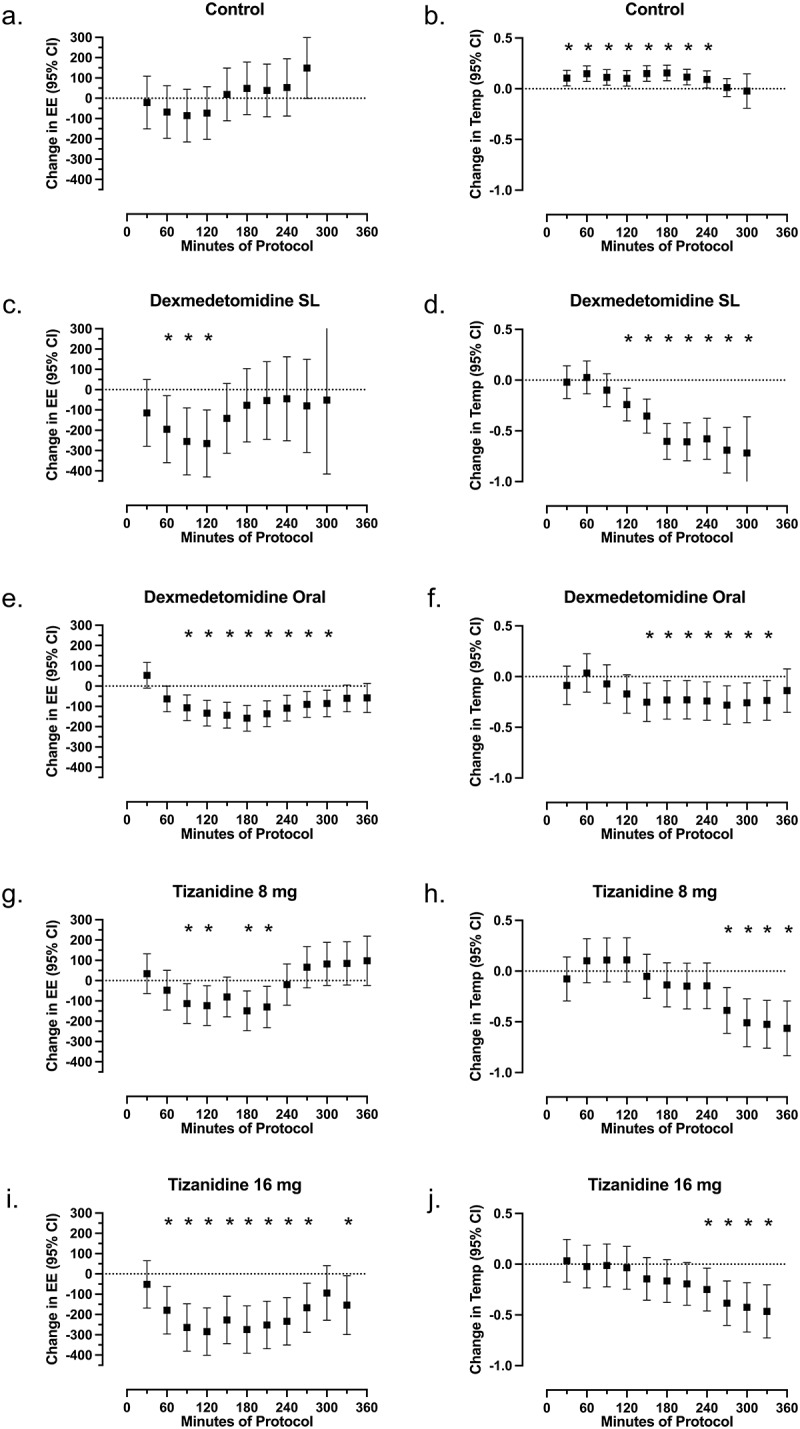
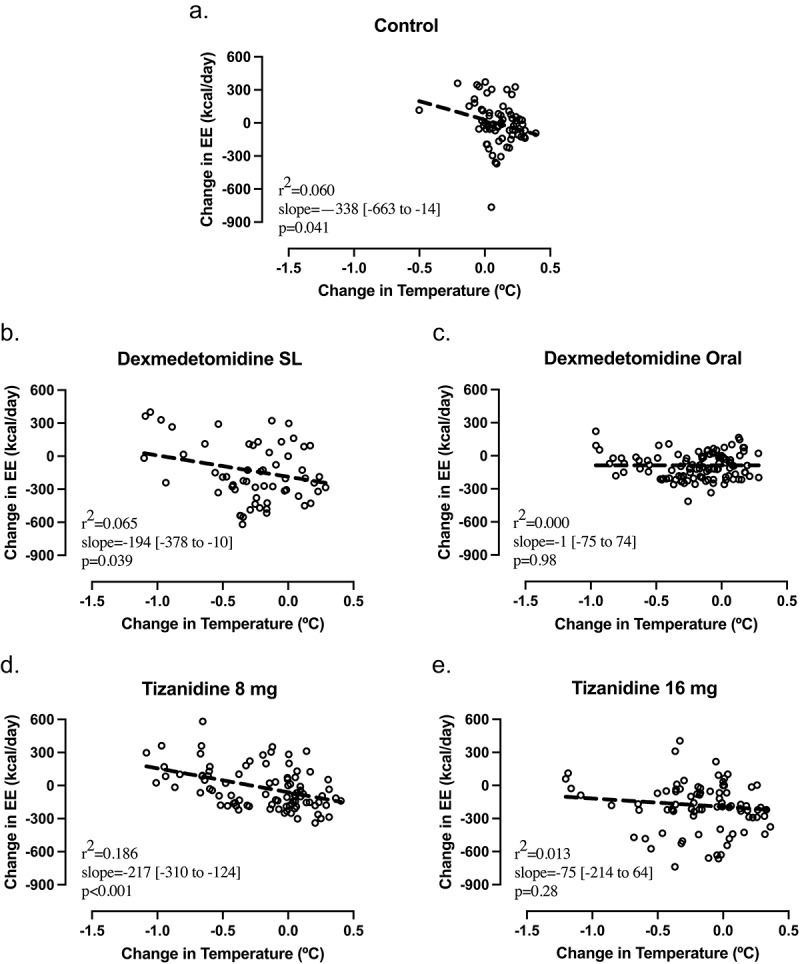
Intravenous alpha-2-adrenergic receptor agonists reduce energy expenditure and lower the temperature when shivering begins in humans, allowing a decrease in core body temperature. Because there are few data about similar effects from oral drugs, we tested whether single oral doses of the sedative dexmedetomidine (1 µg/kg sublingual or 4 µg/kg swallowed) or the muscle relaxant tizanidine (8 mg or 16 mg), combined with surface cooling, reduce energy expenditure and core body temperature in humans. A total of 26 healthy participants completed 41 one-day laboratory studies measuring core body temperature using an ingested telemetry capsule and measuring energy expenditure using indirect calorimetry for up to 6 hours after drug ingestion. Dexmedetomidine induced a median 13% - 19% peak reduction and tizanidine induced a median 15% - 22% peak reduction in energy expenditure relative to baseline. Core body temperature decreased a median of 0.5°C - 0.6°C and 0.5°C - 0.7°C respectively. Decreases in temperature occurred after peak reductions in energy expenditure. Energy expenditure increased with a decrease in core temperature in control participants but did not occur after 4 µg/kg dexmedetomidine or 16 mg tizanidine. Plasma levels of dexmedetomidine but not tizanidine were related to mean temperature change. Decreases in heart rate, blood pressure, respiratory rate, cardiac stroke volume index, and cardiac index were associated with the change in metabolic rate after higher drug doses. We conclude that both oral dexmedetomidine and oral tizanidine reduce energy expenditure and allow decrease in core temperature in humans.
静脉注射α-2肾上腺素能受体激动剂可降低能量消耗,并在人体开始颤抖时降低体温,从而使核心体温下降。由于关于口服药物类似作用的数据较少,我们测试了单剂量口服镇静剂右美托咪定(舌下含服1μg/kg或吞服4μg/kg)或肌肉松弛剂替扎尼定(8mg或16mg)与体表降温相结合,是否能降低人体的能量消耗和核心体温。共有26名健康参与者完成了41项为期一天的实验室研究,使用摄入式遥测胶囊测量核心体温,并在药物摄入后长达6小时使用间接量热法测量能量消耗。相对于基线,右美托咪定使能量消耗峰值中位数降低了13% - 19%,替扎尼定使能量消耗峰值中位数降低了15% - 22%。核心体温分别中位数下降了0.5°C - 0.6°C和0.5°C - 0.7°C。体温下降发生在能量消耗峰值降低之后。在对照组参与者中,能量消耗随着核心体温的降低而增加,但在服用4μg/kg右美托咪定或16mg替扎尼定后未出现这种情况。右美托咪定的血浆水平与平均体温变化有关,而替扎尼定则无关。较高药物剂量后,心率、血压、呼吸频率、心搏量指数和心脏指数的下降与代谢率的变化相关。我们得出结论,口服右美托咪定和口服替扎尼定都能降低人体的能量消耗并使核心体温下降。