Bellisle Rachel F, Peters Brian T, Oddsson Lars, Wood Scott J, Macaulay Timothy R
Harvard-MIT Health Sciences and Technology, Massachusetts Institute of Technology, 77 Massachusetts Ave., Cambridge, MA 02139, USA.
KBR, 2400 E NASA Pkwy, Houston, TX 77058, USA.
Brain Sci. 2024 Jul 30;14(8):768. doi: 10.3390/brainsci14080768.
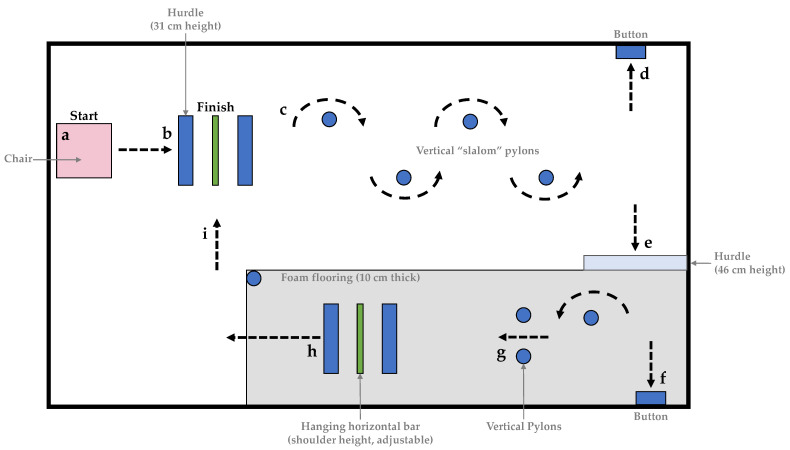
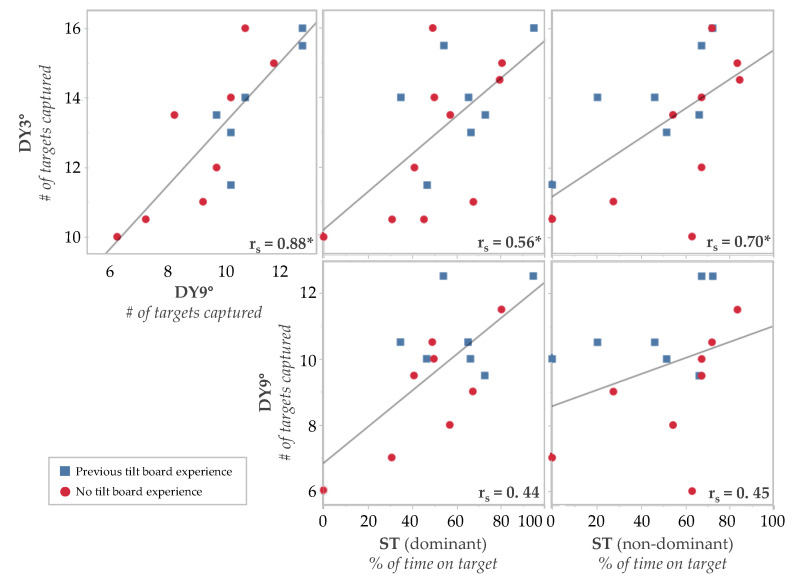
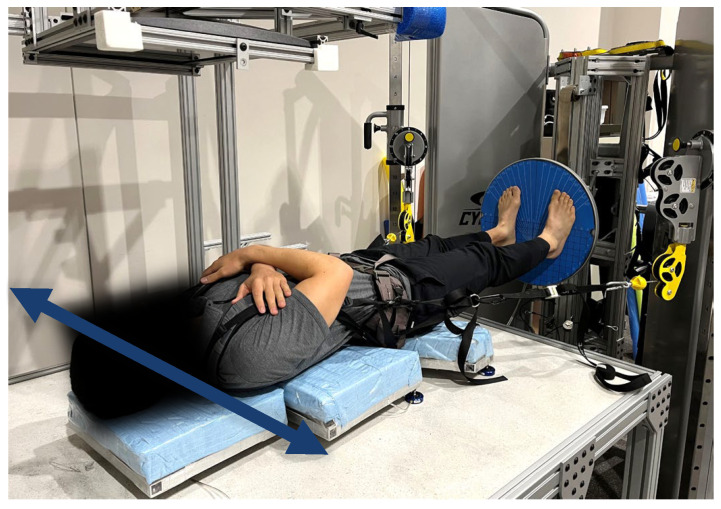
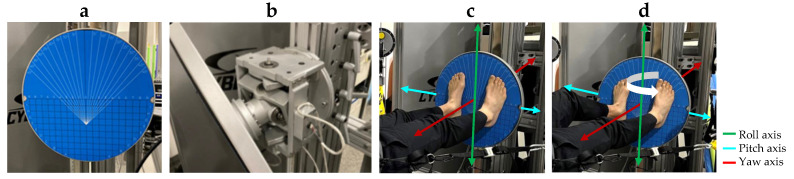
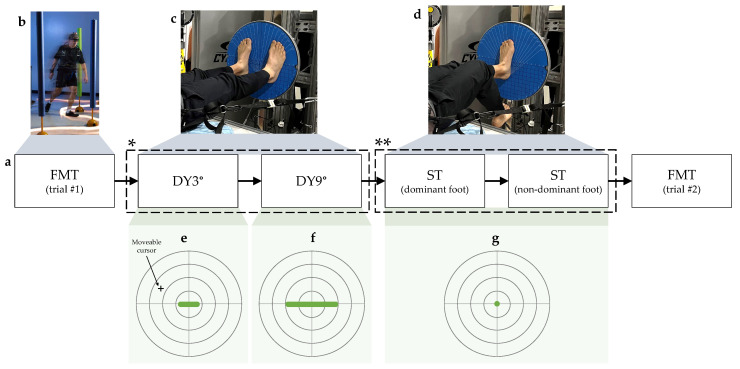
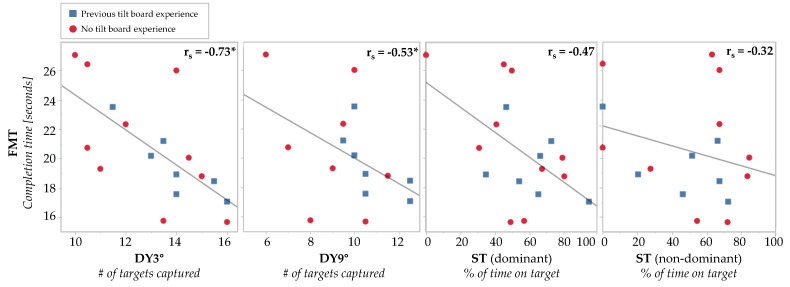
Long-duration bedrest impairs upright postural and locomotor control, prompting the need for assessment tools to predict the effects of deconditioning on post-bedrest outcome measures. We developed a tilt board mounted vertically with a horizontal air-bearing sled as a potential supine assessment tool for a future bedrest study. The purpose of this pilot study was to examine the association between supine proprioceptive assessments on the tilt board and upright functional mobility. Seventeen healthy participants completed variations of a supine tilt board task and an upright functional mobility task (FMT), which is an established obstacle avoidance course. During the supine tasks, participants lay on the air-bearing sled with axial loading toward the tilt board. Participants tilted the board to capture virtual targets on an overhead monitor during 30 s trials. The tasks included two dynamic tasks (i.e., double-leg stance matching mediolateral tilt targets over ±3° or ±9° ranges) and two static tasks (i.e., single-leg stance maintaining a central target position). The performances during the dynamic tasks were significantly correlated with the FMT time to completion. The dominant-leg static task performance showed a moderate trend with the FMT time to completion. The results indicate that supine proprioceptive assessments may be associated with upright ambulation performance, and thus, support the proposed application in bedrest studies.
长时间卧床休息会损害直立姿势和运动控制能力,因此需要评估工具来预测失能状态对卧床休息后各项结果指标的影响。我们开发了一种垂直安装的倾斜板,上面带有一个水平气垫滑板,作为未来卧床休息研究中一种潜在的仰卧位评估工具。这项初步研究的目的是检验在倾斜板上进行的仰卧位本体感觉评估与直立功能活动能力之间的关联。17名健康参与者完成了仰卧位倾斜板任务和直立功能活动任务(FMT,这是一个既定的避障课程)的不同变体。在仰卧位任务中,参与者躺在气垫滑板上,轴向朝向倾斜板加载。在30秒的试验过程中,参与者倾斜板子以捕捉头顶监视器上的虚拟目标。这些任务包括两项动态任务(即双腿站立匹配±3°或±9°范围内的内外侧倾斜目标)和两项静态任务(即单腿站立保持中心目标位置)。动态任务期间的表现与完成FMT的时间显著相关。优势腿静态任务表现与完成FMT的时间呈中等趋势。结果表明,仰卧位本体感觉评估可能与直立行走表现相关,因此,支持其在卧床休息研究中的应用提议。