Maioli Margherita, Cocchi Stefania, Gambarotti Marco, Benini Stefania, Magagnoli Giovanna, Gamberi Gabriella, Griffoni Cristiana, Gasbarrini Alessandro, Ghermandi Riccardo, Noli Luigi Emanuele, Alcherigi Chiara, Ferrari Cristina, Bianchi Giuseppe, Asioli Sofia, Pignotti Elettra, Righi Alberto
Department of Pathology, IRCCS Istituto Ortopedico Rizzoli, 40136 Bologna, Italy.
Department of Spine Surgery, IRCCS Istituto Ortopedico Rizzoli, 40136 Bologna, Italy.
Cancers (Basel). 2024 Aug 9;16(16):2808. doi: 10.3390/cancers16162808.
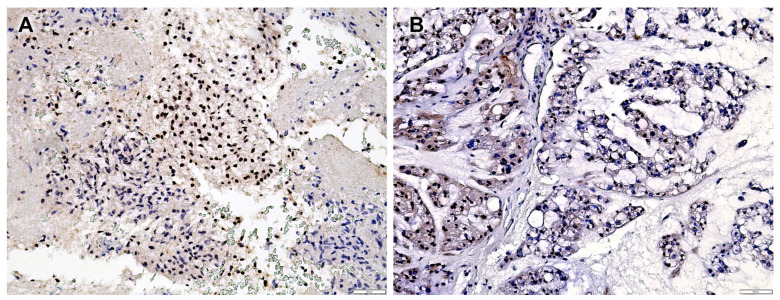
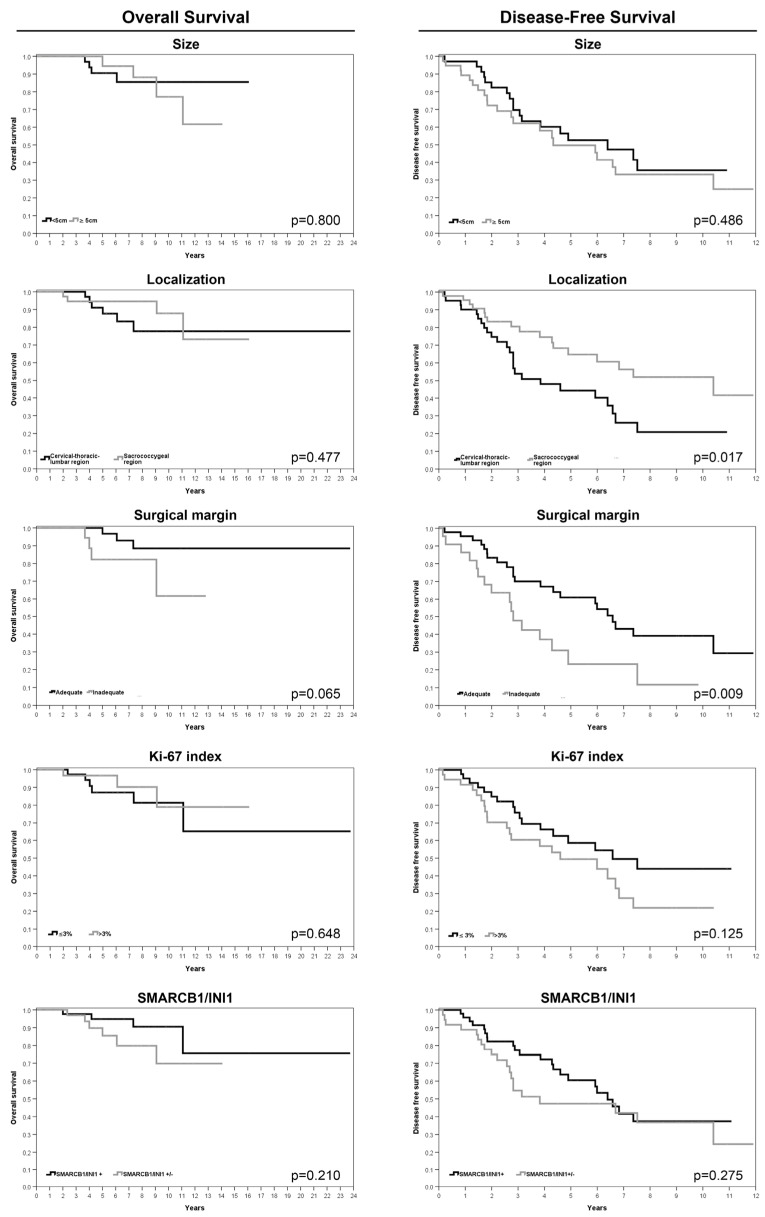
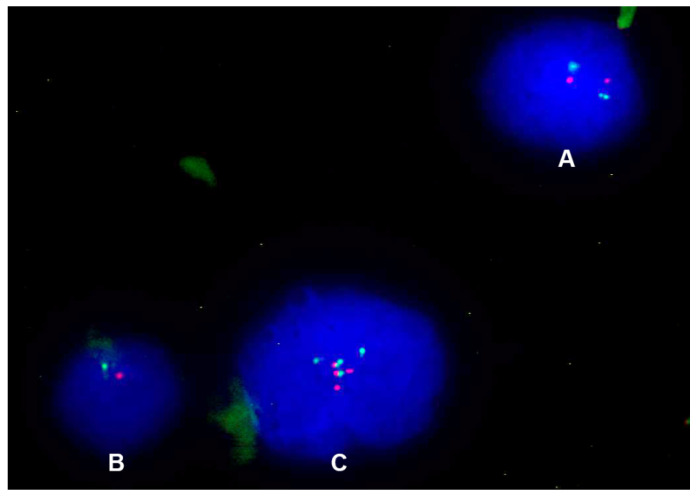
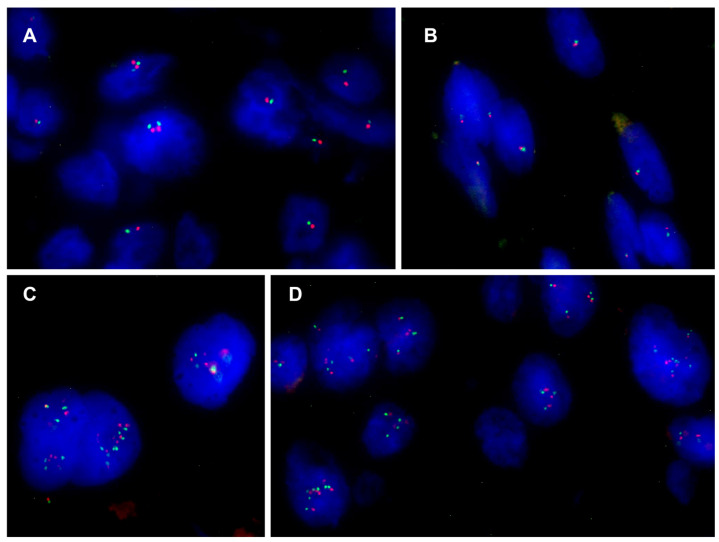
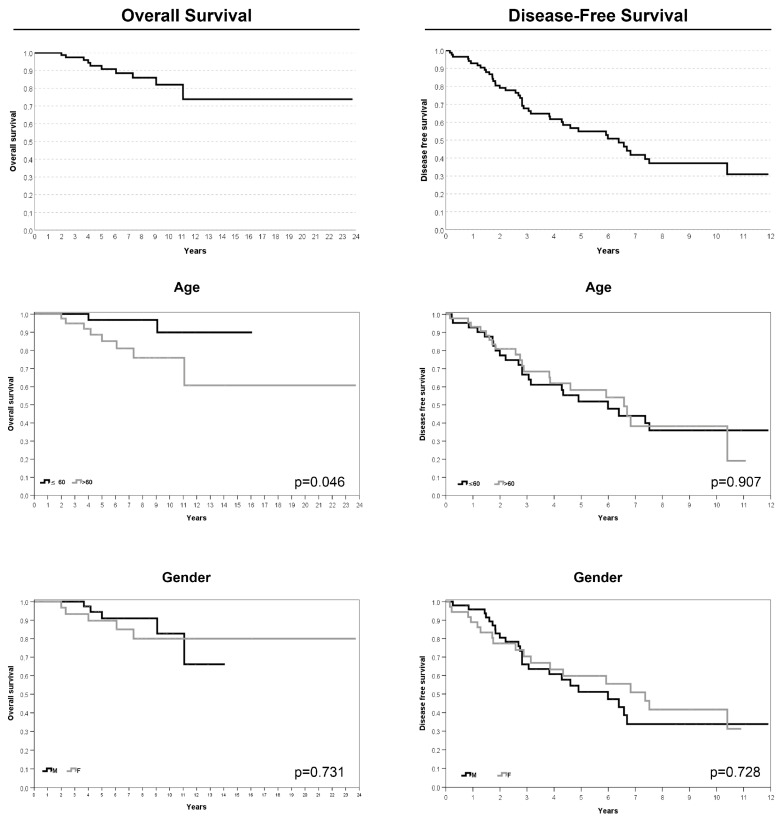
The partial loss of SMARCB1/INI1 expression has recently been reported in skull base conventional chordomas, with possible therapeutic implications. We retrospectively analyzed 89 patients with conventional spinal chordomas to investigate the differences in the immunohistochemical expression of SMARCB1/INI1 and the underlying genetic alterations in the gene. Moreover, we assessed the correlation of clinicopathological features (age, gender, tumor size, tumor location, surgical margins, Ki67 labelling index, SMARCB1/INI1 pattern, previous surgery, previous treatment, type of surgery, and the Charlson Comorbidity Index) with patient survival. Our cohort included 51 males and 38 females, with a median age at diagnosis of 61 years. The median tumor size at presentation was 5.9 cm. The 5-year overall survival (OS) and 5-year disease-free survival (DFS) rates were 90.8% and 54.9%, respectively. Partial SMARCB1/INI1 loss was identified in 37 (41.6%) patients with conventional spinal chordomas (27 mosaic and 10 clonal). The most frequent genetic alteration detected was the monoallelic deletion of a portion of the long arm of chromosome 22, which includes the gene. Partial loss of SMARCB1/INI1 was correlated with cervical-thoracic-lumbar tumor location ( = 0.033) and inadequate surgical margins ( = 0.007), possibly due to the high degree of tumor invasiveness in this site. Among all the considered clinicopathological features related to patient survival, only tumor location in the sacrococcygeal region and adequate surgical margins positively impacted DFS. In conclusion, partial SMARCB1/INI1 loss, mostly due to 22q deletion, was detected in a significant number of patients with conventional spinal chordomas and was correlated with mobile spine location and inadequate surgical margins.
最近有报道称,在颅底传统型脊索瘤中存在SMARCB1/INI1表达部分缺失的情况,这可能具有治疗意义。我们回顾性分析了89例传统型脊柱脊索瘤患者,以研究SMARCB1/INI1免疫组化表达的差异以及该基因潜在的基因改变。此外,我们评估了临床病理特征(年龄、性别、肿瘤大小、肿瘤位置、手术切缘、Ki67标记指数、SMARCB1/INI1模式、既往手术、既往治疗、手术类型以及查尔森合并症指数)与患者生存率的相关性。我们的队列包括51名男性和38名女性,诊断时的中位年龄为61岁。就诊时肿瘤的中位大小为5.9厘米。5年总生存率(OS)和5年无病生存率(DFS)分别为90.8%和54.9%。在37例(41.6%)传统型脊柱脊索瘤患者中发现了SMARCB1/INI1部分缺失(27例为镶嵌型,10例为克隆型)。检测到的最常见基因改变是22号染色体长臂部分的单等位基因缺失,该区域包含该基因。SMARCB1/INI1部分缺失与颈胸腰段肿瘤位置(P = 0.033)和手术切缘不充分(P = 0.007)相关,这可能是由于该部位肿瘤的高侵袭性所致。在所有与患者生存相关的临床病理特征中,只有骶尾区域的肿瘤位置和充分的手术切缘对DFS有积极影响。总之,在大量传统型脊柱脊索瘤患者中检测到SMARCB1/INI1部分缺失,主要是由于22q缺失,且与活动脊柱位置和手术切缘不充分相关。