Zandonà Martina, Novotny Jakub, Garo Maria Luisa, Sgro Ettore, Del Giorno Rosaria, Gabutti Luca
Clinical Research Unit, Department of Internal Medicine, Ente Ospedaliero Cantonale, 6500 Bellinzona, Switzerland.
Faculty of Biomedicine, University of Southern Switzerland, 6900 Lugano, Switzerland.
J Clin Med. 2024 Aug 15;13(16):4822. doi: 10.3390/jcm13164822.
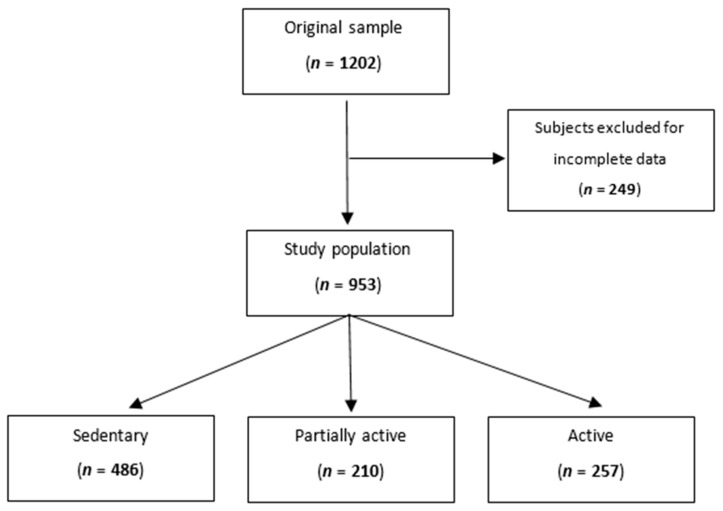
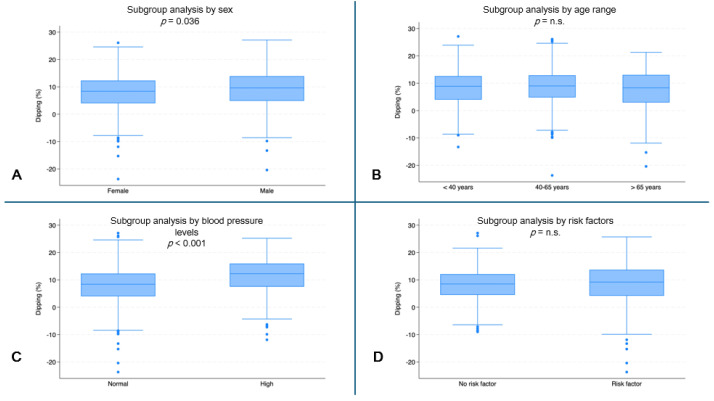
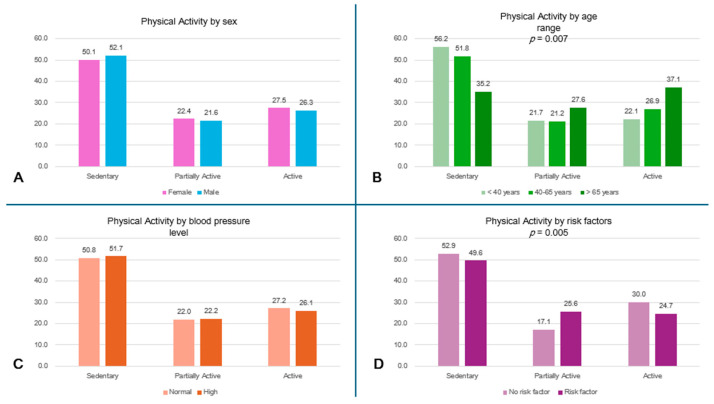
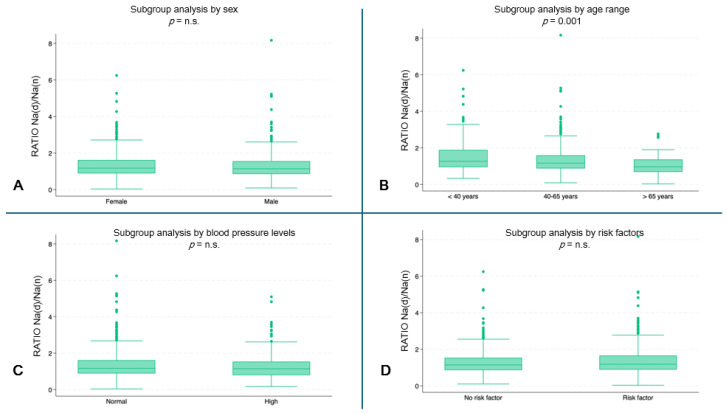
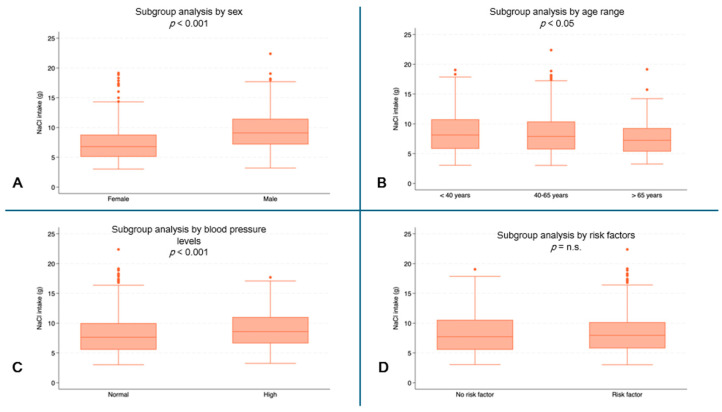
Blood pressure (BP) is characterized by a circadian rhythm (Circr) with lower nighttime values, called dipping. Non-dipping is associated with higher CVD risk. The Circr of urinary sodium excretion (NaCle), peaking during the day, is linked to BP patterns. Physical activity (PA) is known to improve BP control and enhance the dipping phenomenon, but its possible effect on NaCle remains unclarified. This study aimed to investigate the correlation between PA and the Circr of NaCle and to determine if the relationship is independent of age, sex, BP values, dipping pattern, and salt intake. A pilot cross-sectional analysis was conducted using data from the Ticino Epidemiological Stiffness Study, involving 953 participants in Switzerland. Data collection included standardized questionnaires, blood samples, 24 h urine collections, and ambulatory BP monitoring. Participants were categorized into sedentary, partially active, and active. The effect of PA, NaCl intake, and dipping on the day/night NaCle ratio was assessed with multivariable linear regressions. Participants' median age was 49 years, with 78% having normal BP values and 47% exhibiting a dipping pattern; 51% were classified as sedentary and 22% as partially active. The median NaCl intake was 7.9 g/day. The youngest subjects had a higher hourly NaCle ratio compared to older subjects. Higher NaCl intake correlated with increased BP, a phenomenon more pronounced in men and younger subjects. The hourly day/night NaCle ratio positively correlates with dipping; however, PA did not show a significant correlation with the NaCle ratio. This study indicates that while the day/night NaCle ratio correlates with the dipping pattern, PA is unrelated to the circadian rhythm of renal sodium handling. The beneficial effects of PA on BP and cardiovascular health thus appear to be mediated through mechanisms other than NaCle. These are explorative findings only but relativize the need for further investigations on the topic.
血压(BP)具有昼夜节律(Circr),夜间值较低,称为勺型。非勺型与较高的心血管疾病风险相关。尿钠排泄(NaCle)的昼夜节律在白天达到峰值,与血压模式相关。已知身体活动(PA)可改善血压控制并增强勺型现象,但其对NaCle的可能影响仍未明确。本研究旨在调查PA与NaCle昼夜节律之间的相关性,并确定这种关系是否独立于年龄、性别、血压值、勺型模式和盐摄入量。使用提契诺州流行病学僵硬研究的数据进行了一项初步横断面分析,该研究涉及瑞士的953名参与者。数据收集包括标准化问卷、血液样本、24小时尿液收集和动态血压监测。参与者被分为久坐、部分活跃和活跃三类。通过多变量线性回归评估PA、NaCl摄入量和勺型对白天/夜间NaCle比值的影响。参与者的中位年龄为49岁,78%血压值正常,47%呈现勺型模式;51%被归类为久坐,22%为部分活跃。NaCl摄入量中位数为7.9克/天。最年轻的受试者每小时的NaCle比值高于年长受试者。较高的NaCl摄入量与血压升高相关,这种现象在男性和年轻受试者中更为明显。每小时的白天/夜间NaCle比值与勺型呈正相关;然而,PA与NaCle比值未显示出显著相关性。本研究表明,虽然白天/夜间NaCle比值与勺型模式相关,但PA与肾脏钠处理的昼夜节律无关。因此,PA对血压和心血管健康的有益作用似乎是通过NaCle以外的机制介导的。这些只是探索性发现,但降低了对该主题进一步研究的必要性。