Centre de Recherche Azrieli du CHU Sainte-Justine, University of Montreal, Montreal, QC H3T 1C5, Canada.
The Manton Center for Orphan Disease Research, Divisions of Newborn Medicine and of Genetics and Genomics, Boston Children's Hospital, Harvard Medical School, Boston, MA 02115, USA.
Genes (Basel). 2024 Aug 6;15(8):1033. doi: 10.3390/genes15081033.
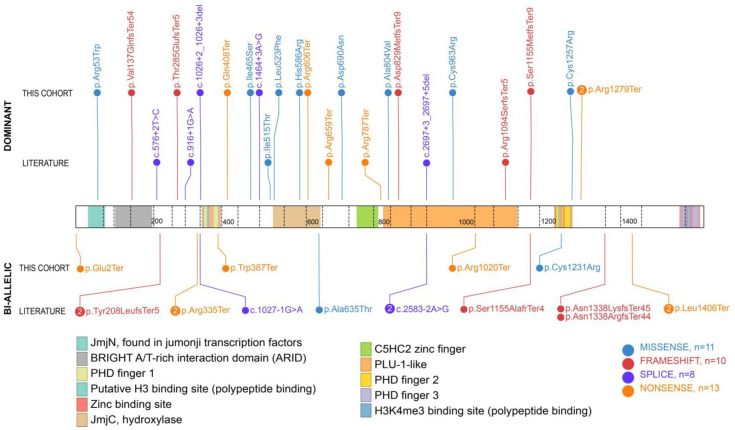
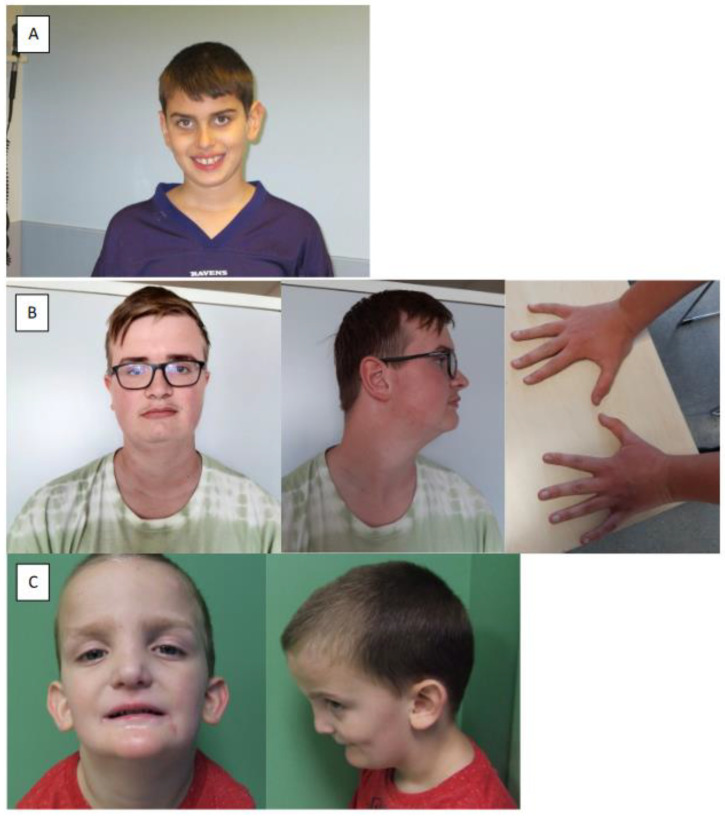
Bi-allelic disruptive variants (nonsense, frameshift, and splicing variants) in have been identified as causative for autosomal recessive intellectual developmental disorder type 65. In contrast, dominant variants, usually disruptive as well, have been more difficult to implicate in a specific phenotype, since some of them have been found in unaffected controls or relatives. Here, we describe individuals with likely pathogenic variants in , including eight individuals with dominant missense variants. This study is a retrospective case series of 21 individuals with variants in . We performed deep phenotyping and collected the clinical information and molecular data of these individuals' family members. We compared the phenotypes according to variant type and to those previously described in the literature. The most common features were developmental delay, impaired intellectual development, behavioral problems, autistic behaviors, sleep disorders, facial dysmorphism, and overgrowth. DD, ASD behaviors, and sleep disorders were more common in individuals with dominant disruptive variants, while individuals with dominant missense variants presented more frequently with renal and skin anomalies. This study extends our understanding of the -related neurodevelopmental disorder and suggests the pathogenicity of certain dominant missense variants.
已发现双等位基因破坏性变异(无义、移码和剪接变异)在常染色体隐性智力发育障碍 65 型中是致病原因。相比之下,通常也是破坏性的显性变异更难以牵连到特定的表型,因为其中一些在未受影响的对照或亲属中也有发现。在这里,我们描述了具有 中可能的致病性变异的个体,包括 8 名具有显性错义变异的个体。这项研究是对 21 名具有 变异个体的回顾性病例系列研究。我们进行了深入的表型分析,并收集了这些个体家庭成员的临床信息和分子数据。我们根据变异类型和文献中先前描述的情况比较了表型。最常见的特征是发育迟缓、智力发育受损、行为问题、自闭症行为、睡眠障碍、面部畸形和过度生长。DD、ASD 行为和睡眠障碍在具有显性破坏性 变异的个体中更为常见,而具有显性错义变异的个体则更常出现肾脏和皮肤异常。这项研究扩展了我们对 相关神经发育障碍的理解,并提示了某些显性 错义变异的致病性。