Sajjad Hafiz Muhammad, Chudoba Thomas, Hartmaier Alexander
Interdisciplinary Centre for Advanced Material Simulation (ICAMS), Ruhr-Universität Bochum, Universitätsstr 150, 44801 Bochum, Germany.
ASMEC Advanced Surface Mechanics GmbH, 01109 Dresden, Germany.
Materials (Basel). 2024 Aug 8;17(16):3938. doi: 10.3390/ma17163938.
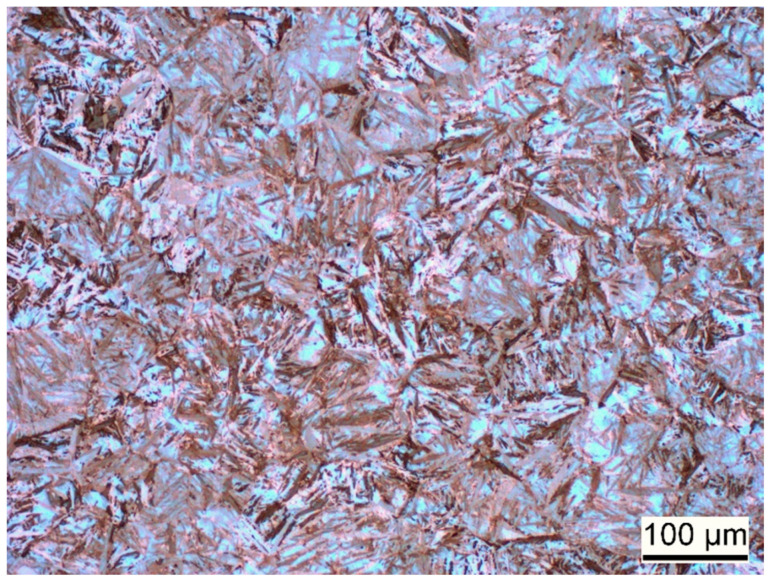
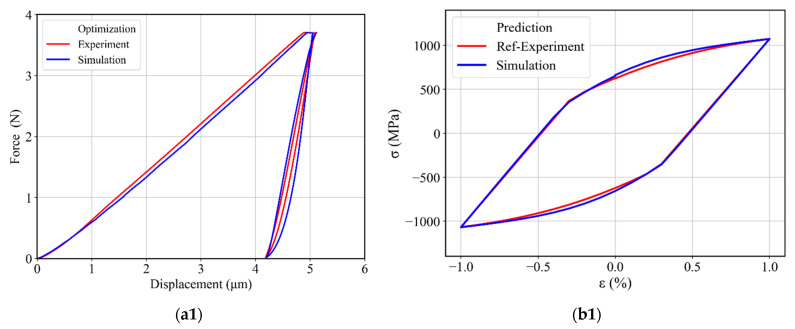
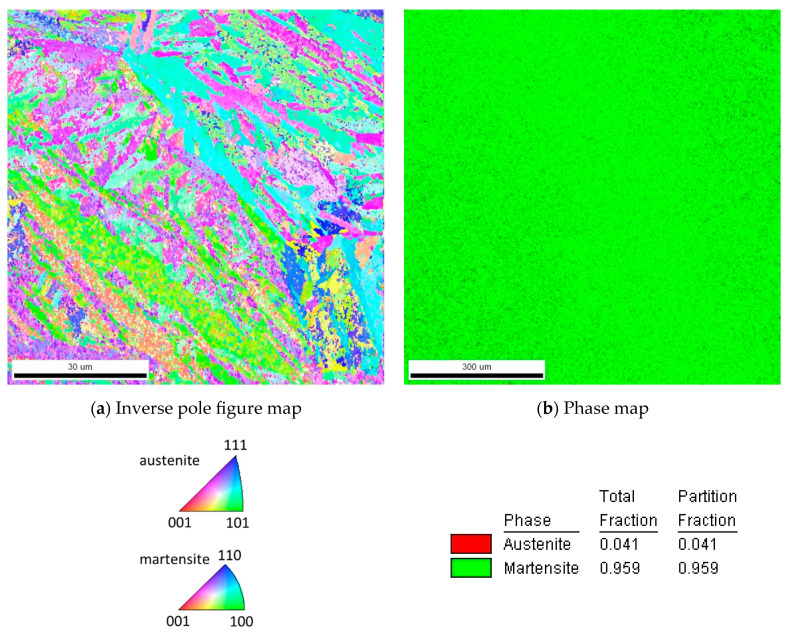
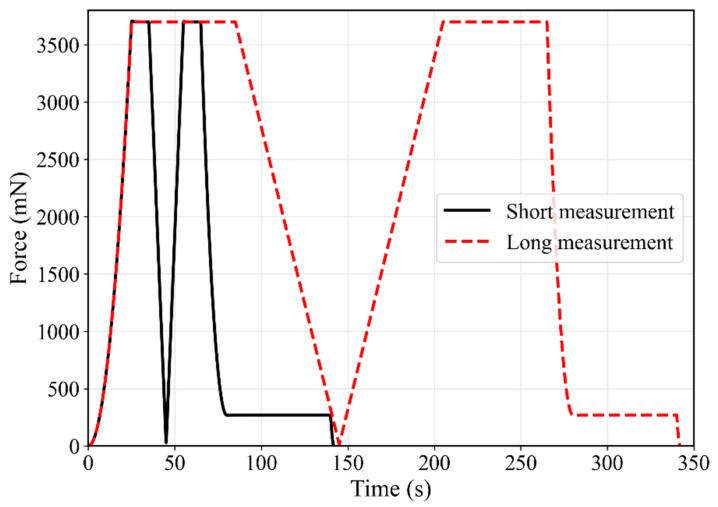
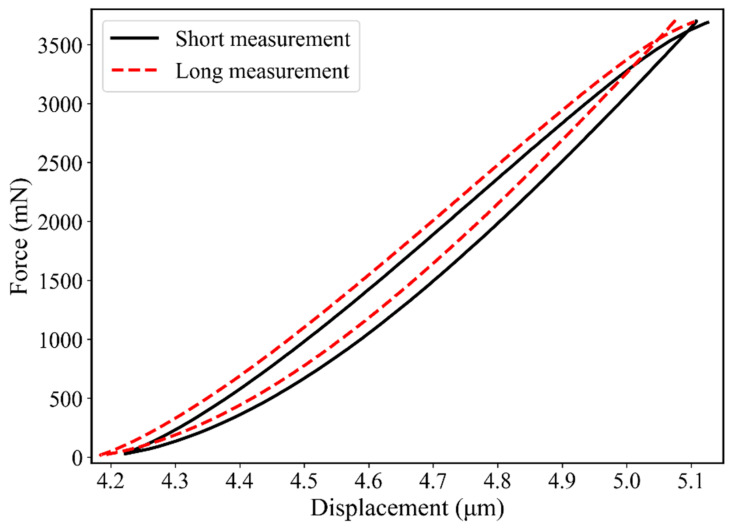
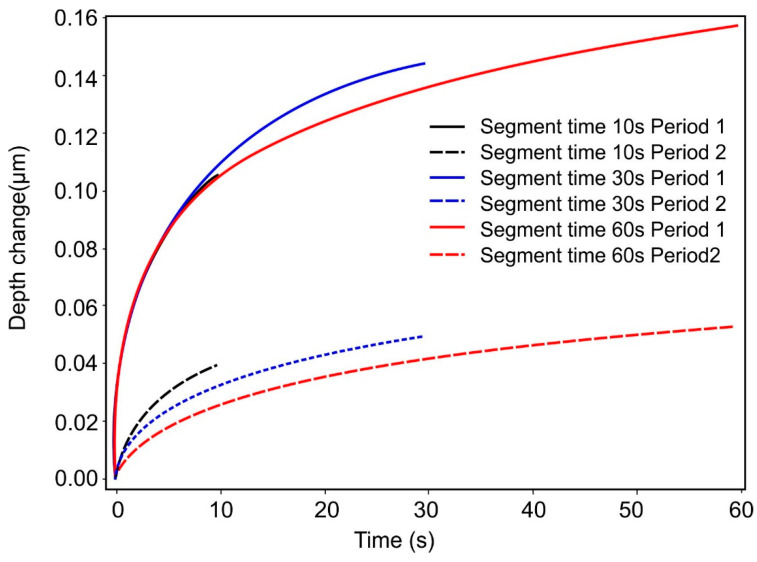
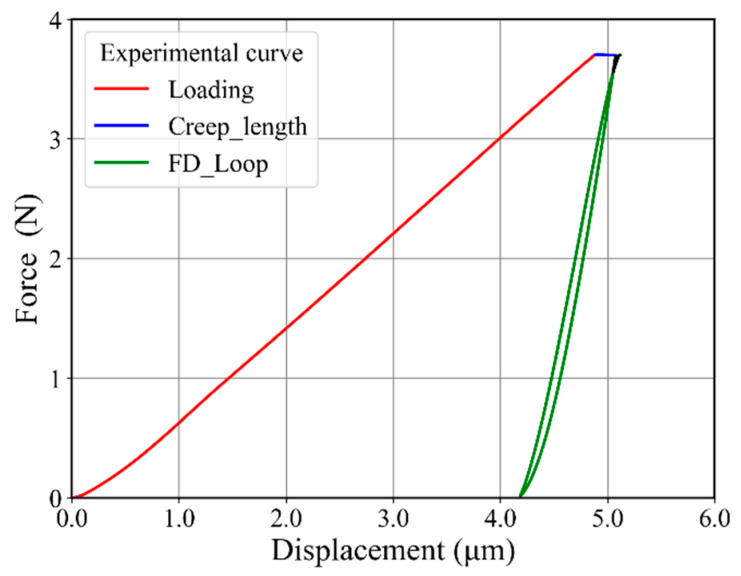
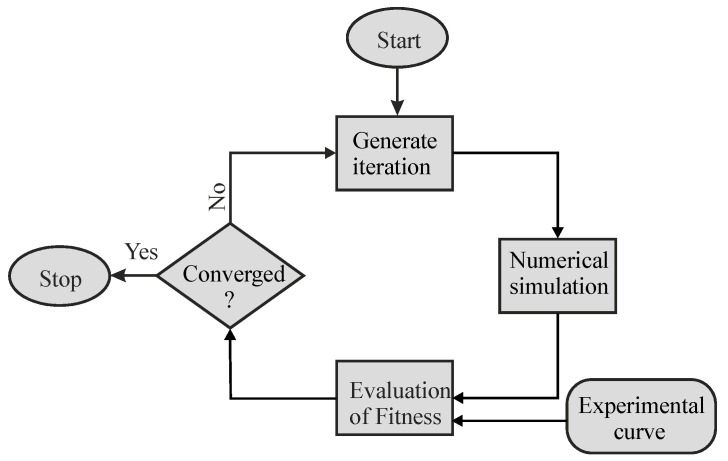
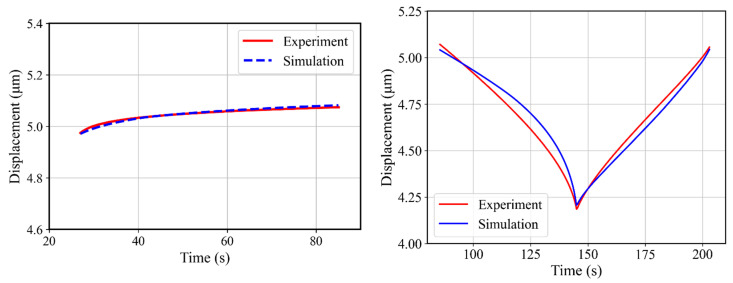
Indentation is a versatile method to assess the hardness of different materials along with their elastic properties. Recently, powerful approaches have been developed to determine further material properties, like yield strength, ultimate tensile strength, work-hardening rate, and even cyclic plastic properties, by a combination of indentation testing and computer simulations. The basic idea of these approaches is to simulate the indentation with known process parameters and to iteratively optimize the initially unknown material properties until just a minimum error between numerical and experimental results is achieved. In this work, we have developed a protocol for instrumented indentation tests and a procedure for the inverse analysis of the experimental data to obtain material parameters for time-dependent viscoplastic material behavior and kinematic and isotropic work-hardening. We assume the elastic material properties and the initial yield strength to be known because these values can be determined independently from indentation tests. Two optimization strategies were performed and compared for identification of the material parameters. The new inverse method for spherical indentation has been successfully applied to martensitic steel.
压痕是一种评估不同材料硬度及其弹性特性的通用方法。最近,通过结合压痕测试和计算机模拟,已经开发出了强大的方法来确定更多的材料特性,如屈服强度、极限抗拉强度、加工硬化率,甚至循环塑性特性。这些方法的基本思想是用已知的工艺参数模拟压痕,并迭代优化最初未知的材料特性,直到数值结果和实验结果之间的误差最小。在这项工作中,我们开发了一种仪器化压痕测试方案和一种实验数据反分析程序以获得与时间相关的粘塑性材料行为以及运动学和各向同性加工硬化的材料参数。我们假设弹性材料特性和初始屈服强度是已知的,因为这些值可以独立于压痕测试来确定。为了识别材料参数,我们执行并比较了两种优化策略。用于球形压痕的新反演方法已成功应用于马氏体钢。