Zupan Nina, Yous Ines, Danede Florence, Verin Jeremy, Kouach Mostafa, Foulon Catherine, Dudognon Emeline, Florin Muschert Susanne
Univ. Lille, Inserm, CHU Lille, U1008, F-59000 Lille, France.
Univ. Lille, CNRS, INRAE, Centrale Lille, UMR 8207-UMET, F-59000 Lille, France.
Pharmaceutics. 2024 Aug 15;16(8):1071. doi: 10.3390/pharmaceutics16081071.
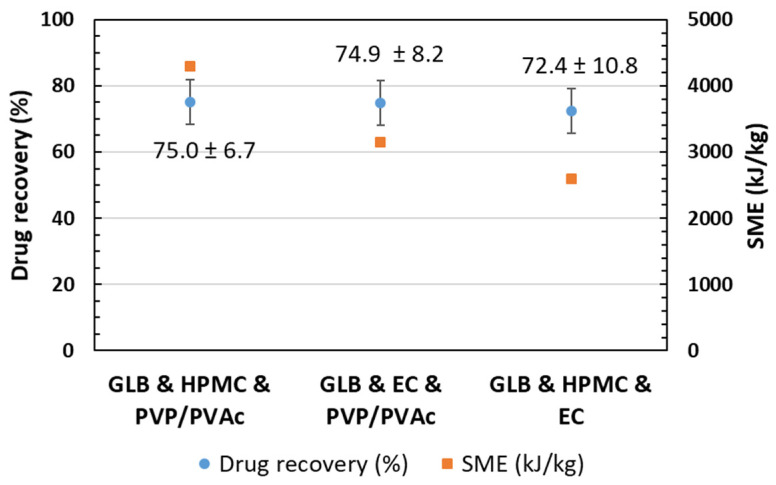
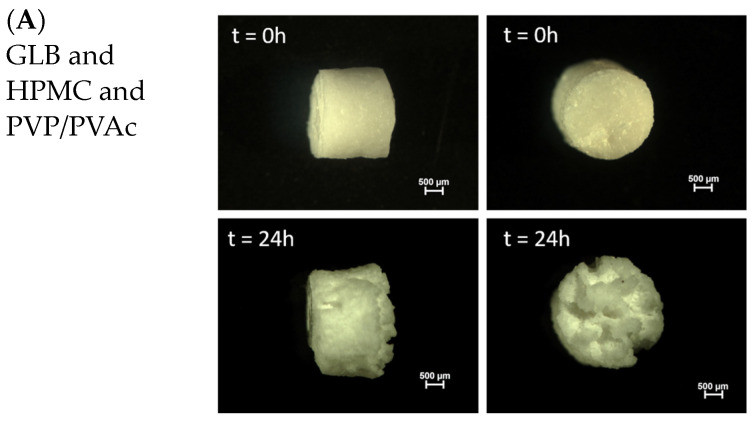
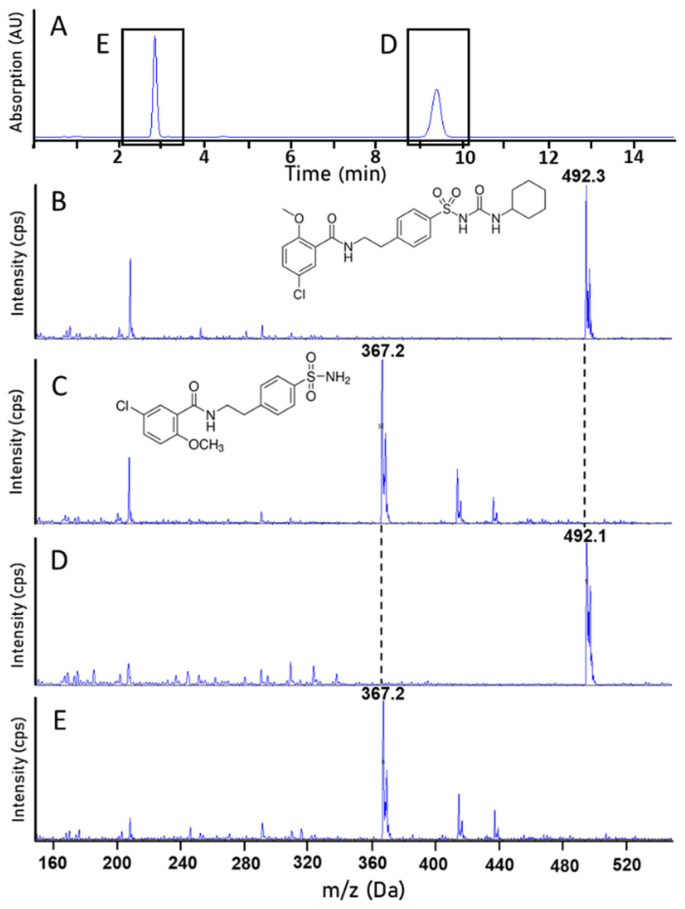
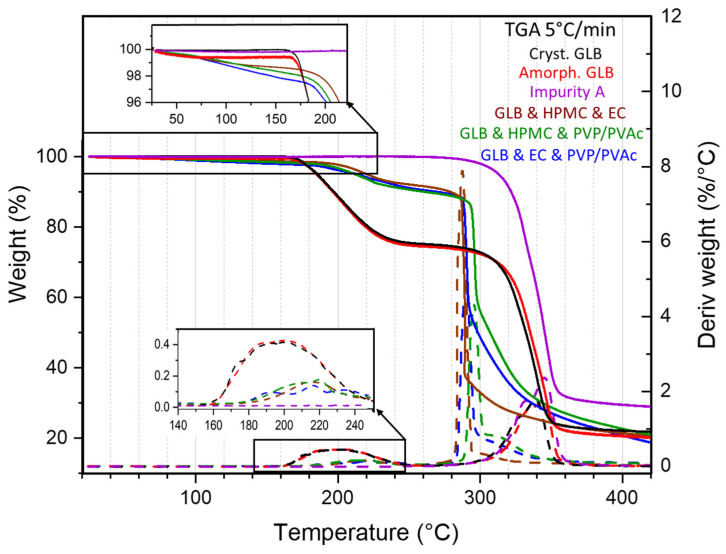
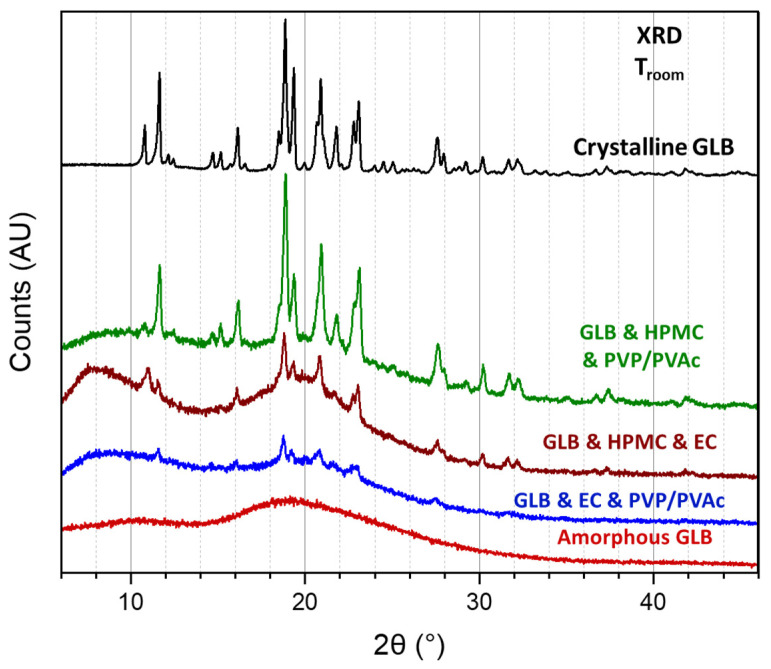
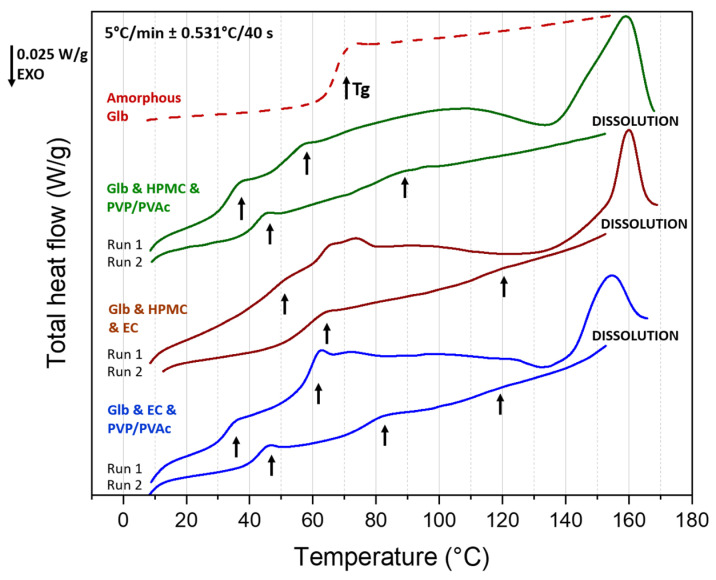
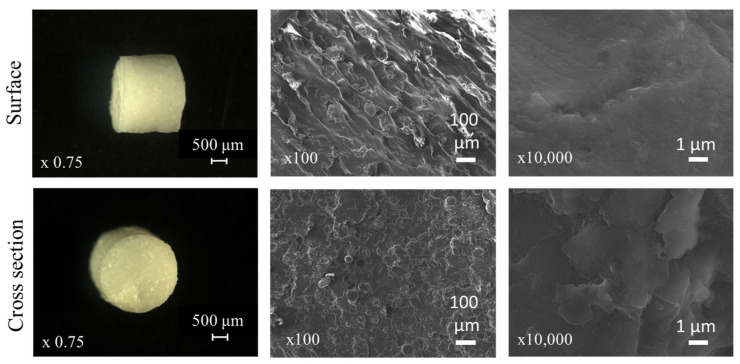
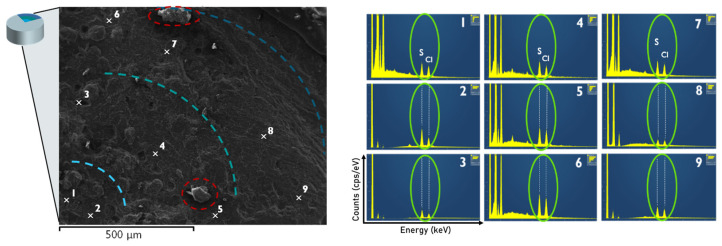
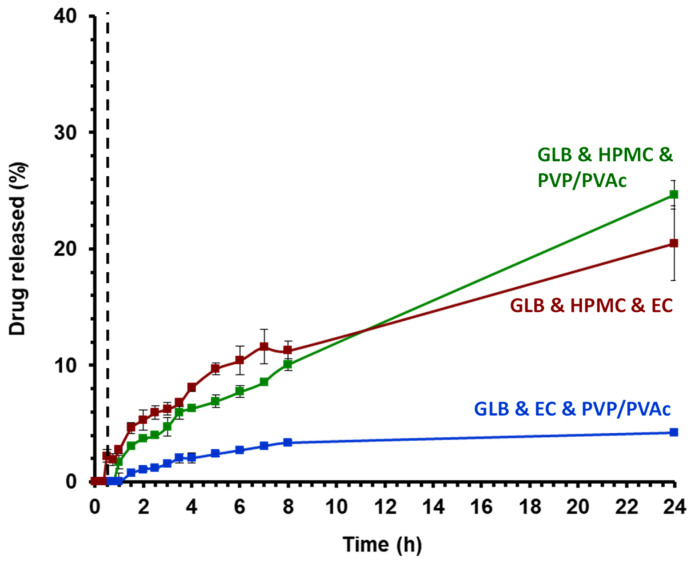
This research work dives into the complexity of hot-melt extrusion (HME) and its influence on drug stability, focusing on solid dispersions containing 30% of glibenclamide and three 50:50 polymer blends. The polymers used in the study are Ethocel Standard 10 Premium, Kollidon SR and Affinisol HPMC HME 4M. Glibenclamide solid dispersions are characterized using thermal analyses (thermogravimetric analysis (TGA) and differential scanning calorimetry), X-ray diffraction and scanning electron microscopy. This study reveals the transformation of glibenclamide into impurity A during the HME process using mass spectrometry and TGA. Thus, it enables the quantification of the extent of degradation. Furthermore, this work shows how polymer-polymer blend matrices exert an impact on process parameters, the active pharmaceutical ingredient's physical state, and drug release behavior. In vitro dissolution studies show that the polymeric matrices investigated provide extended drug release (over 24 h), mainly dictated by the polymer's chemical nature. This paper highlights how glibenclamide is degraded during HME and how polymer selection crucially affects the sustained release dynamics.
本研究工作深入探讨了热熔挤出(HME)的复杂性及其对药物稳定性的影响,重点关注含有30%格列本脲和三种50:50聚合物共混物的固体分散体。研究中使用的聚合物为乙基纤维素标准10优质型、聚乙烯吡咯烷酮SR和羟丙基甲基纤维素HME 4M。通过热分析(热重分析(TGA)和差示扫描量热法)、X射线衍射和扫描电子显微镜对格列本脲固体分散体进行表征。本研究利用质谱和TGA揭示了在HME过程中格列本脲向杂质A的转化。因此,它能够对降解程度进行量化。此外,这项工作展示了聚合物-聚合物共混物基质如何对工艺参数、活性药物成分的物理状态和药物释放行为产生影响。体外溶出研究表明,所研究的聚合物基质可实现药物的长效释放(超过24小时),这主要由聚合物的化学性质决定。本文重点介绍了格列本脲在HME过程中的降解情况以及聚合物的选择如何对缓释动力学产生关键影响。