Wang Bo, Xiong Wangdan, Guo Yanjun
Qingdao Key Laboratory of Specialty Plant Germplasm Innovation and Utilization in Saline Soils of Coastal Beach, Qingdao Agricultural University, Qingdao 266109, China.
Key Laboratory of National Forestry and Grassland Administration on Grassland Resources and Ecology in the Yellow River Delta, Qingdao Agricultural University, Qingdao 266109, China.
Plants (Basel). 2024 Aug 17;13(16):2291. doi: 10.3390/plants13162291.
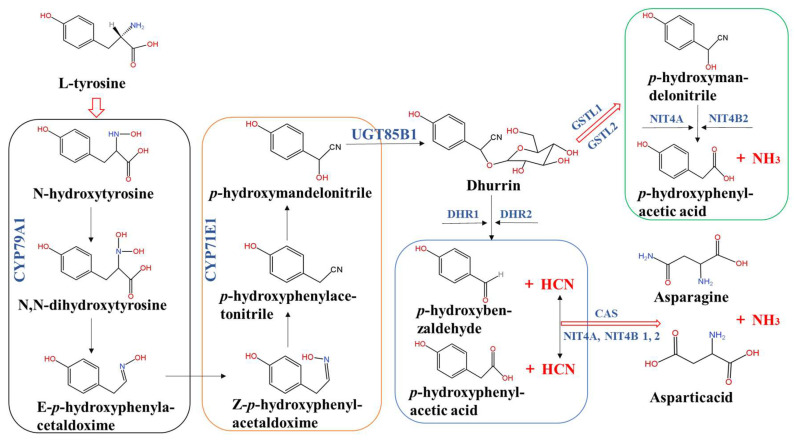
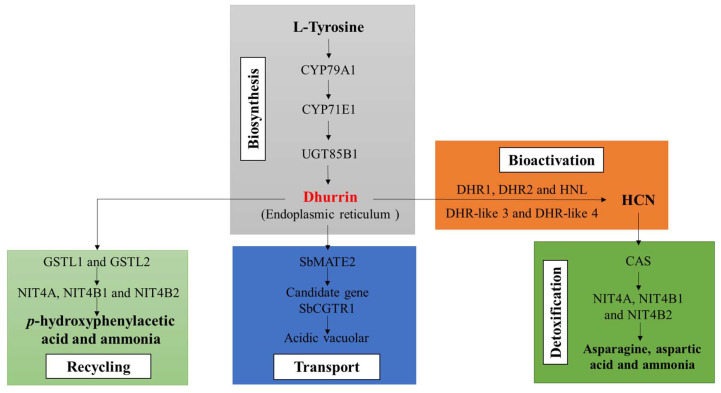
Sorghum () holds a significant position as the fifth most vital cereal crop globally. Its drought resistance and robust biomass production, coupled with commendable nutritional value, make sorghum a promising choice for animal feed. Nevertheless, the utilization of sorghum in animal production faces hurdles of dhurrin (a cyanogenic glycoside) poisoning. While dhurrin serves as a protective secondary metabolite during sorghum growth, the resulting highly toxic hydrogen cyanide poses a significant threat to animal safety. This review extensively examines the biometabolic processes of dhurrin, the pivotal genes involved in the regulation of dhurrin biosynthesis, and the factors influencing dhurrin content in sorghum. It delves into the impact of dhurrin on animal production and explores measures to mitigate its content, aiming to provide insights for advancing research on dhurrin metabolism regulation in sorghum and its rational utilization in animal production.
高粱()作为全球第五重要的谷类作物,占据着重要地位。其抗旱性和强大的生物量生产能力,再加上可观的营养价值,使高粱成为动物饲料的一个有前景的选择。然而,高粱在动物生产中的利用面临着羟基腈苷(一种含氰糖苷)中毒的障碍。虽然羟基腈苷在高粱生长过程中作为一种保护性次生代谢产物,但由此产生的剧毒氰化氢对动物安全构成重大威胁。本综述广泛研究了羟基腈苷的生物代谢过程、参与羟基腈苷生物合成调控的关键基因以及影响高粱中羟基腈苷含量的因素。它深入探讨了羟基腈苷对动物生产的影响,并探索降低其含量的措施,旨在为推进高粱中羟基腈苷代谢调控及其在动物生产中的合理利用研究提供见解。