Tyndall National Institute, Lee Maltings, Dyke Parade, T12 R5CP Cork, Ireland.
School of Engineering, University College Cork, College Road, T12 K8AF Cork, Ireland.
Sensors (Basel). 2024 Aug 20;24(16):5364. doi: 10.3390/s24165364.
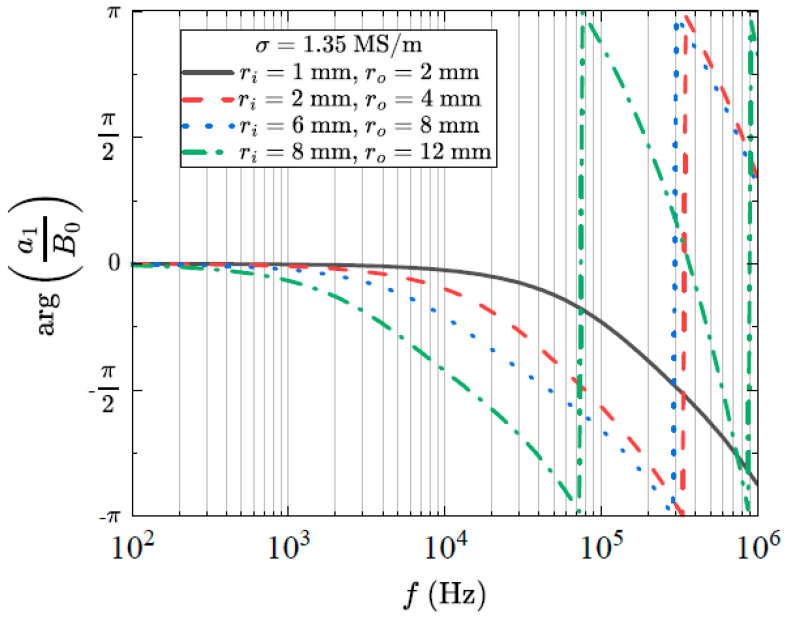
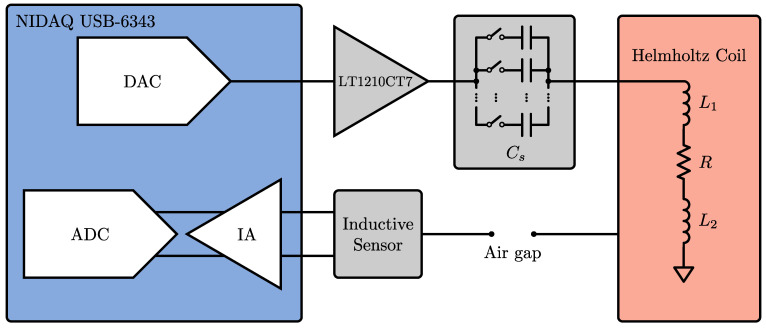
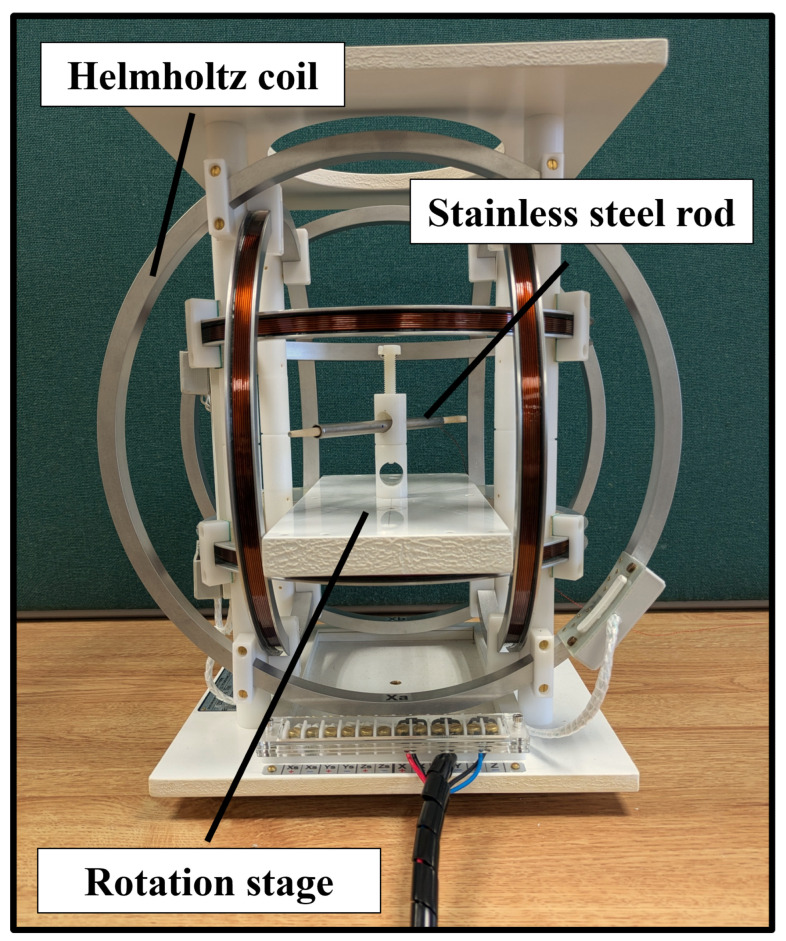
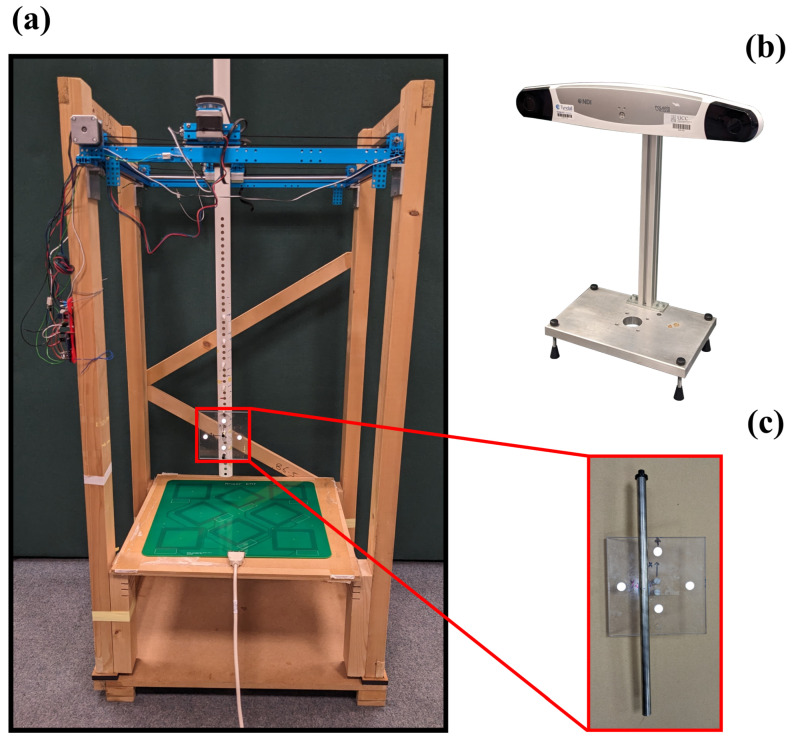
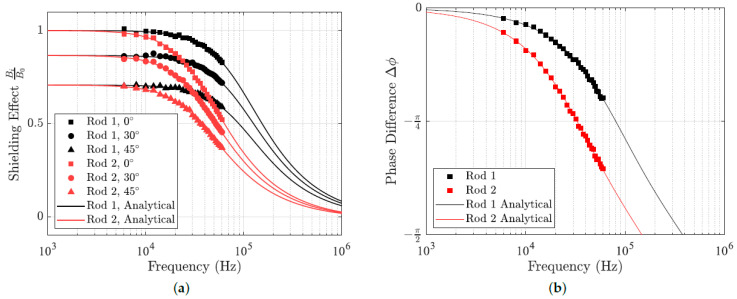
Electromagnetic tracking (EMT) can benefit image-guided interventions in cases where line of sight is unavailable. However, EMT can suffer from electromagnetic distortion in the presence of metal instruments. Metal instruments are widely used in laparoscopic surgery, ENT surgery, arthroscopy and many other clinical applications. In this work, we investigate the feasibility of tracking such metal instruments by placing the inductive sensor within the instrument shaft. We propose a magnetostatic model of the field within the instrument, and verify the results experimentally for frequencies from 6 kHz to 60 kHz. The impact of the instrument's dimensions, conductivity and transmitting field frequency is quantified for ranges representative of typical metal instruments used in image-guided interventions. We then performed tracking using the open-source Anser EMT system and quantify the error caused by the presence of the rod as a function of the frequency of the eight emitting coils for the system. The work clearly demonstrates why smaller tool diameters (less than 8 mm) are less susceptible to distortion, as well as identifying optimal frequencies (1 kHz to 2 kHz) for transmitter design to minimise for distortion in larger instruments.
电磁跟踪(EMT)可以在视线不可用时为图像引导介入提供便利。然而,在存在金属仪器的情况下,EMT 可能会受到电磁干扰。金属仪器广泛应用于腹腔镜手术、耳鼻喉科手术、关节镜手术和许多其他临床应用中。在这项工作中,我们通过将感应传感器放置在仪器轴内来研究跟踪此类金属仪器的可行性。我们提出了仪器内磁场的静磁模型,并针对 6 kHz 至 60 kHz 的频率进行了实验验证。针对典型的用于图像引导介入的金属仪器,量化了仪器尺寸、电导率和发射场频率对范围的影响。然后,我们使用开源的 Anser EMT 系统进行了跟踪,并针对系统的八个发射线圈的频率,量化了杆存在引起的误差。该工作清楚地表明了为什么较小的工具直径(小于 8 毫米)不易受到干扰,以及确定了用于传输器设计的最佳频率(1 kHz 至 2 kHz),以最小化较大仪器中的失真。