
免疫原性细胞死亡(ICD)基因可预测急性髓系白血病(AML)的免疫治疗反应及治疗靶点。
Immunogenic cell death (ICD) genes predict immunotherapy response and therapeutic targets in acute myeloid leukemia (AML).
作者信息
Wen Shuang, Lv Xuefeng, Ma Xiaohan, Deng Shu, Xie Jinming, Yuan Enwu
机构信息
Reproductive Center, The First Affiliated Hospital of Zhengzhou University, Zhengzhou, Henan, China.
Department of Laboratory Medicine, The Third Affiliated Hospital of Zhengzhou University, Zhengzhou, Henan, China.
出版信息
Front Genet. 2024 Aug 14;15:1419819. doi: 10.3389/fgene.2024.1419819. eCollection 2024.
INTRODUCTION
Numerous studies have demonstrated acute myeloid leukemia (AML) is one of the malignancies with high mortality worldwide. Immunogenic cell death (ICD) is a form of cell death that is specialised in that it triggers the body's immune response, particularly the adaptive immune response. Recent evidence has confirmed that pseudogenes are implicated in multiple human tumorigenesis and progression although lacking the function of coding protein. However, the roles of ICD-associated genes in AML remain largely unascertained.
METHODS
TCGA-AML and GSE71014 cohorts were picked out and we combined them into a merged dataset by removing the batch effect using the sva package in the R project. A consensus clustering analysis of the ICD genes in AML was performed to define subgroups. Based on the expression of 15 prognostic-related pseudogenes, we developed a prognostic model and categorized AML samples into low and high-risk groups.
RESULTS
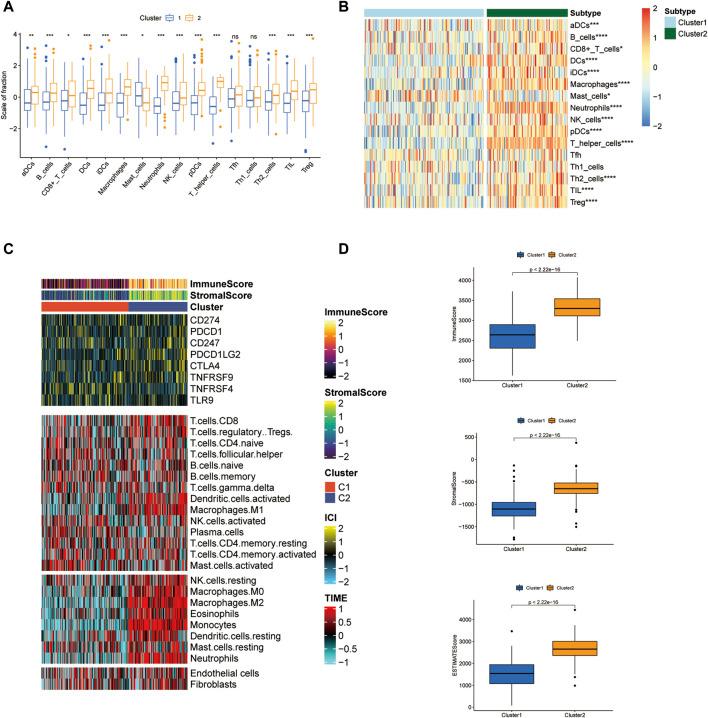
AML was differentiated into two subgroups (C1 and C2 clusters). Most ICD-related genes were significantly up-regulated in the C2 cluster. The single sample gene set enrichment analysis (ssGSEA) revealed that the immune cell infiltration and immune checkpoint gene expression of the C2 cluster was strongly high, suggesting that the C2 population responded well to immune checkpoint blockade (ICB) therapy and had better survival. The C1 group was sensitive to chemotherapy, including Cytarabine, Midostaurin, and Doxorubicin. On the other hand, 15 ICD-related pseudogenes were identified to be associated with AML prognosis. The receiver operator curve (ROC) analysis and nomogram manifested that our prognostic model had high accuracy in predicting survival. However, the high-risk group was sensitive to ICB therapy and chemotherapy such as Methotrexate, Cytarabine, and Axitinib while the low-risk group benefited from 5-Fluorouracil, Talazoparib, and Navitoclax therapy.
DISCUSSION
In summary, we defined two subgroups relying on 33 ICD-related genes and this classification exerted a decisive role in assessing immunotherapy and chemotherapy benefit. Significantly, a prognostic signature identified by critical ICD-related pseudogene was created. The pseudogene prognostic signature had a powerful performance in predicting prognosis and therapeutic efficacy, including immunotherapy and chemotherapy to AML. Our research points out novel implications of ICD in cancer prognosis and treatment approach choice.
引言
众多研究表明,急性髓系白血病(AML)是全球死亡率较高的恶性肿瘤之一。免疫原性细胞死亡(ICD)是一种特殊的细胞死亡形式,它能触发机体的免疫反应,尤其是适应性免疫反应。最近有证据证实,假基因虽缺乏编码蛋白质的功能,但与多种人类肿瘤的发生和进展有关。然而,ICD相关基因在AML中的作用仍 largely未确定。
方法
挑选出TCGA-AML和GSE71014队列,并使用R项目中的sva包去除批次效应,将它们合并为一个合并数据集。对AML中的ICD基因进行共识聚类分析以定义亚组。基于15个预后相关假基因的表达,我们构建了一个预后模型,并将AML样本分为低风险和高风险组。
结果
AML被分为两个亚组(C1和C2簇)。大多数ICD相关基因在C2簇中显著上调。单样本基因集富集分析(ssGSEA)显示,C2簇的免疫细胞浸润和免疫检查点基因表达强烈升高,表明C2群体对免疫检查点阻断(ICB)治疗反应良好且生存期较好。C1组对化疗敏感,包括阿糖胞苷、米哚妥林和多柔比星。另一方面,15个ICD相关假基因被确定与AML预后相关。受试者工作特征曲线(ROC)分析和列线图表明,我们的预后模型在预测生存方面具有较高的准确性。然而,高风险组对ICB治疗和化疗如甲氨蝶呤、阿糖胞苷和阿昔替尼敏感,而低风险组则受益于5-氟尿嘧啶、他拉唑帕尼和维托克拉治疗。
讨论
总之,我们基于33个ICD相关基因定义了两个亚组,这种分类在评估免疫治疗和化疗获益方面发挥了决定性作用。重要的是,创建了一个由关键ICD相关假基因确定的预后特征。该假基因预后特征在预测AML的预后和治疗疗效(包括免疫治疗和化疗)方面具有强大的性能。我们的研究指出了ICD在癌症预后和治疗方法选择方面的新意义。




 Zotero 插件