Cancer Immunotherapy Unit (UNICA), Department of Immunology, Hospital Universitario 12 de Octubre, Madrid, Spain.
Immuno-Oncology and Immunotherapy Group, Instituto de Investigación Sanitaria 12 de Octubre (imas12), Madrid, Spain.
Oncoimmunology. 2024 Aug 27;13(1):2392897. doi: 10.1080/2162402X.2024.2392897. eCollection 2024.
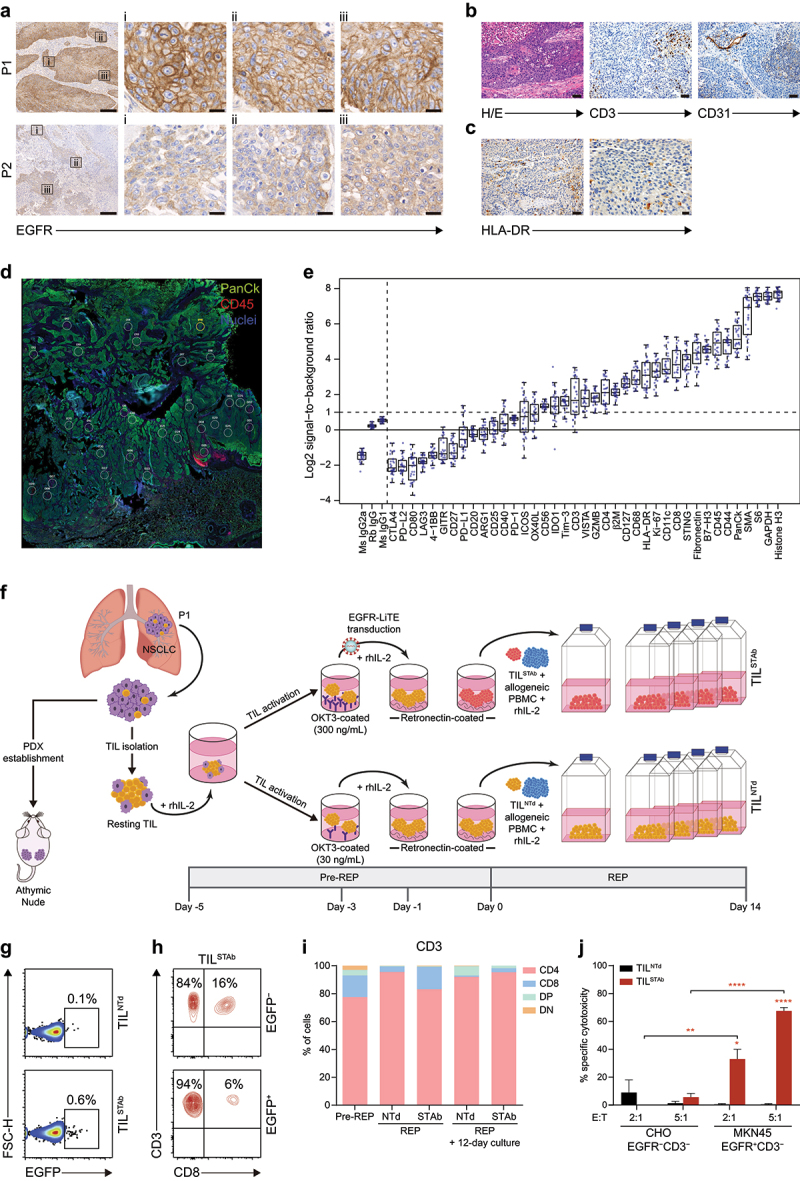
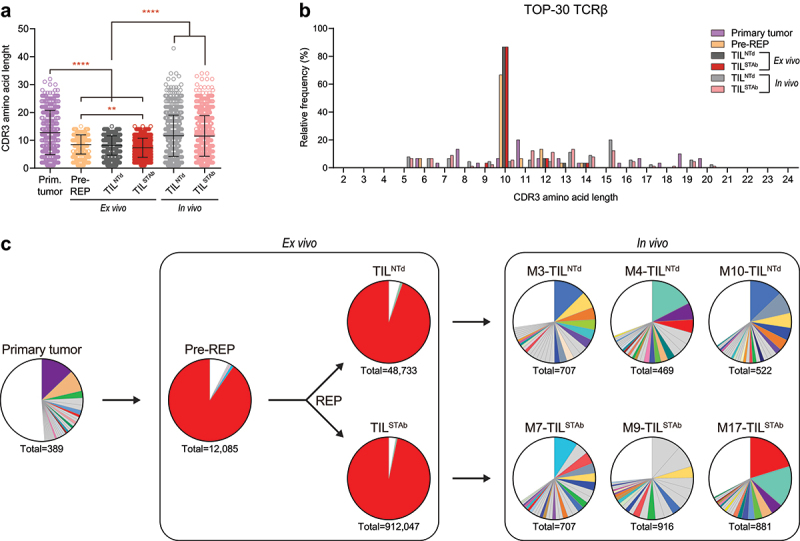
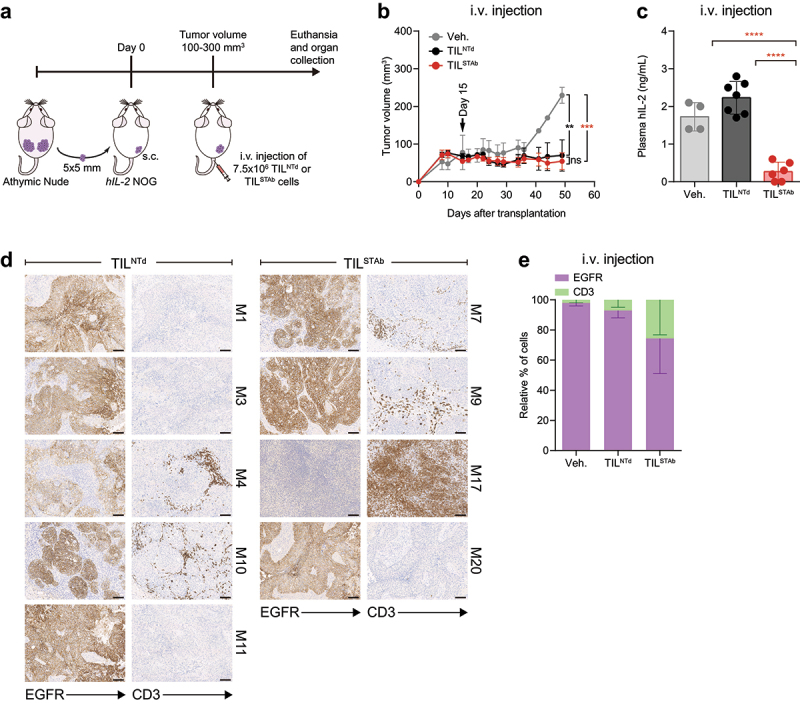
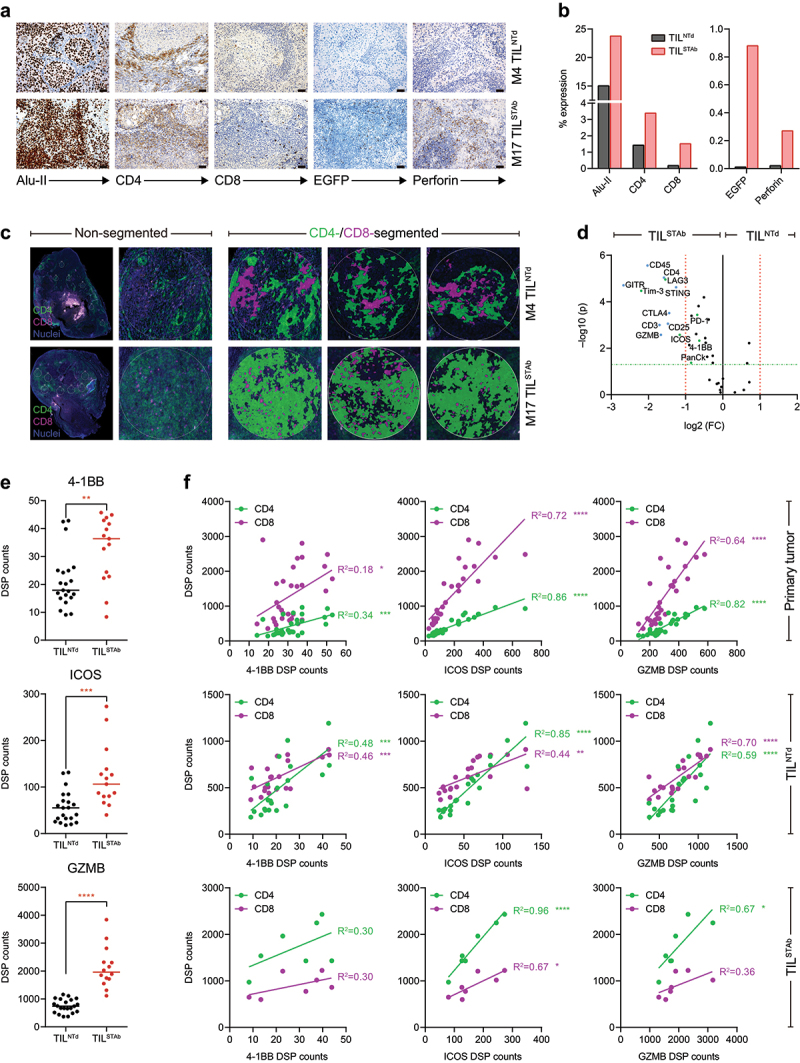
Adoptive transfer of tumor-infiltrating lymphocytes (TIL) has shown remarkable results in melanoma, but only modest clinical benefits in other cancers, even after TIL have been genetically modified to improve their tumor homing, cytotoxic potential or overcome cell exhaustion. The required TIL expansion process may induce changes in the T cell clonal composition, which could likely compromise the tumor reactivity of TIL preparations and ultimately the success of TIL therapy. A promising approach based on the production of bispecific T cell-engagers (TCE) by engineered T cells (STAb-T therapy) improves the efficacy of current T cell redirection strategies against tumor-associated antigens in hematological tumors. We studied the TCRβ repertoire in non-small cell lung cancer (NSCLC) tumors and in expanded TIL from two unrelated patients. We generated TIL secreting anti-epidermal growth factor receptor (EGFR) × anti-CD3 TCE (TIL) and tested their antitumor efficacy and using a NSCLC patient-derived xenograft (PDX) model in which tumor fragments and TIL from the same patient were transplanted into NOG mice. We confirmed that the standard TIL expansion protocol promotes the loss of tumor-dominant T cell clones and the overgrowth of virus-reactive TCR clonotypes that were marginally detectable in primary tumors. We demonstrated the antitumor activity of TIL both and when administered intratumorally and systemically in an autologous immune-humanized PDX EGFR NSCLC mouse model, where tumor regression was mediated by TCE-redirected CD4 TIL bearing non-tumor dominant clonotypes.
肿瘤浸润淋巴细胞(TIL)的过继转移在黑色素瘤中显示出显著的效果,但在其他癌症中,即使 TIL 经过基因修饰以提高其肿瘤归巢、细胞毒性潜力或克服细胞衰竭,也只有适度的临床获益。所需的 TIL 扩增过程可能会导致 T 细胞克隆组成发生变化,这可能会损害 TIL 制剂的肿瘤反应性,并最终影响 TIL 治疗的成功。一种基于工程化 T 细胞(STAb-T 治疗)产生双特异性 T 细胞衔接器(TCE)的有前途的方法,提高了针对血液肿瘤中肿瘤相关抗原的当前 T 细胞重定向策略的疗效。我们研究了非小细胞肺癌(NSCLC)肿瘤中的 TCRβ 库,以及来自两个无关患者的扩增的 TIL。我们生成了分泌抗表皮生长因子受体(EGFR)×抗-CD3 TCE(TIL)的 TIL,并使用 NSCLC 患者来源的异种移植(PDX)模型测试了它们的抗肿瘤功效,其中来自同一患者的肿瘤碎片和 TIL 被移植到 NOG 小鼠中。我们证实,标准的 TIL 扩增方案促进了肿瘤优势 T 细胞克隆的丢失和病毒反应性 TCR 克隆型的过度生长,这些克隆型在原发性肿瘤中仅略有检测到。我们证明了 TIL 的抗肿瘤活性,无论是在同种免疫 PDX EGFR NSCLC 小鼠模型中进行瘤内和系统给药,肿瘤的消退都是由携带非肿瘤优势克隆型的 TCE 重定向 CD4 TIL 介导的。