Lisiecka Maria Zofia
Department of Allergology, National Medical Institute of the Ministry of the Interior and Administration, Warsaw, Poland.
Eur J Microbiol Immunol (Bp). 2024 Aug 29;14(3):219-227. doi: 10.1556/1886.2024.00076. Print 2024 Sep 11.
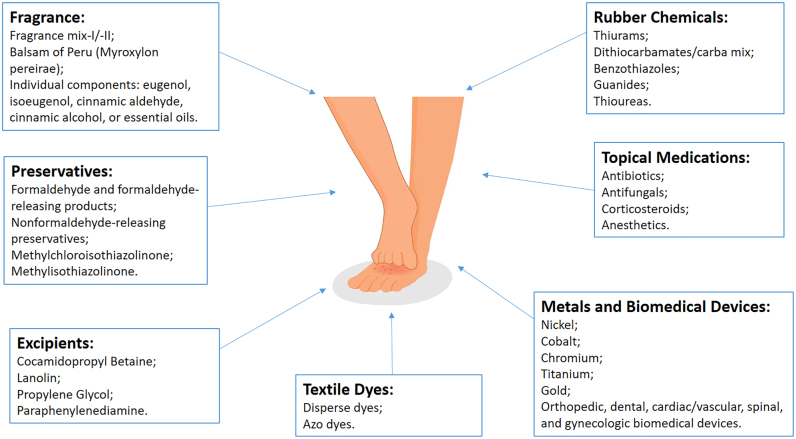
Allergic contact dermatitis of the feet is a significant problem that affects the quality of life and requires attention from the medical community due to the number of studied and still unidentified allergens. The purpose of this review article is to summarize the available scientific data regarding the most common allergens that cause ACD of the feet.
Nickel sulphate, neomycin sulphate, thiuram mix and colophony occupy a significant place in the prevalence of allergies. The prevalence of sensitization to rubber and leather products can vary depending on the ethno-demographic characteristics of the country, as well as the specifics of a person's professional activity, such as the use of protective waterproof shoes, increased humidity of the microclimate, and atopy in anamnesis.
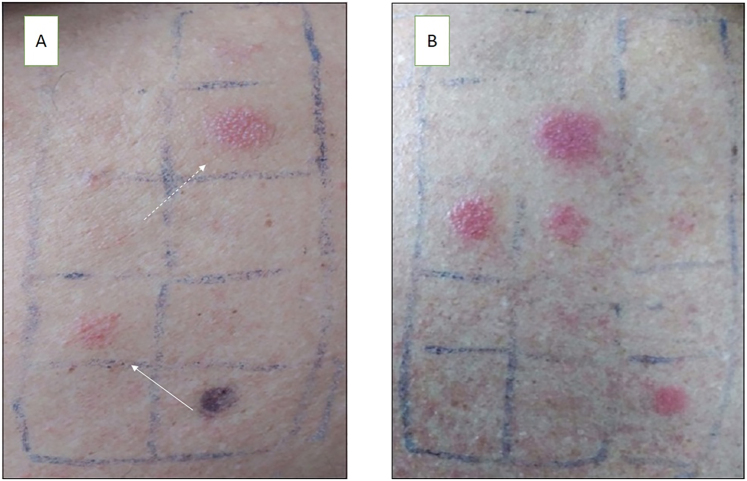
Patch testing has been shown to be an important method for identifying allergens, however, not all footwear components are tested during patch testing with standard allergen series, requiring the use of patches made from patient shoe samples.
Expanding the scope of patch testing to include other possible allergens is important for the accurate diagnosis of ACD of the feet and a more detailed study of those allergens that were previously considered rare.
足部过敏性接触性皮炎是一个严重问题,会影响生活质量,且由于众多已研究但仍未明确的变应原,需要医学界予以关注。这篇综述文章的目的是总结关于导致足部过敏性接触性皮炎的最常见变应原的现有科学数据。
硫酸镍、硫酸新霉素、秋兰姆混合物和松香在过敏患病率中占据重要地位。对橡胶和皮革制品致敏的患病率可能因国家的民族人口特征以及个人职业活动的具体情况而有所不同,例如使用防护防水鞋、微气候湿度增加以及既往有特应性病史。
斑贴试验已被证明是识别变应原的重要方法,然而,在使用标准变应原系列进行斑贴试验时,并非所有鞋类部件都会被检测,这就需要使用由患者鞋样制成的贴片。
扩大斑贴试验范围以纳入其他可能的变应原,对于准确诊断足部过敏性接触性皮炎以及更详细地研究那些以前被认为罕见的变应原非常重要。