Department of Medical Oncology, Trinity St James' Cancer Institute, Dublin, Ireland
Department of Medical Oncology, Trinity St James' Cancer Institute, Dublin, Ireland.
J Immunother Cancer. 2024 Aug 28;12(8):e009258. doi: 10.1136/jitc-2024-009258.
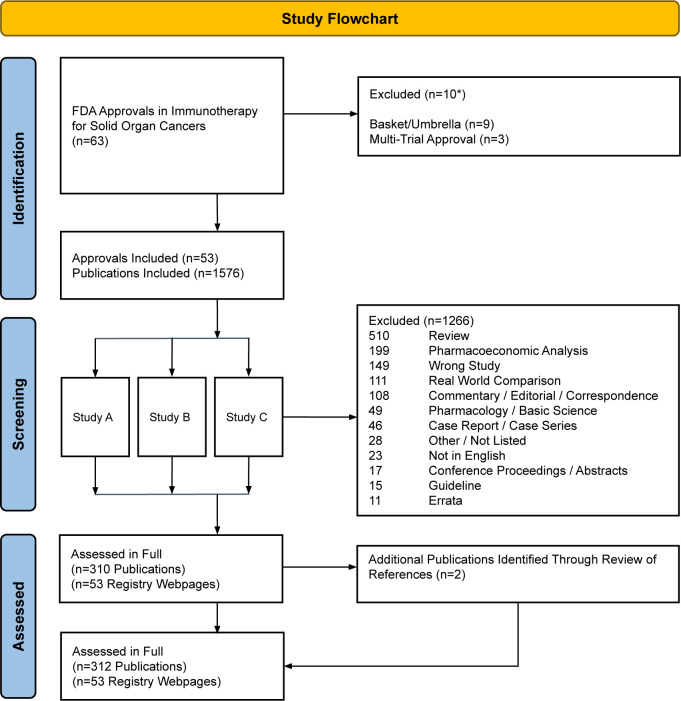
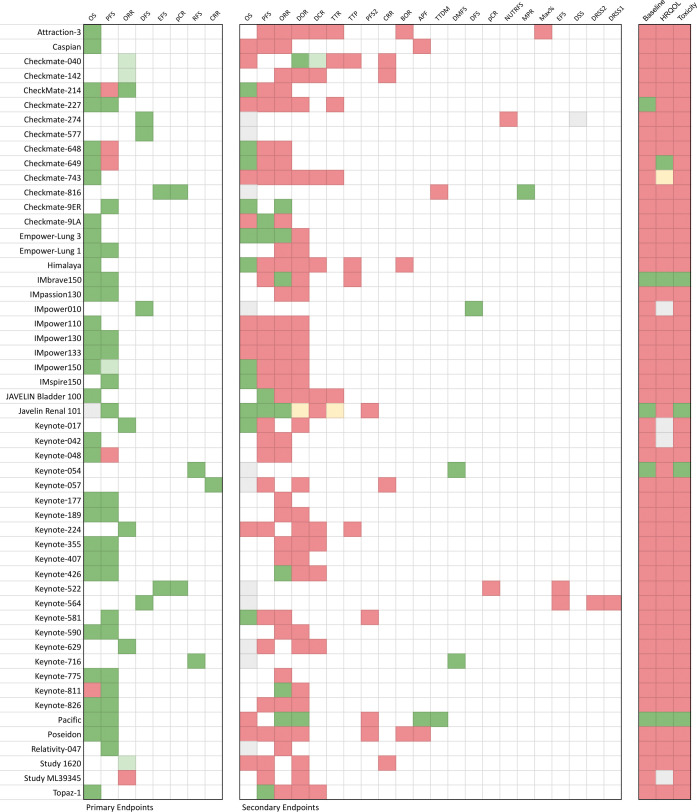
Immune checkpoint inhibitors (ICI) have transformed the management of cancer, particularly for older adults, who constitute a majority of the global cancer patient population. This study aimed to assess the inclusion, characteristics, and reporting of older adults enrolled in Food and Drug Administration (FDA) registration clinical trials of ICI between 2018 and 2022. Clinical trials of ICI leading to an FDA approval in solid tumor oncology between 2018 and 2022 were included. Primary study reports and all available secondary publications were assessed. The availability and completeness of older subgroup data for protocol-defined clinical efficacy endpoints, health-related quality of life (HRQOL) and toxicity outcomes, and baseline characteristics were assessed according to predefined criteria which categorized reporting completeness hierarchically in relation to the availability of published data, including effect size, sample size, and measures of precision. 53 registration trials were included, involving a total of 37,094 participants. Most trials (64.2%) were of ICI combination therapy. 42.3% of patients were aged≥65 years; 11.1% were aged≥75. No trials specified an upper age limit for eligibility. 98.1% of trials excluded patients with European Cooperative Oncology Group performance status>1. 87.2% of primary efficacy endpoints and 17.9% of secondary efficacy endpoints were reported completely for older adults. Five studies (9.4%) reported baseline characteristics, three (6.1%) reported HRQOL assessments, and four (7.5%) reported toxicity outcomes completely among older subgroups. No trials conducted baseline geriatric assessments or reported geriatric-specific symptoms or quality of life scales. This analysis highlights significant deficits in the enrollment and reporting of older subgroups in pivotal trials of ICI therapy. The findings highlight an urgent need for improved reporting and inclusion standards in clinical trials of ICI to better inform treatment decisions for older adults.
免疫检查点抑制剂(ICI)改变了癌症的治疗方式,尤其对老年人影响重大,他们在全球癌症患者中占大多数。本研究旨在评估 2018 年至 2022 年期间,食品和药物管理局(FDA)注册临床试验中入组的老年患者的纳入、特征和报告情况。纳入 2018 年至 2022 年期间,在实体瘤肿瘤学方面导致 FDA 批准的 ICI 临床试验。评估了主要研究报告和所有可用的二次出版物。根据预先确定的标准,评估了协议定义的临床疗效终点、健康相关生活质量(HRQOL)和毒性结局以及基线特征的老年亚组数据的可用性和完整性,这些标准根据发布数据的可用性,按报告完整性的层次分类,包括效应大小、样本量和精度度量。共纳入 53 项注册试验,共涉及 37094 名参与者。大多数试验(64.2%)为 ICI 联合治疗。42.3%的患者年龄≥65 岁;11.1%的患者年龄≥75 岁。没有试验规定资格的最高年龄限制。98.1%的试验排除了欧洲癌症研究和治疗组织(ECOG)体能状态>1 的患者。87.2%的主要疗效终点和 17.9%的次要疗效终点完全报告了老年患者的数据。仅有 5 项研究(9.4%)报告了基线特征,3 项研究(6.1%)报告了 HRQOL 评估,4 项研究(7.5%)完全报告了老年亚组的毒性结局。没有试验进行基线老年评估,也没有报告老年特有的症状或生活质量量表。本分析强调了在 ICI 治疗的关键试验中,老年亚组的入组和报告存在显著缺陷。研究结果强调迫切需要改善 ICI 临床试验的报告和纳入标准,以更好地为老年人的治疗决策提供信息。