Jia Jiangwei, Liu Bo, Wang Xin, Ji Fenglan, Wen Fuchun, Xu Huibo, Ding Tao
Pharmacodynamic and Toxicological Evaluation Center, Jilin Academy of Chinese Medicine Sciences, Changchun, China.
Front Microbiol. 2024 Aug 16;15:1453436. doi: 10.3389/fmicb.2024.1453436. eCollection 2024.
Diabetic retinopathy (DR) is one of the common chronic complications of diabetes mellitus, which has developed into the leading cause of irreversible visual impairment in adults worldwide. Compound Qilian tablets (CQLT) is a traditional Chinese medicine (TCM) developed for treating DR, but its mechanism is still unclear. This study explored the mechanism of action of CQLT in treating DR through metabolomics and intestinal microbiota.
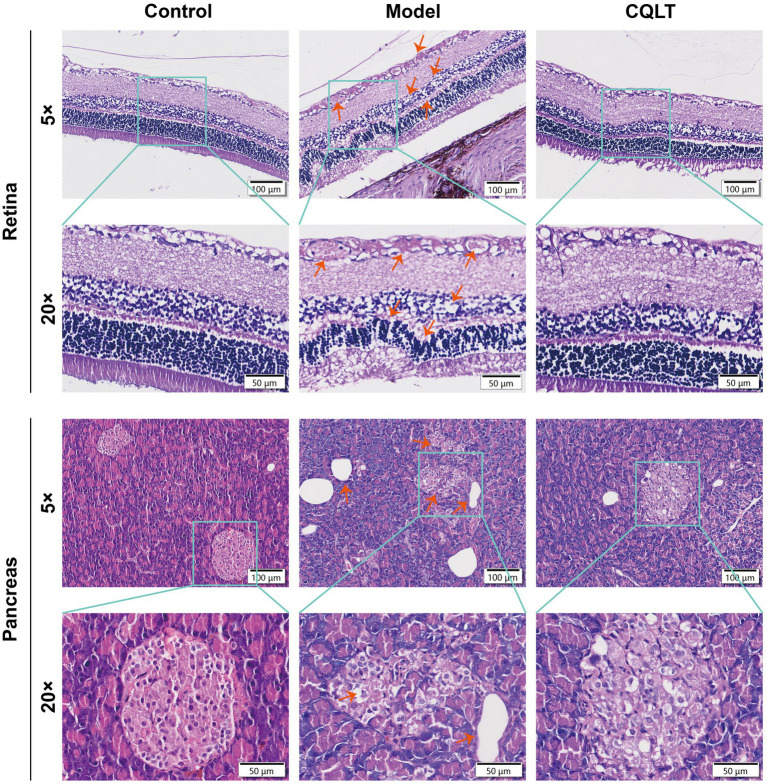
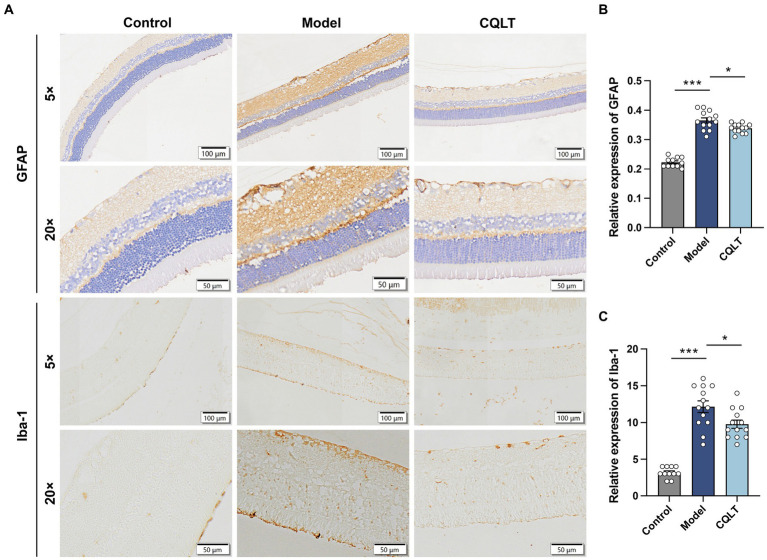
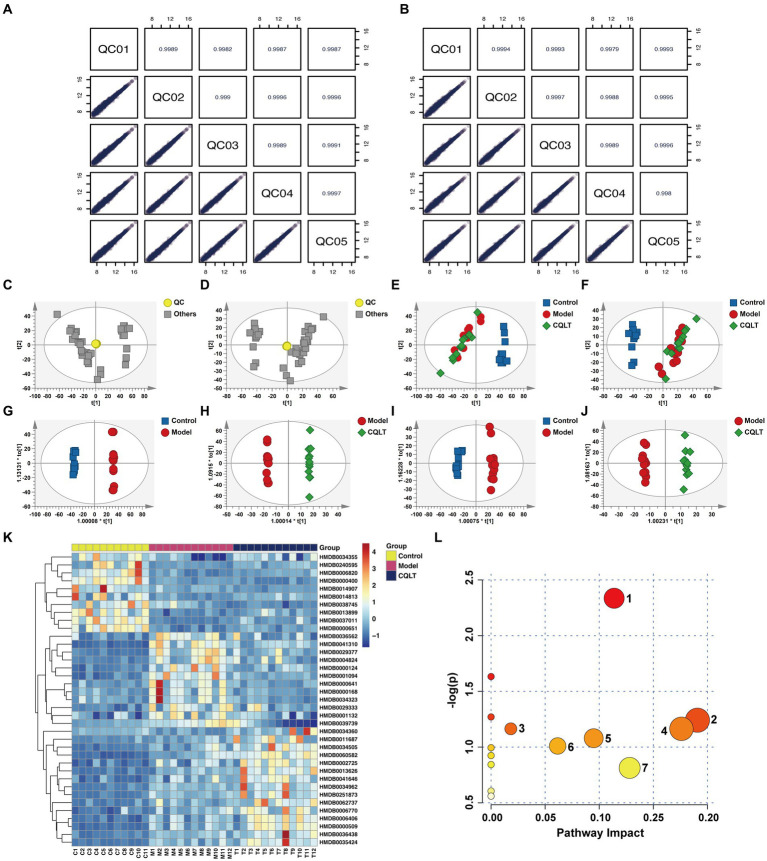
Histopathologic examination of the pancreas and retina of Zucker diabetic fatty (ZDF) rats and immunohistochemistry were used to determine the expression levels of retinal nerve damage indicators ionized calcium binding adaptor molecule-1 (Iba-1) and glial fibrillary acidic protein (GFAP). Rat fecal samples were tested by LC-MS metabolomics to search for potential biomarkers and metabolic pathways for CQLT treatment of DR. Characteristic nucleic acid sequences of rat intestinal microbiota from each group were revealed using 16S rDNA technology to explore key microbes and related pathways for CQLT treatment of DR. At the same time, we investigated the effect of CQLT on the gluconeogenic pathway.
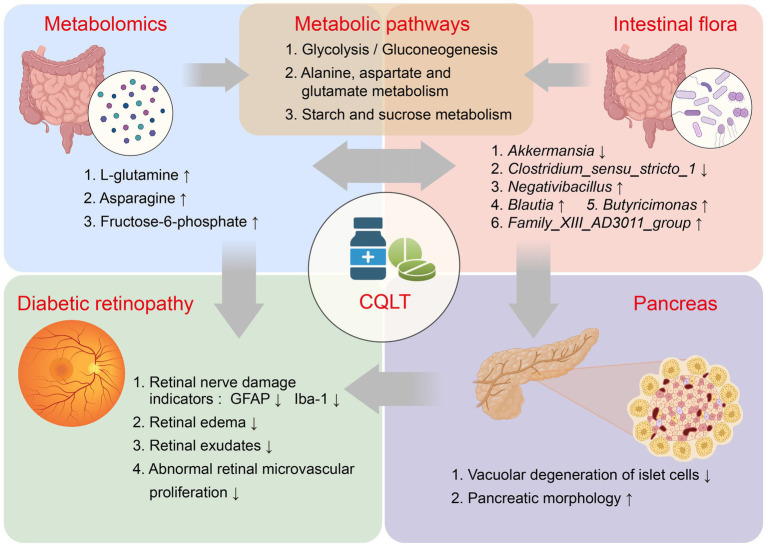
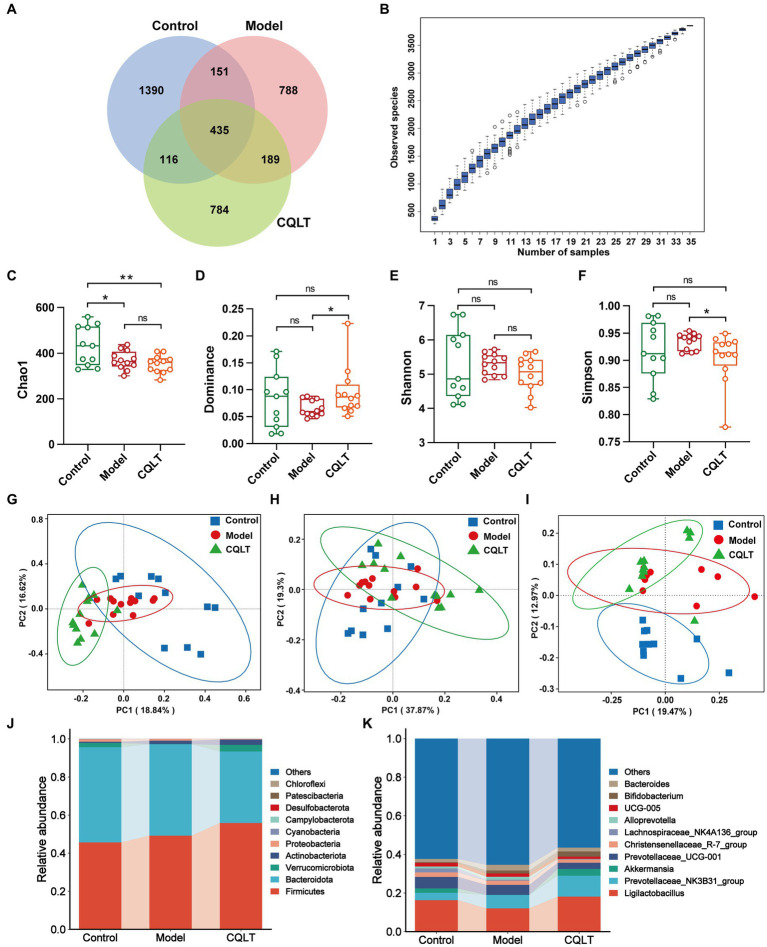
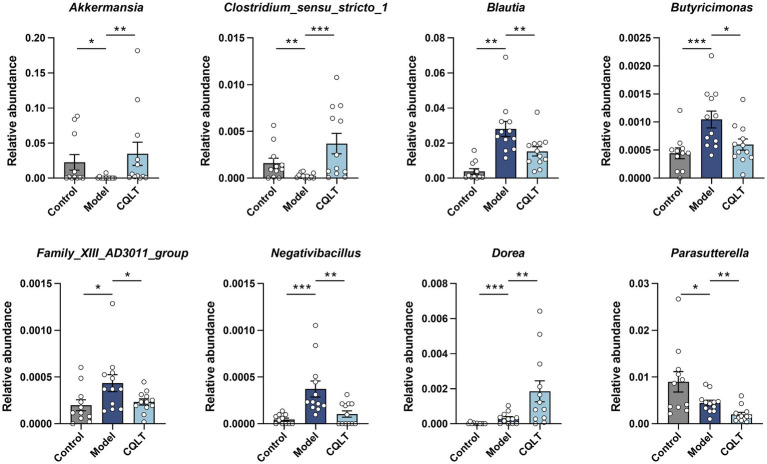
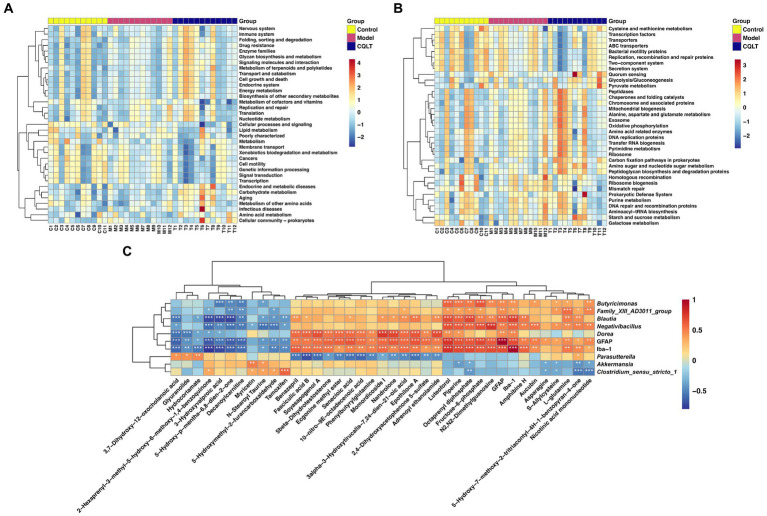
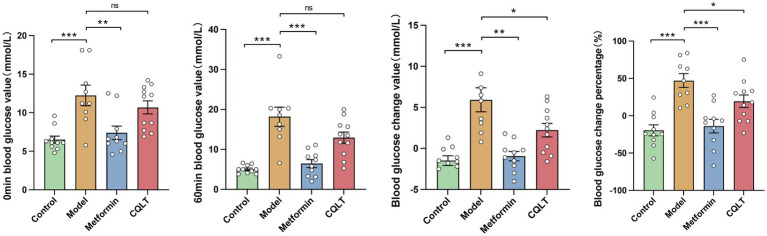
After CQLT intervention, islet cell status was improved, Iba-1 and GFAP expression were significantly decreased, and abnormal retinal microvascular proliferation and exudation were ameliorated. Metabolomics results showed that CQLT reversed 20 differential metabolites that were abnormally altered in DR rats. Intestinal microbiota analysis showed that treatment with CQLT improved the abundance and diversity of intestinal flora. Functional annotation of metabolites and intestinal flora revealed that glycolysis/gluconeogenesis, alanine, aspartate and glutamate metabolism, starch and sucrose metabolism were the main pathways for CQLT in treating DR. According to the results of correlation analysis, there were significant correlations between Iba-1, GFAP, and intestinal microbiota and metabolites affected by CQLT. In addition, we found that CQLT effectively inhibited the gluconeogenesis process in diabetic mice.
In conclusion, CQLT could potentially reshape intestinal microbiota composition and regulate metabolite profiles to protect retinal morphology and function, thereby ameliorating the progression of DR.
糖尿病视网膜病变(DR)是糖尿病常见的慢性并发症之一,已成为全球成年人不可逆视力损害的主要原因。复方芪连片(CQLT)是一种用于治疗DR的中药,但其作用机制尚不清楚。本研究通过代谢组学和肠道微生物群探讨CQLT治疗DR的作用机制。
采用Zucker糖尿病脂肪(ZDF)大鼠胰腺和视网膜组织病理学检查及免疫组化法检测视网膜神经损伤指标离子钙结合衔接分子1(Iba-1)和胶质纤维酸性蛋白(GFAP)的表达水平。采用液相色谱-质谱联用(LC-MS)代谢组学技术检测大鼠粪便样本,寻找CQLT治疗DR的潜在生物标志物和代谢途径。利用16S rDNA技术揭示各组大鼠肠道微生物群的特征核酸序列,探索CQLT治疗DR的关键微生物和相关途径。同时,研究CQLT对糖异生途径的影响。
CQLT干预后,胰岛细胞状态改善,Iba-1和GFAP表达显著降低,视网膜微血管异常增殖和渗出得到改善。代谢组学结果显示,CQLT逆转了DR大鼠20种异常改变的差异代谢物。肠道微生物群分析表明,CQLT治疗可改善肠道菌群的丰度和多样性。代谢物和肠道菌群的功能注释显示,糖酵解/糖异生、丙氨酸、天冬氨酸和谷氨酸代谢、淀粉和蔗糖代谢是CQLT治疗DR的主要途径。根据相关性分析结果,Iba-1、GFAP与CQLT影响的肠道微生物群和代谢物之间存在显著相关性。此外,我们发现CQLT有效抑制了糖尿病小鼠的糖异生过程。
总之,CQLT可能重塑肠道微生物群组成并调节代谢物谱,以保护视网膜形态和功能,从而改善DR的进展。