
电针改善大鼠早泄相关的脑活动异常。
Altered brain activity associated with premature ejaculation improved by electroacupuncture in rats.
作者信息
Wu Ning, Chen Jian-Huai, Wang Tong, Yang Bai-Bing, Xing Si-Yan, Gao Song-Zhan, Ni Da-Wei, Du Guang-Jun, Song Tao, Han You-Feng, Sun Guo-Hai, Gao Qing-Qiang, Xu Chun-Lu, Dai Yu-Tian
机构信息
Department of Andrology, Nanjing Drum Tower Hospital Clinical College of Nanjing University of Chinese Medicine, Nanjing 210008, China.
Department of Urology, The People's Hospital of Jiaozuo, No. 263 Jiefang Middle Road, Jiaozuo 454002, China.
出版信息
Sex Med. 2024 Aug 31;12(4):qfae047. doi: 10.1093/sexmed/qfae047. eCollection 2024 Aug.
BACKGROUND
Premature ejaculation (PE) is linked with abnormal brain activity that is modifiable by electroacupuncture (EA).
AIM
In this study we aimed to explore the central pathological mechanism underlying EA in treating PE.
METHODS
Six-week-old male Sprague-Dawley rats were divided into a PE group (n = 8) and a control group (n = 8) according to ejaculatory frequency during copulatory behavior. All rats underwent EA at the Zusanli acupoint (ST-36) for 4 weeks. Magnetic resonance imaging data were collected before and after EA.
OUTCOMES
The behavioral parameters, plasma norepinephrine levels, fractional amplitude of low frequency fluctuation (fALFF), and regional homogeneity (ReHo) were evaluated.
RESULTS
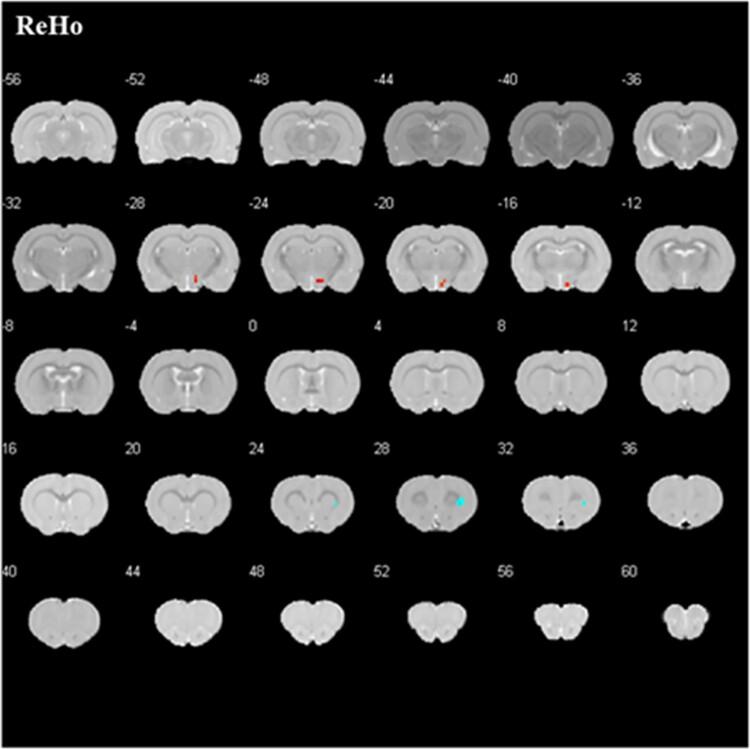
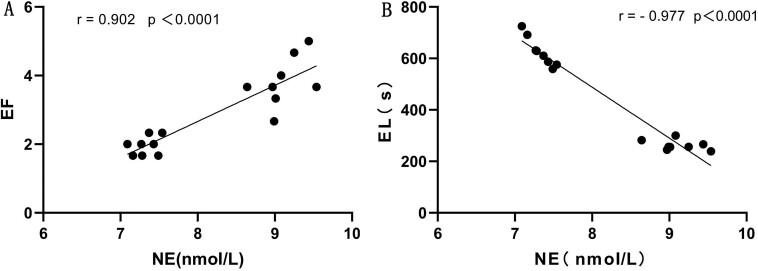
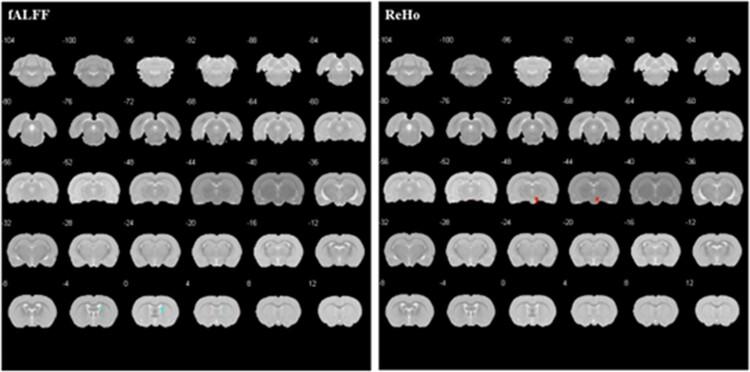
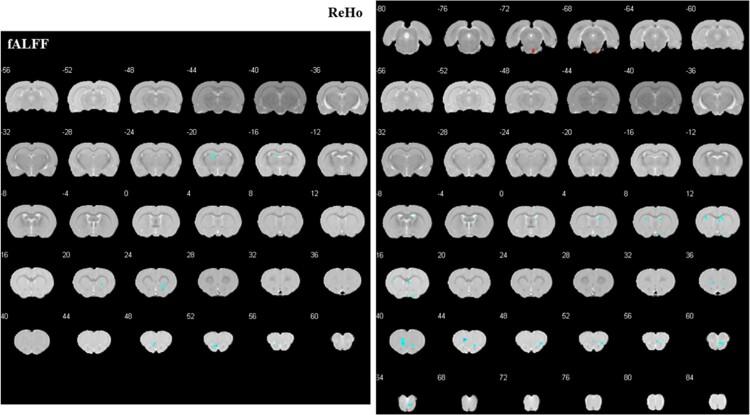
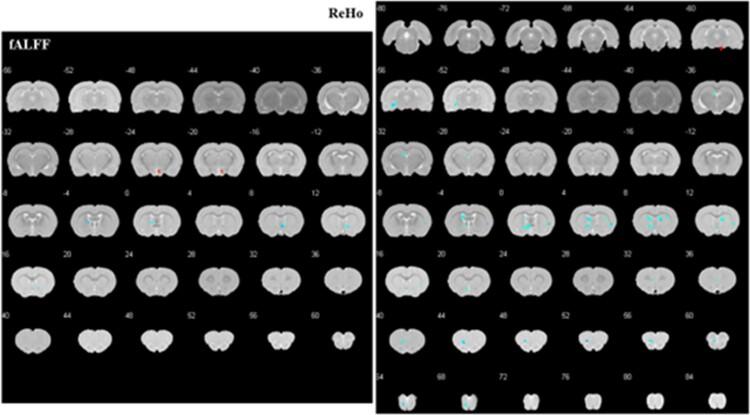
The PE group ejaculated more times with shorter latency compared with controls. After EA, the ejaculation frequency of the PE group decreased, and the ejaculation latency period increased, with no changes observed in the control group. Norepinephrine levels were higher in the PE group than in the controls and were positively correlated with ejaculation frequency and negatively correlated with ejaculation latency. The PE group showed lower fALFF in the right striatum and higher ReHo in the brainstem compared with controls. After EA, controls showed decreased fALFF in the right striatum, left olfactory bulb, and dorsal fornix and increased ReHo in the right interpeduncular nucleus, as well as decreased ReHo in the left striatum, prelimbic system, right basal forebrain region, septal region, and olfactory bulb, while the model group exhibited increased fALFF in the right hypothalamic region, decreased fALFF in the left globus pallidum and right basal forebrain region and increased ReHo in the right interpeduncular nucleus, as well as decreased ReHo in the left striatum, olfactory bulb, basal forebrain region, dentate gyrus, right dysgranular insular cortex, and striatum. Compared with the controls after EA, the model group showed increased ReHo of the right hypothalamic region and decreased ReHo of the right dysgranular insular cortex.
CLINICAL IMPLICATIONS
These findings might enhance the understanding of PE and contribute to new, targeted therapies for PE.
STRENGTHS AND LIMITATIONS
The therapeutic effects might be achieved by EA inhibiting the activity in brain regions involved in ejaculatory behavior. However, the curative effect of acupuncture might be underestimated due to some curative effects of sham acupuncture used in the control group.
CONCLUSION
In conclusion, the ejaculatory frequency of rats may be reduced and ejaculation latency could be extended by EA at ST-36, which might be achieved by the effects of this treatment on brain activity.
背景
早泄(PE)与可通过电针(EA)调节的大脑异常活动有关。
目的
在本研究中,我们旨在探讨电针治疗早泄的中枢病理机制。
方法
根据交配行为中的射精频率,将6周龄雄性Sprague-Dawley大鼠分为早泄组(n = 8)和对照组(n = 8)。所有大鼠在足三里穴(ST-36)接受电针治疗4周。在电针治疗前后收集磁共振成像数据。
结果
评估行为参数、血浆去甲肾上腺素水平、低频波动分数振幅(fALFF)和局部一致性(ReHo)。
结果
与对照组相比,早泄组射精次数更多,潜伏期更短。电针治疗后,早泄组射精频率降低,射精潜伏期延长,而对照组未观察到变化。早泄组去甲肾上腺素水平高于对照组,且与射精频率呈正相关,与射精潜伏期呈负相关。与对照组相比,早泄组右侧纹状体的fALFF较低,脑干的ReHo较高。电针治疗后,对照组右侧纹状体、左侧嗅球和背侧穹窿的fALFF降低,右侧脚间核的ReHo增加,左侧纹状体、前额叶系统、右侧基底前脑区、隔区和嗅球的ReHo降低,而模型组右侧下丘脑区域的fALFF增加,左侧苍白球和右侧基底前脑区的fALFF降低,右侧脚间核的ReHo增加,左侧纹状体、嗅球基底前脑区、齿状回、右侧颗粒下岛叶皮质和纹状体的ReHo降低。与电针治疗后的对照组相比,模型组右侧下丘脑区域的ReHo增加,右侧颗粒下岛叶皮质的ReHo降低。
临床意义
这些发现可能会增进对早泄的理解,并有助于开发新的、有针对性的早泄治疗方法。
优点和局限性
电针可能通过抑制参与射精行为的脑区活动来实现治疗效果。然而,由于对照组使用的假针刺有一定疗效,针刺的治疗效果可能被低估。
结论
总之,电针刺激ST-36可降低大鼠射精频率,延长射精潜伏期,这可能是通过该治疗对大脑活动的影响来实现的。
 Zotero 插件