Inami Kasumi, Tsutsumi Satoshi, Asagiri Hana, Yamataka Motoki, Sugiyama Natsuki, Ueno Hideaki, Ishii Hisato
Department of Neurological Surgery, Juntendo University Urayasu Hospital, Urayasu, Chiba, Japan.
Radiol Case Rep. 2024 Aug 7;19(10):4610-4613. doi: 10.1016/j.radcr.2024.07.081. eCollection 2024 Oct.
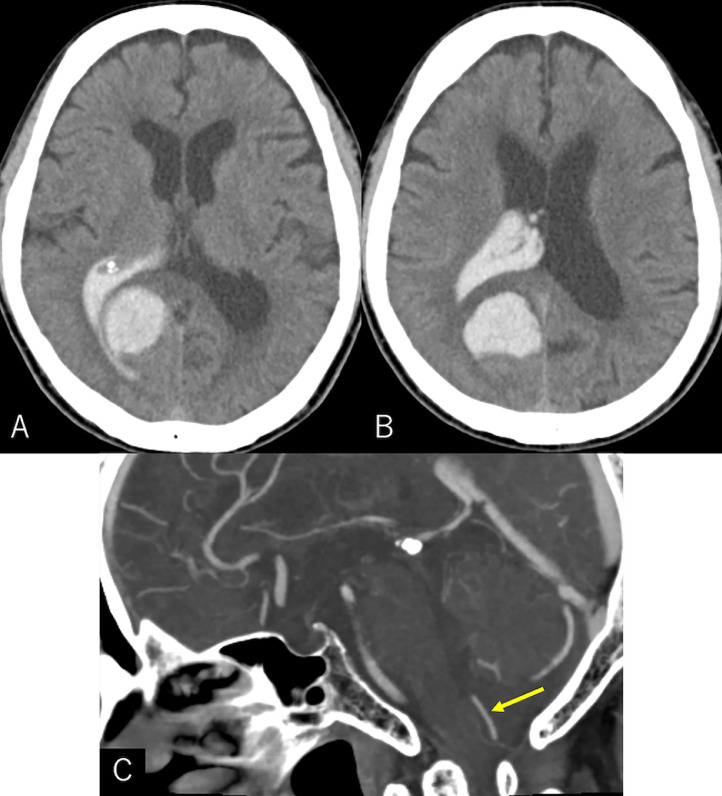
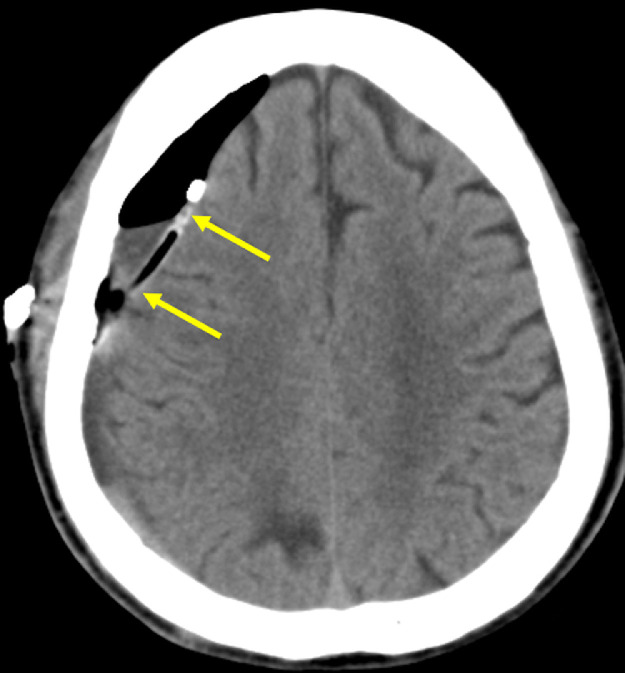
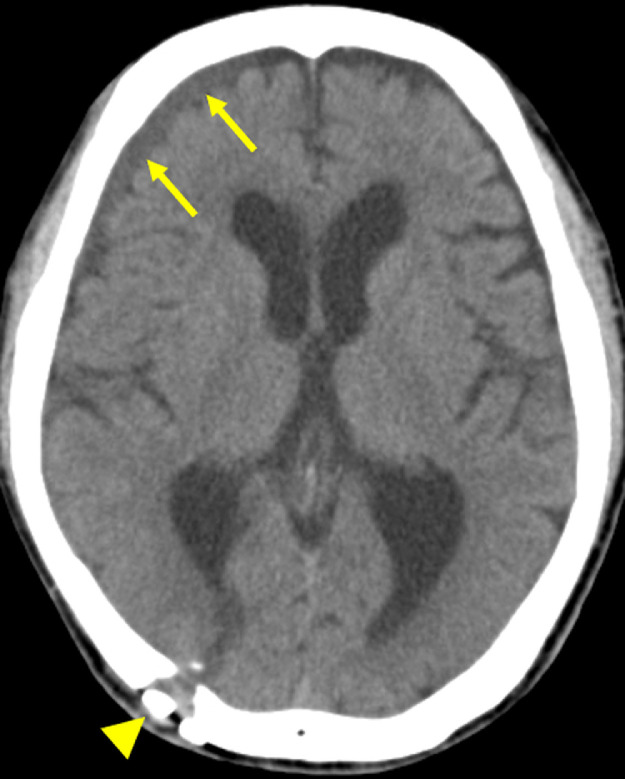
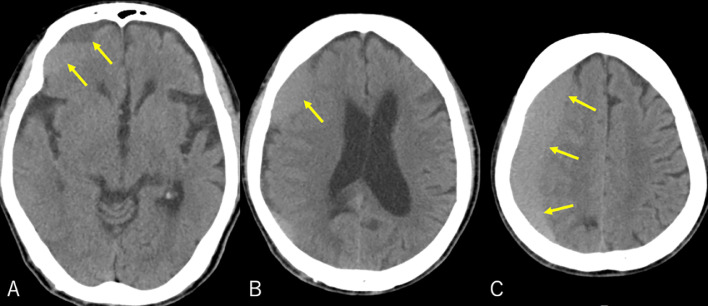
A 74-year-old man presented with persistent hiccups and headache persisting for 2 days. An anticoagulant was administered for his coronary heart disease. Cranial computed tomography (CT) revealed an intracerebral hemorrhage (ICH) located in the right occipital lobe, without any abnormal findings around the brainstem. The patient underwent endoscopic hematoma evacuation via a burr hole, resulting in immediate resolution of hiccups. Following an uneventful postoperative course, the patient experienced recurrent hiccups on the 47th day postsurgery. A subsequent CT scan taken on the 50th day revealed a compressive chronic subdural hematoma (CSDH) situated in the right frontoparietal convexity. The patient underwent burr-hole irrigation, leading to prompt cessation of the hiccups. Persistent hiccup should be recognized as potential manifestation of supratentorial lesions, including ICH or CSDH. Surgical evacuation of such lesions can rapidly alleviate hiccups associated with these pathologies.
一名74岁男性出现持续打嗝和头痛症状,已持续2天。他因冠心病正在接受抗凝治疗。头颅计算机断层扫描(CT)显示右侧枕叶有脑出血(ICH),脑干周围未发现任何异常。患者接受了经钻孔的内镜血肿清除术,术后打嗝立即缓解。术后恢复顺利,但患者在术后第47天再次出现打嗝。第50天的后续CT扫描显示右侧额顶叶凸面有一个压迫性慢性硬膜下血肿(CSDH)。患者接受了钻孔冲洗,打嗝随即停止。持续性打嗝应被视为幕上病变的潜在表现,包括脑出血或慢性硬膜下血肿。手术清除此类病变可迅速缓解与这些病症相关的打嗝症状。