Faucher Caroline, Borne Léonie, Behler Anna, Paton Bryan, Giorgio Joseph, Fripp Jurgen, Thienel Renate, Lupton Michelle K, Breakspear Michael
School of Psychological Science, College of Science, Engineering and the Environment, University of Newcastle, Australia.
Australian eHealth Research Centre, CSIRO, Brisbane, Australia.
Sleep Adv. 2024 Aug 10;5(1):zpae058. doi: 10.1093/sleepadvances/zpae058. eCollection 2024.
Evidence suggests that poor sleep impacts cognition, brain health, and dementia risk but the nature of the association is poorly understood. This study examined how self-reported sleep duration, napping, and subjective depression symptoms are associated with the brain-cognition relationship in older adults, using sulcal width as a measure of relative brain health.
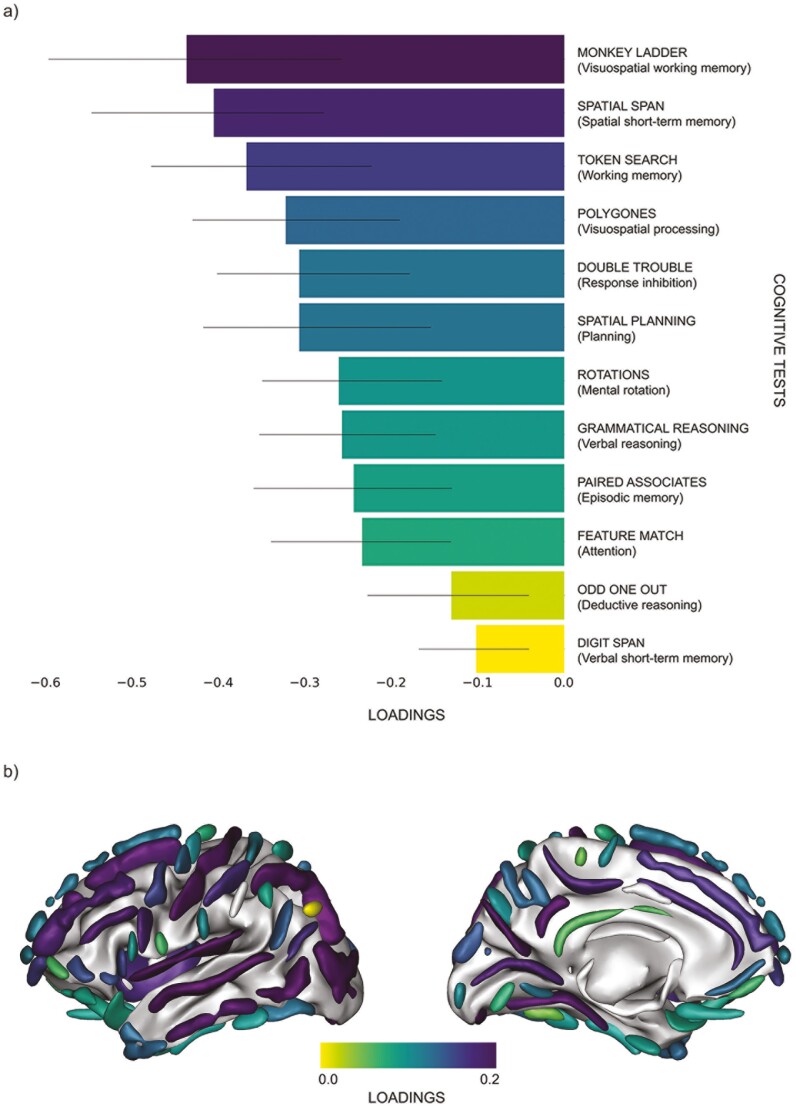
A canonical partial least squares analysis was used to obtain two composite variables that relate cognition and sulcal width in a cross-sectional study of 137 adults aged 46-72. We used a combination of ANCOVA and path analyses to test the associations of self-reported sleep duration, napping, and subjective depression symptoms with the brain-cognition relationship.
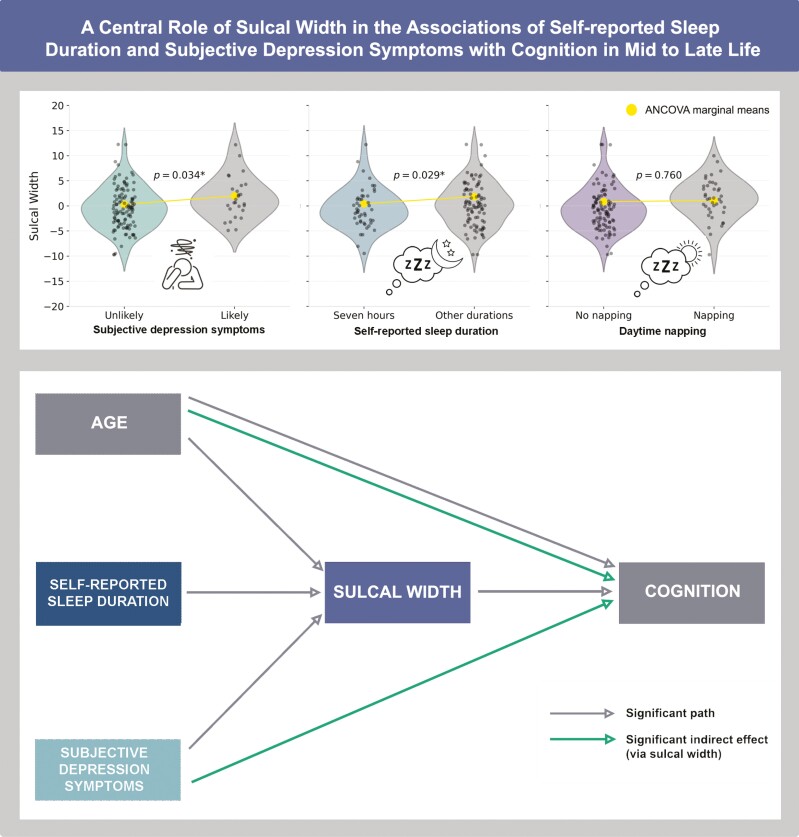
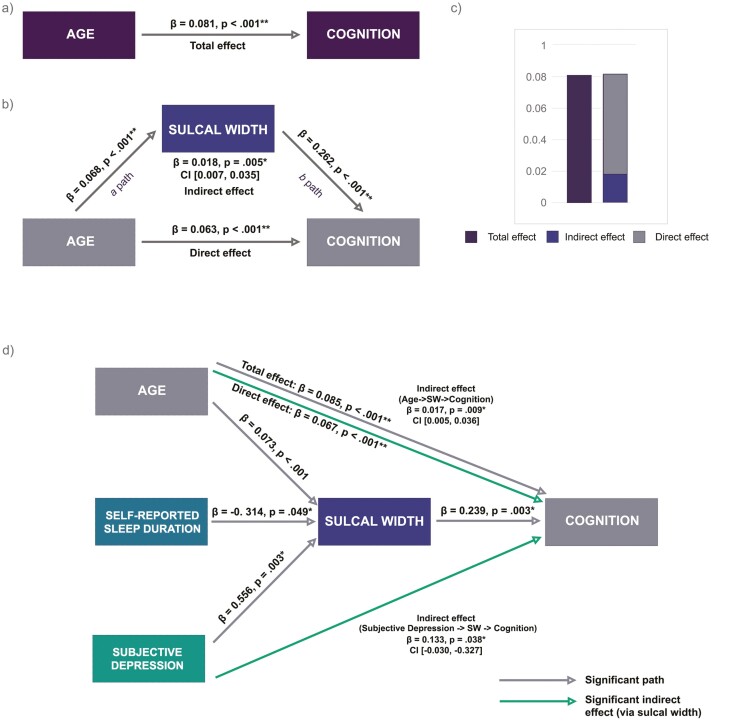
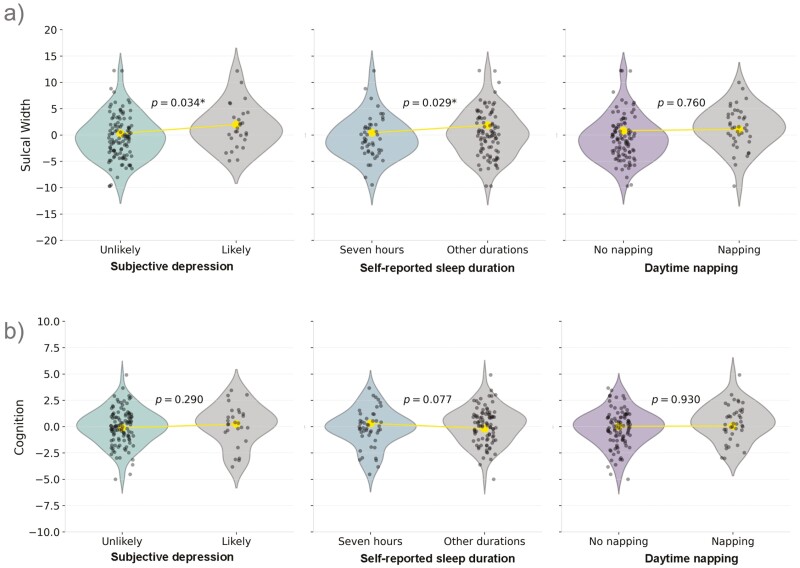
We observed a significant main effect of sleep duration on sulcal width, with participants reporting 7 hours showing narrower sulci than other durations. This effect remained significant after including subjective depression as a covariate, which also had a significant main effect on sulcal width in the model. There was no significant effect of napping on sulcal width. In path analyses where the effects of age, self-reported sleep duration and depression symptoms were investigated together, sulcal width mediated the relationship between age and cognition. We also observed a significant indirect effect of sulci width in the subjective depression-cognition relationship.
Findings suggest that self-reported sleep duration and subjective depression may each be independently associated with brain morphology, which is related to cognitive functions. Results could help inform clinical trials and related intervention studies that aim at delaying cognitive decline in adults at risk of developing dementia.
有证据表明,睡眠质量差会影响认知、大脑健康和患痴呆症的风险,但这种关联的本质尚不清楚。本研究以脑沟宽度作为相对大脑健康的指标,探讨了自我报告的睡眠时间、午睡情况和主观抑郁症状与老年人脑认知关系之间的联系。
在一项对137名年龄在46至72岁之间的成年人进行的横断面研究中,采用典型偏最小二乘法分析来获得两个将认知与脑沟宽度联系起来的复合变量。我们使用协方差分析和路径分析相结合的方法,来检验自我报告的睡眠时间、午睡情况和主观抑郁症状与脑认知关系之间的关联。
我们观察到睡眠时间对脑沟宽度有显著的主效应,报告睡眠时间为7小时的参与者脑沟比其他时长的参与者更窄。在将主观抑郁作为协变量纳入后,这种效应仍然显著,主观抑郁在模型中对脑沟宽度也有显著的主效应。午睡对脑沟宽度没有显著影响。在同时研究年龄、自我报告的睡眠时间和抑郁症状影响的路径分析中,脑沟宽度介导了年龄与认知之间的关系。我们还观察到脑沟宽度在主观抑郁与认知关系中存在显著的间接效应。
研究结果表明,自我报告的睡眠时间和主观抑郁可能各自独立地与大脑形态相关,而大脑形态与认知功能有关。这些结果可为旨在延缓有患痴呆症风险的成年人认知衰退的临床试验和相关干预研究提供参考。