Tepedino Maria Francesca, Diana Francesco, Abate Filomena, Avallone Anna Rosa, Caterino Miriam, Erro Roberto, Pellecchia Maria Teresa, Manara Renzo, Barone Paolo, Picillo Marina
Center for Neurodegenerative Diseases (CEMAND), Department of Medicine, Surgery and Dentistry "Scuola Medica Salernitana", University of Salerno, Via Allende, 84131, Baronissi, Salerno, Italy.
Department of Neuroradiology, Azienda Ospedaliera Universitaria San Giovanni di Dio e Ruggi d'Aragona, Salerno, Italy.
J Neurol. 2024 Oct;271(10):6866-6875. doi: 10.1007/s00415-024-12662-0. Epub 2024 Sep 2.
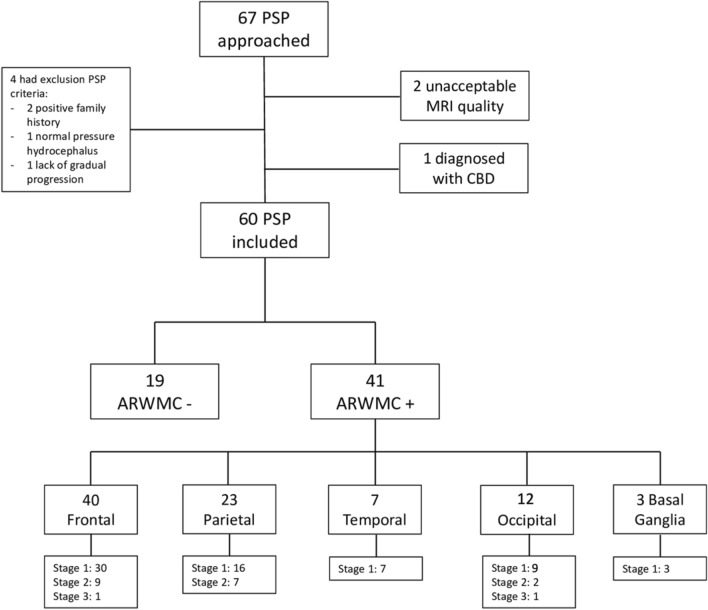
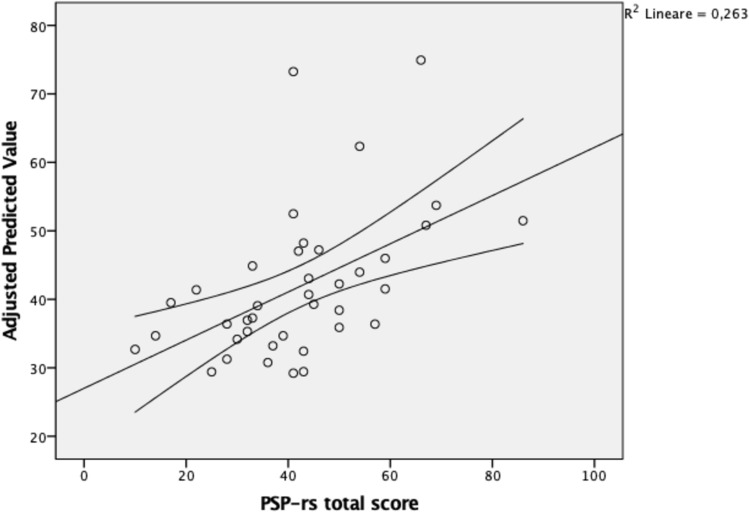
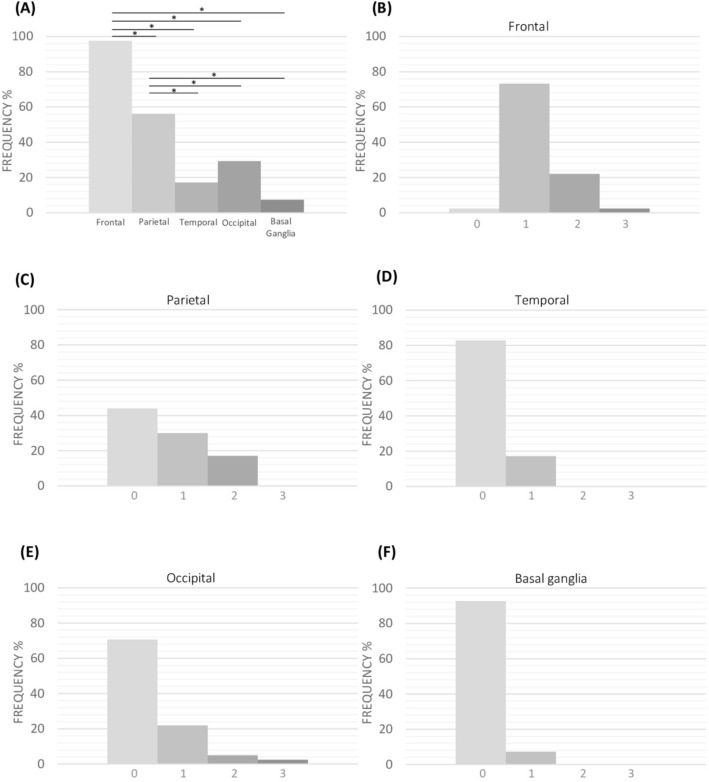
White matter hyperintensities (WMH) are considered magnetic brain imaging (MRI) biomarkers of cerebral small vessel disease but their clinical role in neurodegenerative-related disorders is poorly understood. This study describes the distribution of WMH on brain MRI in Progressive Supranuclear Palsy (PSP) in comparison with Parkinson's disease (PD) and explores their possible impact on disease's features. Sixty PSP and 33 PD patients were included. Motor symptoms, cardiovascular risk factors and the age-related white matter changes (ARWMC) score was computed to rate WMH for both groups. Pearson's correlation and linear or logistic regression analysis were used to check for relationships between ARWMC and PSP clinical scores. The mean (standard deviation) ARWMC total score in the PSP cohort was 4.66 (3.25). Any degree of WMH was present in 68% of PSP (ARWMC +). Compared to ARWMC-, ARWMC + did not have greater disease severity or more cardiovascular risk factors. WMH were frequently localized in fronto-parietal lobes and were mild in severity. Linear regression analysis showed that ARWMC total score was related to the PSP-rating scale, irrespective of age, disease duration and the Charlson modified comorbidity index. Logistic regression analysis confirmed that ARWMC total score was related to the use of wheelchair, irrespective of above-mentioned covariates. Vascular risk factors as well as severity and distribution of WMH did not have an impact on the PSP phenotype. No differences were found with PD patients. Our results suggest that WMH in PSP might be markers of neurodegenerative-related pathology rather than being simple expression of atherosclerotic cerebrovascular changes.
脑白质高信号(WMH)被认为是脑小血管病的磁共振脑成像(MRI)生物标志物,但其在神经退行性相关疾病中的临床作用尚不清楚。本研究描述了进行性核上性麻痹(PSP)患者脑MRI上WMH的分布情况,并与帕金森病(PD)进行比较,探讨其对疾病特征的可能影响。研究纳入了60例PSP患者和33例PD患者。计算两组患者的运动症状、心血管危险因素以及年龄相关白质变化(ARWMC)评分以评估WMH。采用Pearson相关性分析以及线性或逻辑回归分析来检验ARWMC与PSP临床评分之间的关系。PSP队列中ARWMC总分的平均值(标准差)为4.66(3.25)。68%的PSP患者存在任何程度的WMH(ARWMC阳性)。与ARWMC阴性患者相比,ARWMC阳性患者的疾病严重程度并不更高,心血管危险因素也没有更多。WMH常位于额顶叶,且严重程度较轻。线性回归分析表明,ARWMC总分与PSP评定量表相关,不受年龄、病程和Charlson修正合并症指数的影响。逻辑回归分析证实,ARWMC总分与轮椅使用情况相关,不受上述协变量的影响。血管危险因素以及WMH的严重程度和分布对PSP表型没有影响。与PD患者相比未发现差异。我们的结果表明,PSP中的WMH可能是神经退行性相关病理的标志物,而非动脉粥样硬化性脑血管变化的简单表现。