Department of Biology, University of Crete, Heraklion 71409, Greece.
Institute of Molecular Biology and Biotechnology, Foundation for Research and Technology-Hellas, Heraklion 70013, Greece.
Genome Biol Evol. 2024 Sep 3;16(9). doi: 10.1093/gbe/evae186.
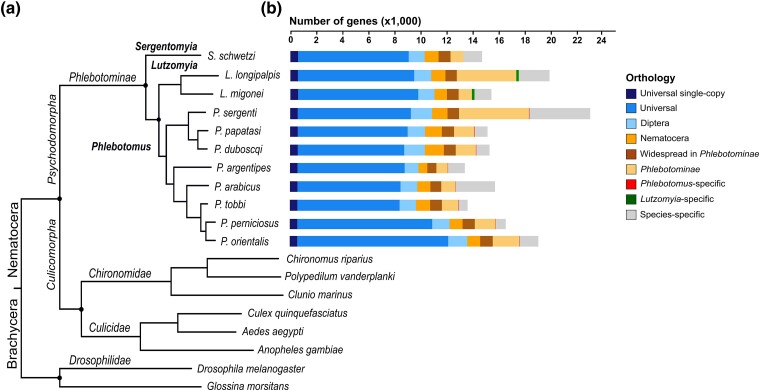
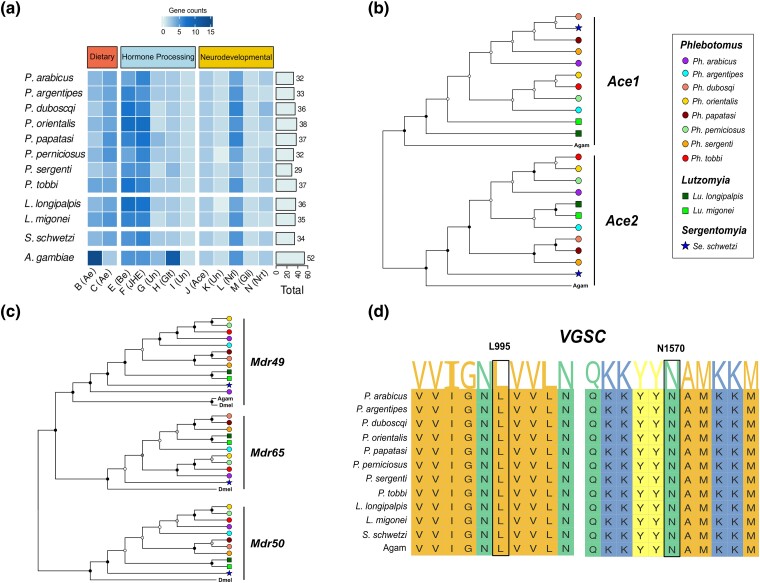
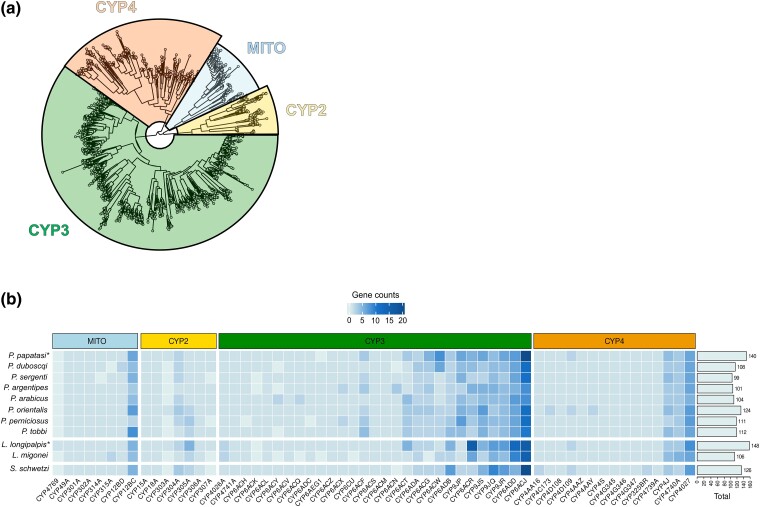
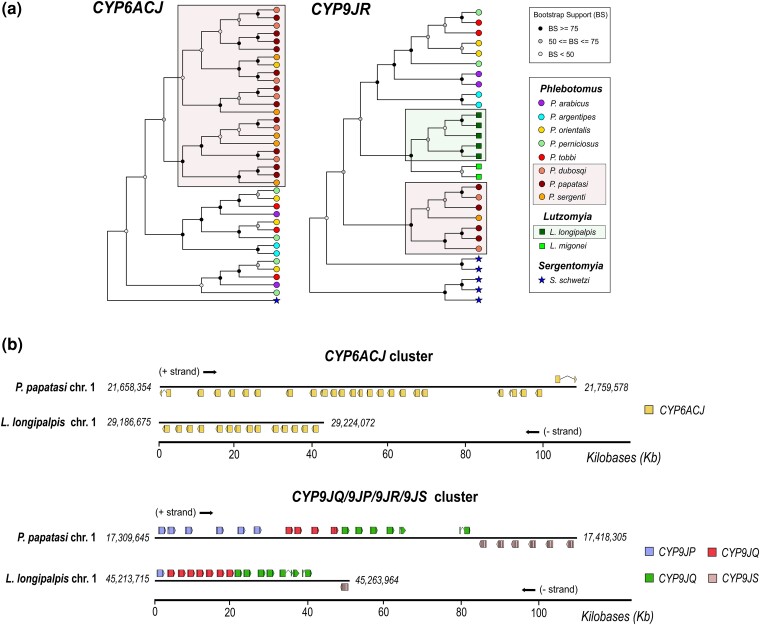
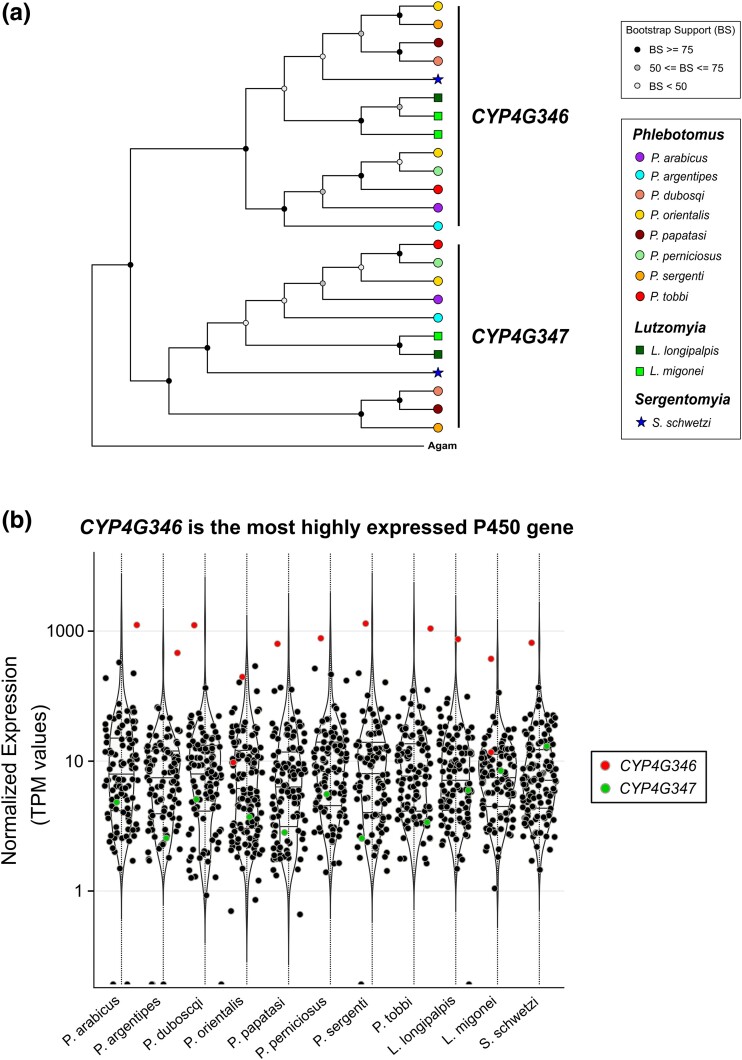
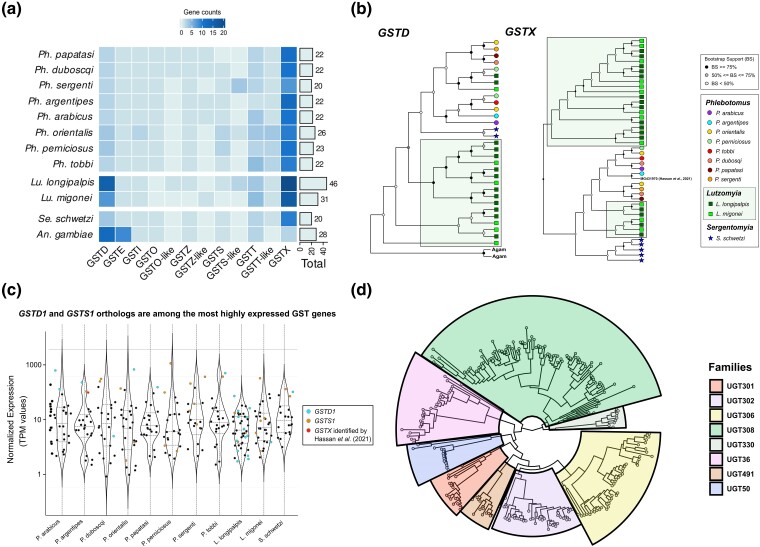
Sand flies infect more than 1 million people annually with Leishmania parasites and other bacterial and viral pathogens. Progress in understanding sand fly adaptations to xenobiotics has been hampered by the limited availability of genomic resources. To address this gap, we sequenced, assembled, and annotated the transcriptomes of 11 phlebotomine sand fly species. Subsequently, we leveraged these genomic resources to generate novel evolutionary insights pertaining to their adaptations to xenobiotics, including those contributing to insecticide resistance. Specifically, we annotated over 2,700 sand fly detoxification genes and conducted large-scale phylogenetic comparisons to uncover the evolutionary dynamics of the five major detoxification gene families: cytochrome P450s (CYPs), glutathione-S-transferases (GSTs), UDP-glycosyltransferases (UGTs), carboxyl/cholinesterases (CCEs), and ATP-binding cassette (ABC) transporters. Using this comparative approach, we show that sand flies have evolved diverse CYP and GST gene repertoires, with notable lineage-specific expansions in gene groups evolutionarily related to known xenobiotic metabolizers. Furthermore, we show that sand flies have conserved orthologs of (i) CYP4G genes involved in cuticular hydrocarbon biosynthesis, (ii) ABCB genes involved in xenobiotic toxicity, and (iii) two primary insecticide targets, acetylcholinesterase-1 (Ace1) and voltage gated sodium channel (VGSC). The biological insights and genomic resources produced in this study provide a foundation for generating and testing hypotheses regarding the molecular mechanisms underlying sand fly adaptations to xenobiotics.
沙蝇每年感染超过 100 万人感染利什曼原虫寄生虫和其他细菌和病毒病原体。由于缺乏基因组资源,人们对沙蝇适应外来生物的理解进展受到阻碍。为了解决这一差距,我们对 11 种白蛉科沙蝇物种的转录组进行了测序、组装和注释。随后,我们利用这些基因组资源产生了与它们适应外来生物相关的新的进化见解,包括那些有助于抗杀虫剂的见解。具体来说,我们注释了超过 2700 个白蛉解毒基因,并进行了大规模的系统发育比较,以揭示五个主要解毒基因家族的进化动态:细胞色素 P450s (CYPs)、谷胱甘肽-S-转移酶 (GSTs)、UDP-糖基转移酶 (UGTs)、羧酸/胆碱酯酶 (CCEs) 和 ATP 结合盒 (ABC) 转运蛋白。使用这种比较方法,我们表明沙蝇已经进化出多样化的 CYP 和 GST 基因库,与已知的外来生物代谢物相关的基因组具有显著的谱系特异性扩张。此外,我们表明沙蝇具有(i)参与表皮碳氢化合物生物合成的 CYP4G 基因的保守直系同源物,(ii)涉及外来生物毒性的 ABCB 基因,以及(iii)两种主要杀虫剂靶标,乙酰胆碱酯酶-1 (Ace1) 和电压门控钠通道 (VGSC) 的保守直系同源物。本研究产生的生物学见解和基因组资源为生成和测试有关沙蝇适应外来生物的分子机制的假设提供了基础。