Delie Amare Mebrat, Bogale Eyob Ketema, Anagaw Tadele Fentabel, Tiruneh Misganaw Guadie, Fenta Eneyew Talie, Endeshaw Destaw, Eshetu Habitu Birhan, Adal Ousman, Tareke Abiyu Abadi, Kebede Natnael
Department of Public Health, College of Medicine and Health Sciences, Injibara University, Injibara, Ethiopia.
Department of Health Promotion and Behavioral Science, School of Public Health, College of Medicine and Health Sciences, Bahir Dar University, Bahir Dar, Ethiopia.
Front Oncol. 2024 Aug 19;14:1436095. doi: 10.3389/fonc.2024.1436095. eCollection 2024.
Cervical cancer is a prevalent cancer among women in low and middle-income countries, but it can be largely prevented through screening programs and HPV vaccination. This study aimed to determine the level of knowledge, attitudes, and practices regarding cervical cancer screening among healthcare providers in Sub-Saharan African countries.
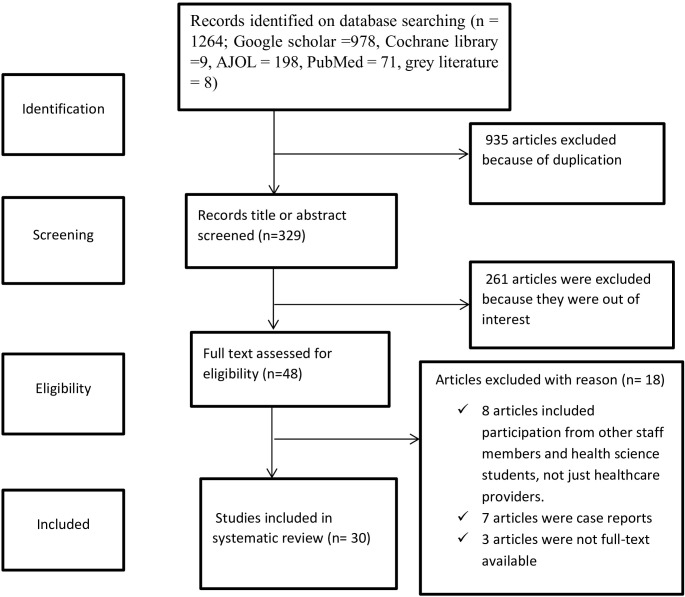
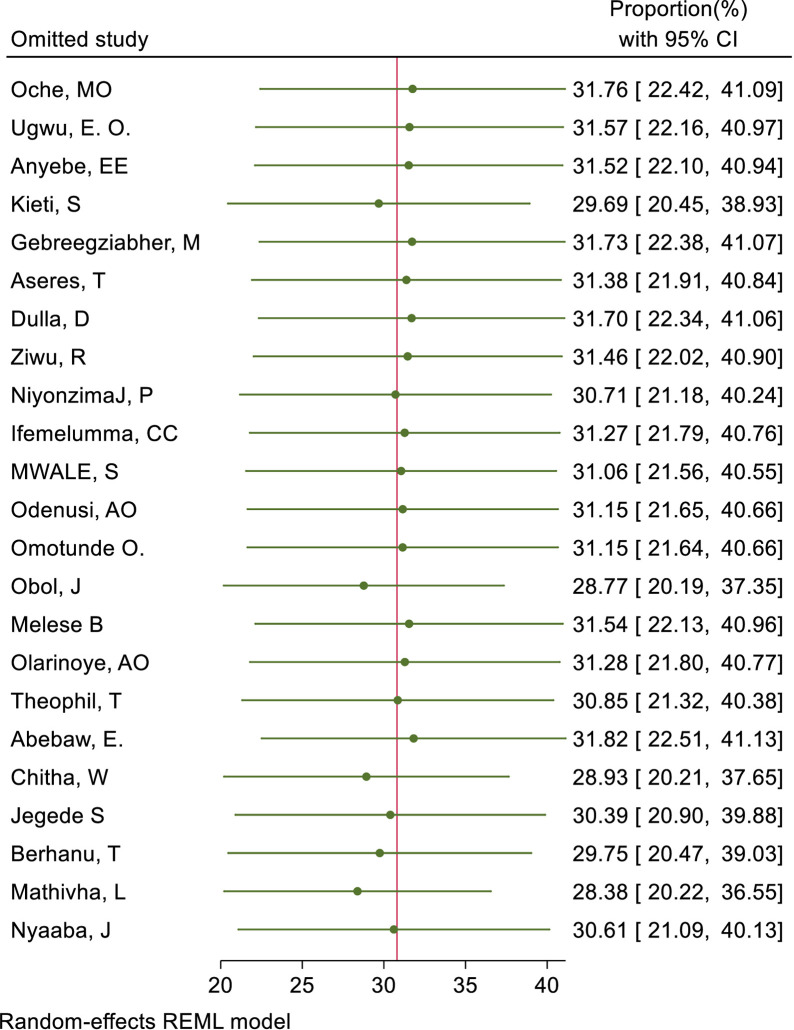
Systematic review and meta-analysis were conducted according to the Preferred Reporting Items for Systematic Reviews and Meta-Analysis guidelines. Relevant databases including PubMed, Cochrane Library, AJOL, Google Scholar, and ScienceDirect databases were used to retrieve and search articles. The study included published and unpublished research written in English between January 2013 and May 16, 2024 for studies reporting knowledge, attitude, and practice towards cervical cancer screening among healthcare providers in Sub-Saharan Africa. This review has been registered on PROSPERO. The heterogeneity of the data was evaluated using the I statistic. A meta-analysis was conducted using STATA 17 software, with a 95% confidence interval. The researchers also conducted publication bias and sensitivity analysis.
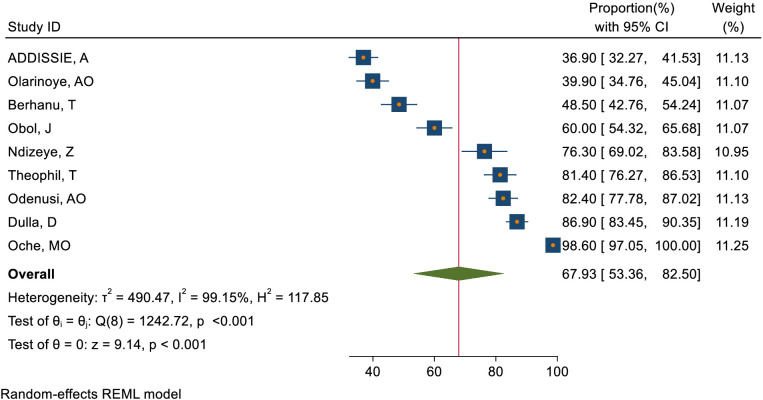
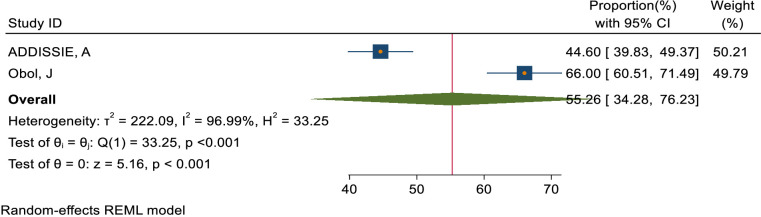
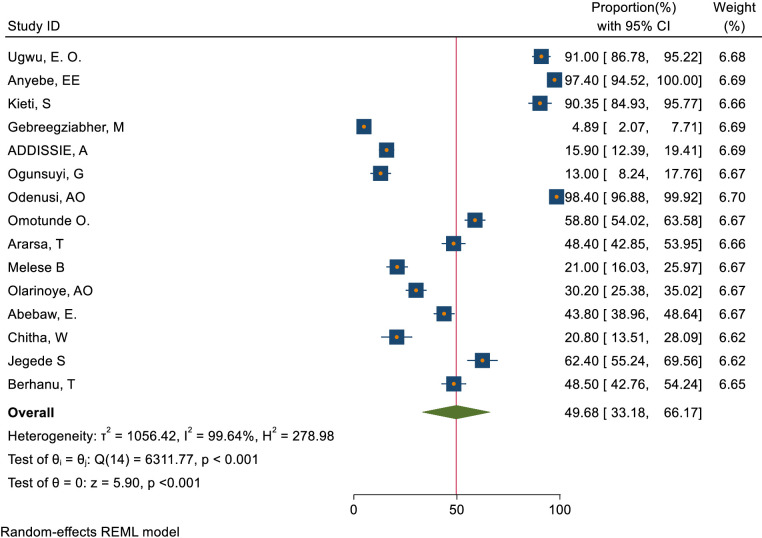
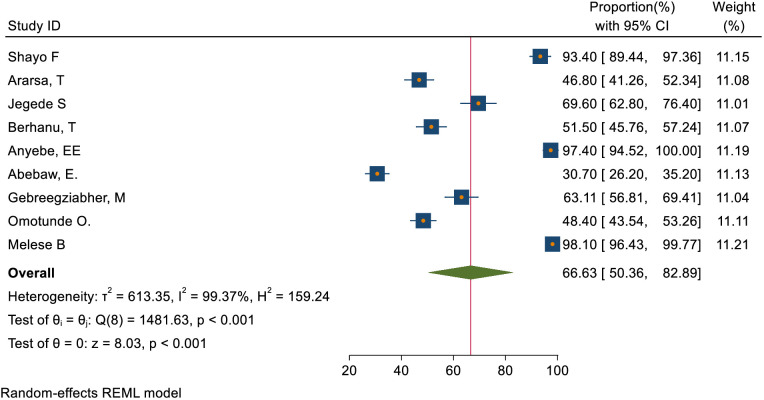
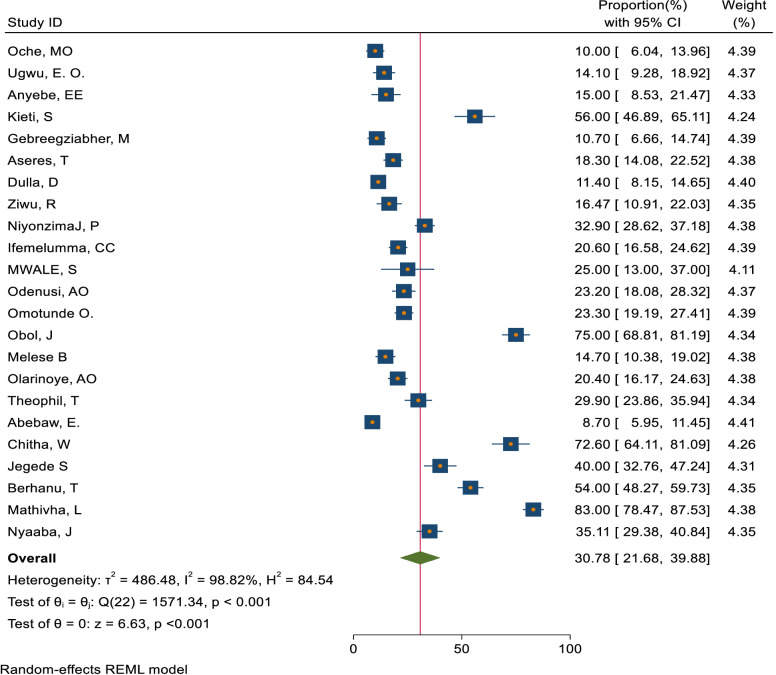
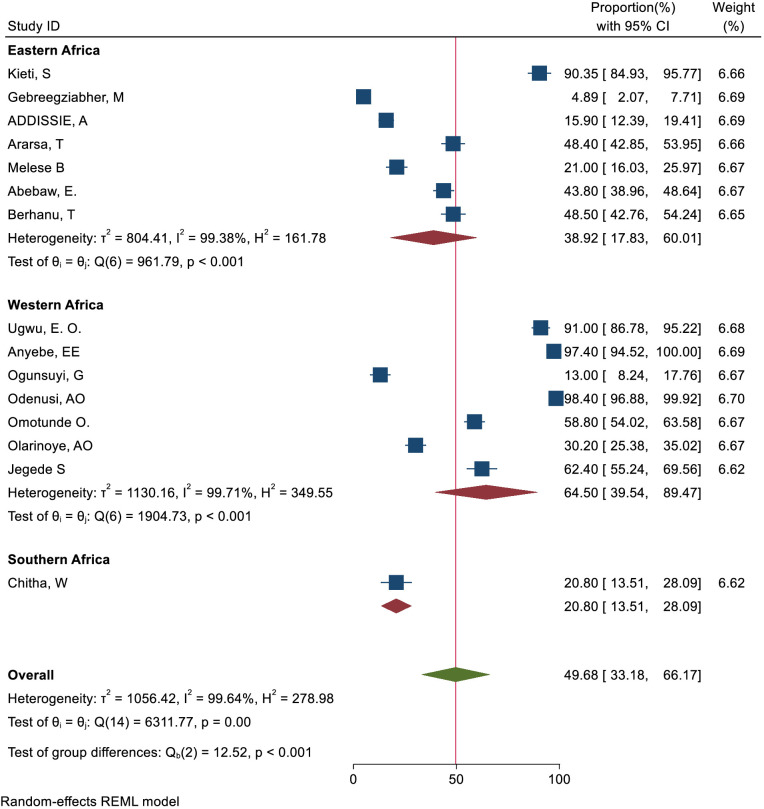
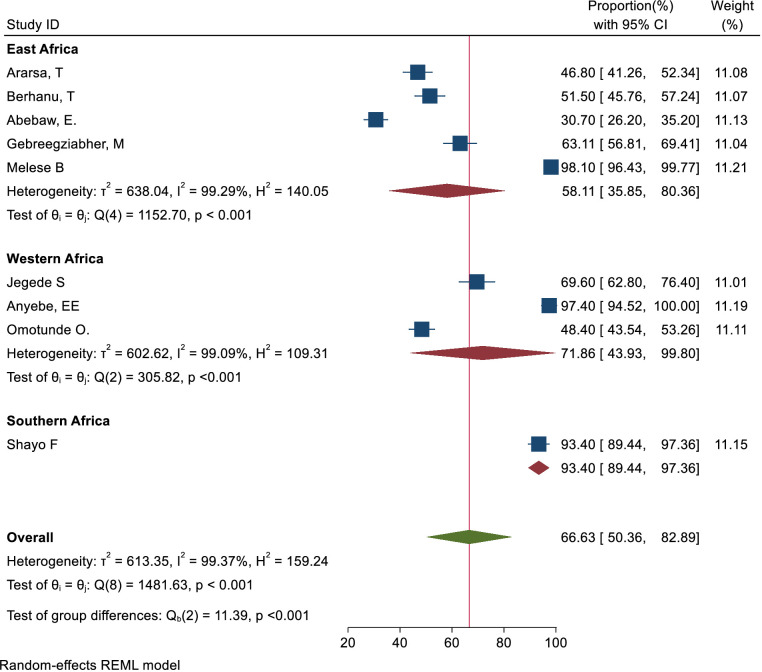
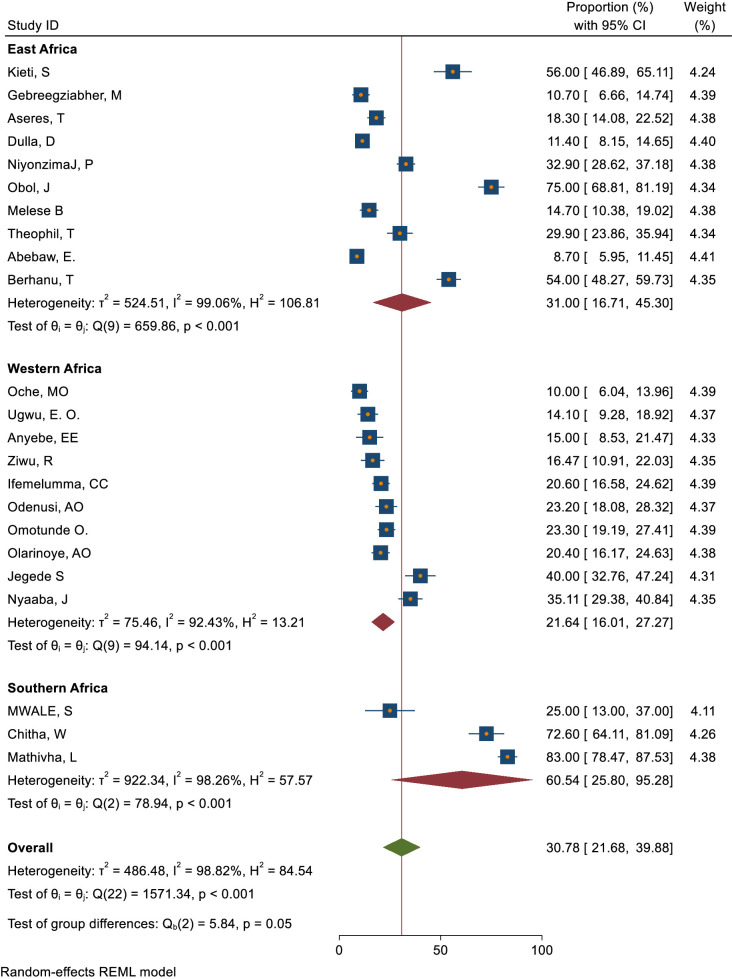
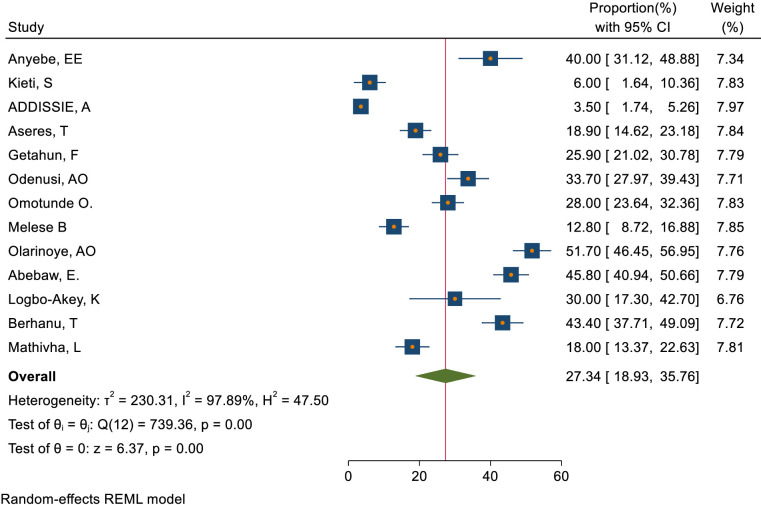
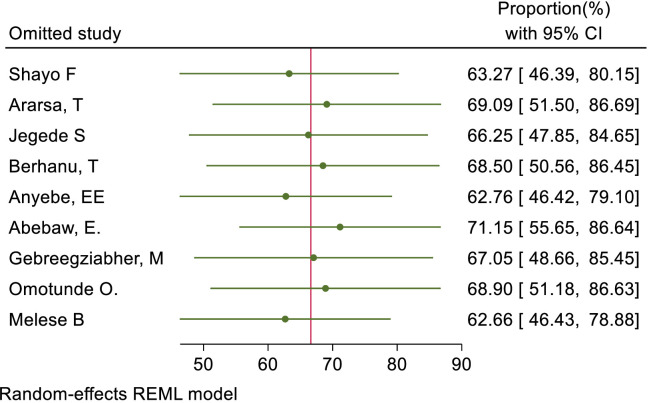
The review included 30 studies involving 7542 healthcare providers. The pooled magnitude of good knowledge status towards cervical cancer was 67.93% (95% CI: 53.36-82.50) whereas the pooled magnitude of positive attitude towards cervical cancer was 55.26% (95% CI: 34.28- 76.23). The results also showed that about 49.68% (95% CI: 33.18-66.17) of healthcare providers had good knowledge status about cervical cancer screening, 66.63%(95% CI: 50.36- 82.89) had a positive attitude towards it, and only 17.23% (95% CI; 6.08-28.37) had ever screened for cervical cancer.
The overall magnitude of knowledge and attitude of healthcare providers in Sub-Saharan Africa towards cervical cancer and its screening was suboptimal. Furthermore, a low percentage of female healthcare providers in the region had undergone screening for cervical cancer. As a result, policymakers and program administrators should focus on improving the knowledge, attitude, and practices of healthcare providers to meet the global health goal of cervical cancer screening and effectively eliminating cervical cancer. Healthcare providers must serve as role models for other women who should also undergo screening.
https://www.crd.york.ac.uk/PROSPERO/, identifier CRD42023495241.
宫颈癌在低收入和中等收入国家的女性中是一种常见癌症,但通过筛查项目和人乳头瘤病毒(HPV)疫苗接种在很大程度上可以预防。本研究旨在确定撒哈拉以南非洲国家医疗服务提供者对宫颈癌筛查的知识、态度和实践水平。
根据系统评价和Meta分析的首选报告项目(PRISMA)指南进行系统评价和Meta分析。使用包括PubMed、Cochrane图书馆、非洲期刊在线(AJOL)、谷歌学术和科学Direct数据库在内的相关数据库检索和搜索文章。该研究纳入了2013年1月至2024年5月16日期间以英文撰写的已发表和未发表的研究,这些研究报告了撒哈拉以南非洲地区医疗服务提供者对宫颈癌筛查的知识、态度和实践情况。本综述已在国际前瞻性系统评价注册库(PROSPERO)注册。使用I统计量评估数据的异质性。使用STATA 17软件进行Meta分析,置信区间为95%。研究人员还进行了发表偏倚和敏感性分析。
该综述纳入了30项研究,涉及7542名医疗服务提供者。对宫颈癌知识知晓良好的合并比例为67.93%(95%置信区间:53.36 - 82.50),而对宫颈癌持积极态度的合并比例为55.26%(95%置信区间:34.28 - 76.23)。结果还显示,约49.68%(95%置信区间:33.18 - 66.17)的医疗服务提供者对宫颈癌筛查知识知晓良好,66.63%(95%置信区间:50.36 - 82.89)对其持积极态度,而只有17.23%(95%置信区间:6.08 - 28.37)曾进行过宫颈癌筛查。
撒哈拉以南非洲地区医疗服务提供者对宫颈癌及其筛查的知识和态度总体水平欠佳。此外,该地区接受宫颈癌筛查的女性医疗服务提供者比例较低。因此,政策制定者和项目管理者应专注于提高医疗服务提供者的知识、态度和实践水平,以实现宫颈癌筛查的全球卫生目标并有效消除宫颈癌。医疗服务提供者必须成为其他也应接受筛查的女性的榜样。