Department of Population and Quantitative Health Sciences, Case Western Reserve University School of Medicine, Cleveland, OH, USA.
Case Comprehensive Cancer Center, Case Western Reserve University School of Medicine, Cleveland, OH, USA.
Cancer Causes Control. 2024 Dec;35(12):1531-1540. doi: 10.1007/s10552-024-01908-x. Epub 2024 Sep 3.
Prostate cancer (PCa) screening recommendations do not support prostate-specific antigen (PSA) screening for older men. Such screening often occurs, however. It is, therefore, important to understand how frequently and among which subgroups screening occurs, and the extent of distant stage PCa diagnoses among screened older men.
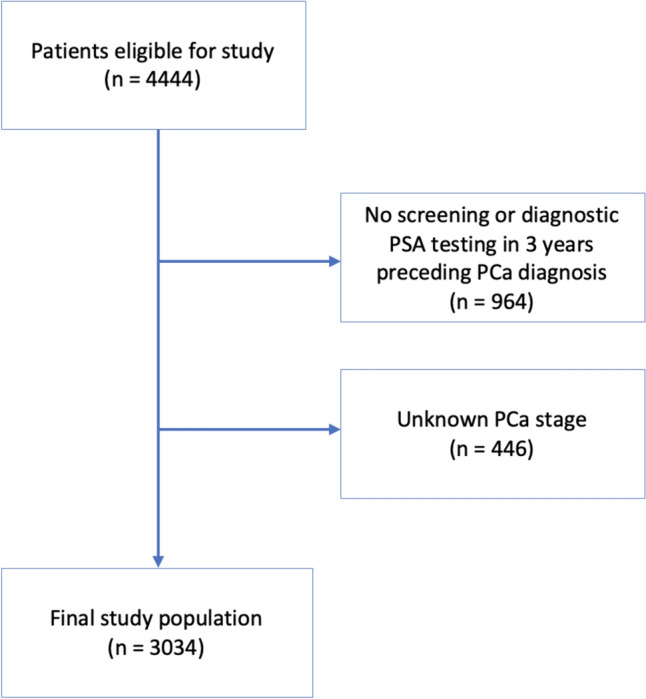
Using the 2014-2016 linked Ohio Cancer Incidence Surveillance System (OCISS) and Medicare administrative database, we identified men 68 and older diagnosed with PCa and categorized their PSA testing in the three years preceding diagnosis as screening or diagnostic. We conducted multivariable logistic regression analysis to identify correlates of screening PSA and to determine whether screening PSA is independently associated with distant stage disease.
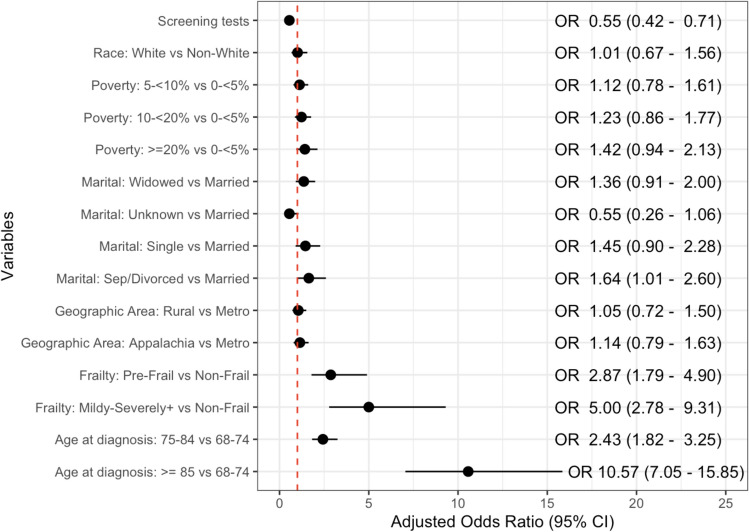
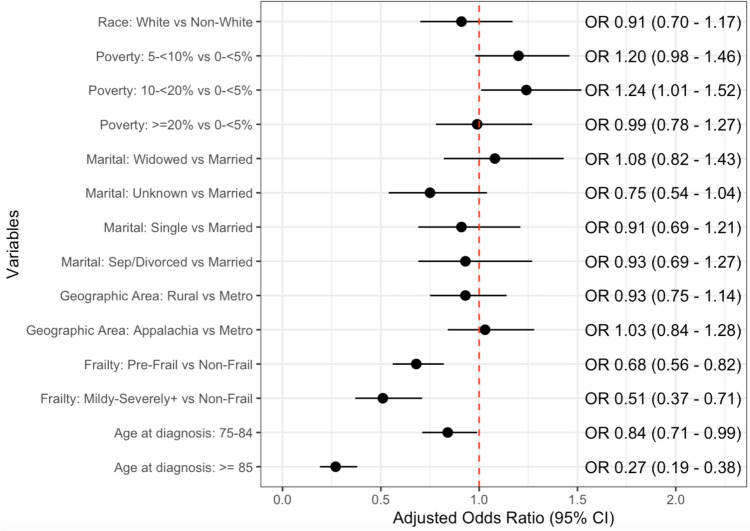
Our study population included 3034 patients (median age: 73 years). 62.1% of PCa patients underwent at least one screening-based PSA in the three years preceding diagnosis. Older age (75-84 years: aOR [95% CI]: 0.84 [0.71, 0.99], ≥ 85: aOR: 0.27 [0.19, 0.38]), and frailty (aOR: 0.51 [0.37, 0.71]) were associated with lower screening. Screening was associated with decreased odds of distant stage disease (aOR: 0.55 [0.42, 0.71]). However, older age (75-84 years: aOR: 2.43 [1.82, 3.25], ≥ 85: aOR: 10.57 [7.05, 15.85]), frailty (aOR: 5.00 [2.78, 9.31]), and being separated or divorced (aOR: 1.64 [1.01, 2.60]) were associated with increased distant stage PCa.
PSA screening in older men is common, though providers appear to curtail PSA screening as age and frailty increase. Screened older men are diagnosed at earlier stages, but the harms of screening cannot be assessed.
前列腺癌(PCa)筛查建议不支持对老年男性进行前列腺特异性抗原(PSA)筛查。然而,这种筛查经常发生。因此,了解筛查的频率和发生的亚组以及筛查老年男性中远处阶段 PCa 的诊断程度非常重要。
使用 2014-2016 年俄亥俄州癌症发病率监测系统(OCISS)和医疗保险管理数据库,我们确定了诊断为 PCa 的年龄在 68 岁及以上的男性,并将他们在诊断前三年内的 PSA 检测归类为筛查或诊断。我们进行了多变量逻辑回归分析,以确定筛查 PSA 的相关性,并确定筛查 PSA 是否与远处阶段疾病独立相关。
我们的研究人群包括 3034 名患者(中位年龄:73 岁)。62.1%的 PCa 患者在诊断前三年内至少进行了一次基于 PSA 的筛查。年龄较大(75-84 岁:aOR [95%CI]:0.84 [0.71, 0.99],≥85 岁:aOR:0.27 [0.19, 0.38])和虚弱(aOR:0.51 [0.37, 0.71])与较低的筛查率相关。筛查与远处阶段疾病的几率降低相关(aOR:0.55 [0.42, 0.71])。然而,年龄较大(75-84 岁:aOR:2.43 [1.82, 3.25],≥85 岁:aOR:10.57 [7.05, 15.85])、虚弱(aOR:5.00 [2.78, 9.31])和分居或离婚(aOR:1.64 [1.01, 2.60])与远处阶段 PCa 的增加相关。
老年男性中 PSA 筛查很常见,尽管随着年龄和虚弱程度的增加,提供者似乎会减少 PSA 筛查。筛查的老年男性被诊断为早期阶段,但无法评估筛查的危害。