Department of Pharmacology and Cancer Biology, Duke University School of Medicine, Durham, NC, USA.
Duke Cancer Institute, Duke University School of Medicine, Durham, NC, USA.
Nat Commun. 2024 Sep 3;15(1):7675. doi: 10.1038/s41467-024-52032-y.
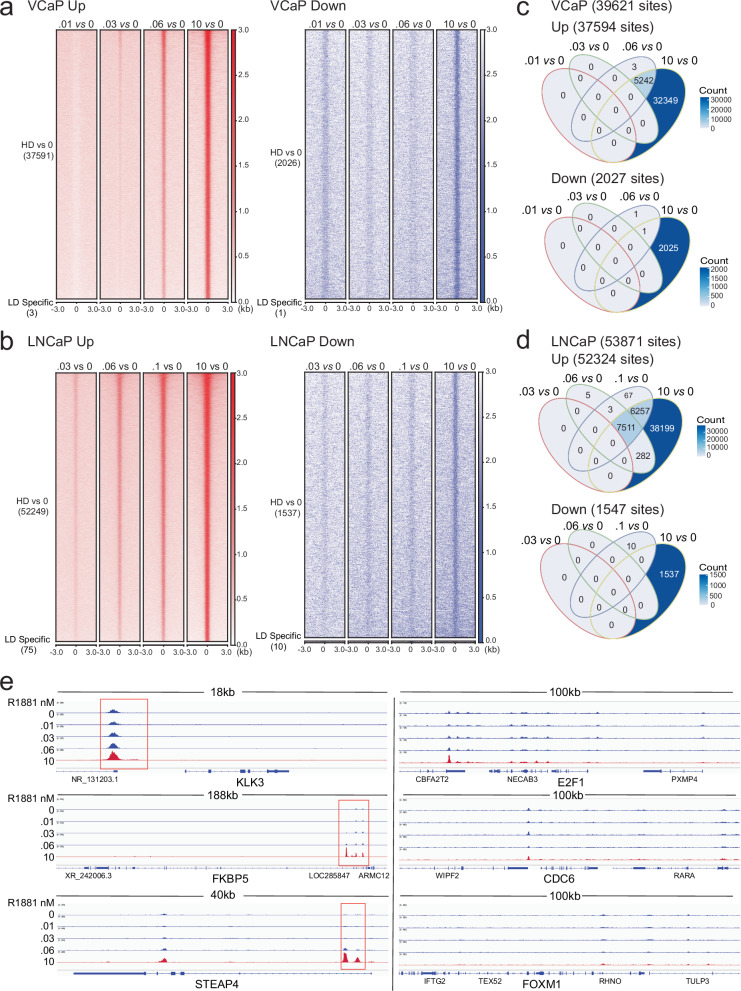
Most prostate cancers express the androgen receptor (AR), and tumor growth and progression are facilitated by exceptionally low levels of systemic or intratumorally produced androgens. Thus, absolute inhibition of the androgen signaling axis remains the goal of current therapeutic approaches to treat prostate cancer (PCa). Paradoxically, high dose androgens also exhibit considerable efficacy as a treatment modality in patients with late-stage metastatic PCa. Here we show that low levels of androgens, functioning through an AR monomer, facilitate a non-genomic activation of the mTOR signaling pathway to drive proliferation. Conversely, high dose androgens facilitate the formation of AR dimers/oligomers to suppress c-MYC expression, inhibit proliferation and drive a transcriptional program associated with a differentiated phenotype. These findings highlight the inherent liabilities in current approaches used to inhibit AR action in PCa and are instructive as to strategies that can be used to develop new therapeutics for this disease and other androgenopathies.
大多数前列腺癌表达雄激素受体 (AR),肿瘤的生长和进展得益于极低水平的全身或肿瘤内产生的雄激素。因此,绝对抑制雄激素信号轴仍然是目前治疗前列腺癌 (PCa) 的治疗方法的目标。矛盾的是,高剂量雄激素在晚期转移性 PCa 患者的治疗中也具有相当大的疗效。在这里,我们表明,低水平的雄激素通过 AR 单体发挥作用,促进 mTOR 信号通路的非基因组激活,从而驱动增殖。相反,高剂量雄激素促进 AR 二聚体/寡聚体的形成,以抑制 c-MYC 表达、抑制增殖并驱动与分化表型相关的转录程序。这些发现强调了当前用于抑制 PCa 中 AR 作用的方法所固有的缺陷,并为开发用于治疗这种疾病和其他雄激素疾病的新疗法的策略提供了指导。