Department of Nephrology, Jiangsu Province Hospital, The First Affiliated Hospital of Nanjing Medical University, Nanjing, #300 Guangzhou Road, 210029, China.
Department of General Medicine, The Second Hospital of Nanjing, Affiliated to Nanjing University of Chinese Medicine, #1-1 Zhongfu Road, Nanjing, 210003, China.
J Transl Med. 2024 Sep 3;22(1):820. doi: 10.1186/s12967-024-05605-w.
The prevalence of vascular calcification (VC) in chronic kidney disease (CKD) patients remains substantial, but currently, there are no effective pharmaceutical therapies available. BRCA1/BRCA2-containing complex subunit 36 (BRCC36) has been implicated in osteoblast osteogenic conversion; however, its specific role in VC remains to be fully elucidated. The aim of this study was to investigate the role and underlying mechanisms of BRCC36 in VC.
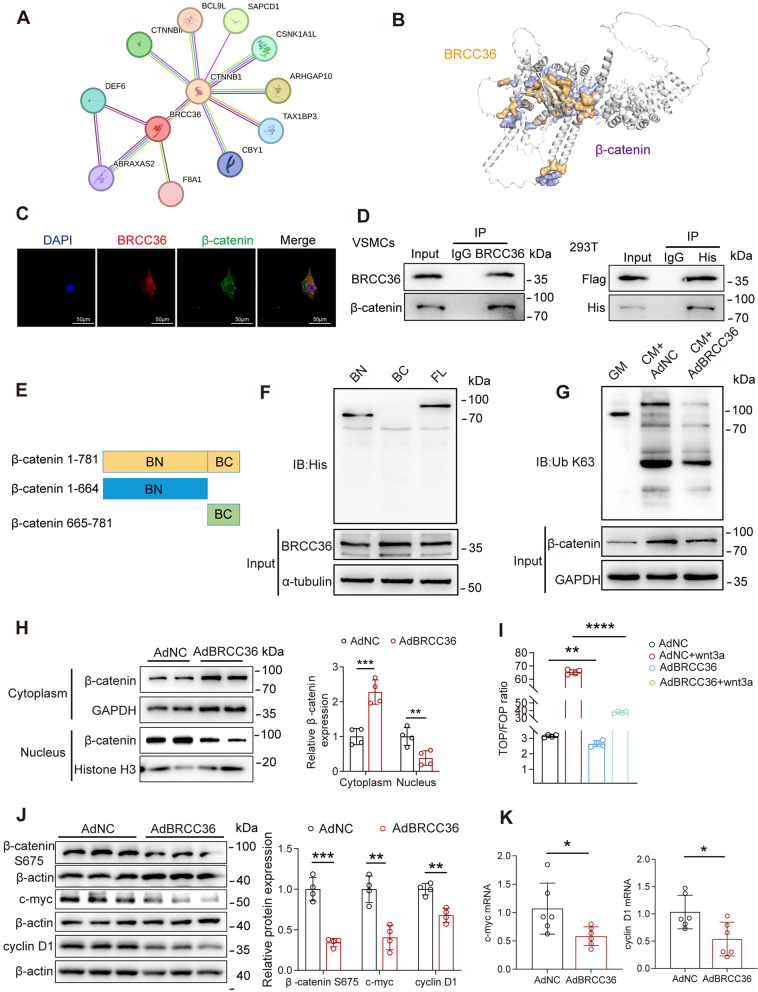
The association between BRCC36 expression and VC was examined in radial arteries from patients with CKD, high-adenine-induced CKD mice, and vascular smooth muscle cells (VSMCs). Western blotting, real-time polymerase chain reaction, immunofluorescence, and immunohistochemistry were used to analyse gene expression. Gain- and loss-of-function experiments were performed to comprehensively investigate the effects of BRCC36 on VC. Coimmunoprecipitation and TOPFlash luciferase assays were utilized to further investigate the regulatory effects of BRCC36 on the Wnt/β-catenin pathway.
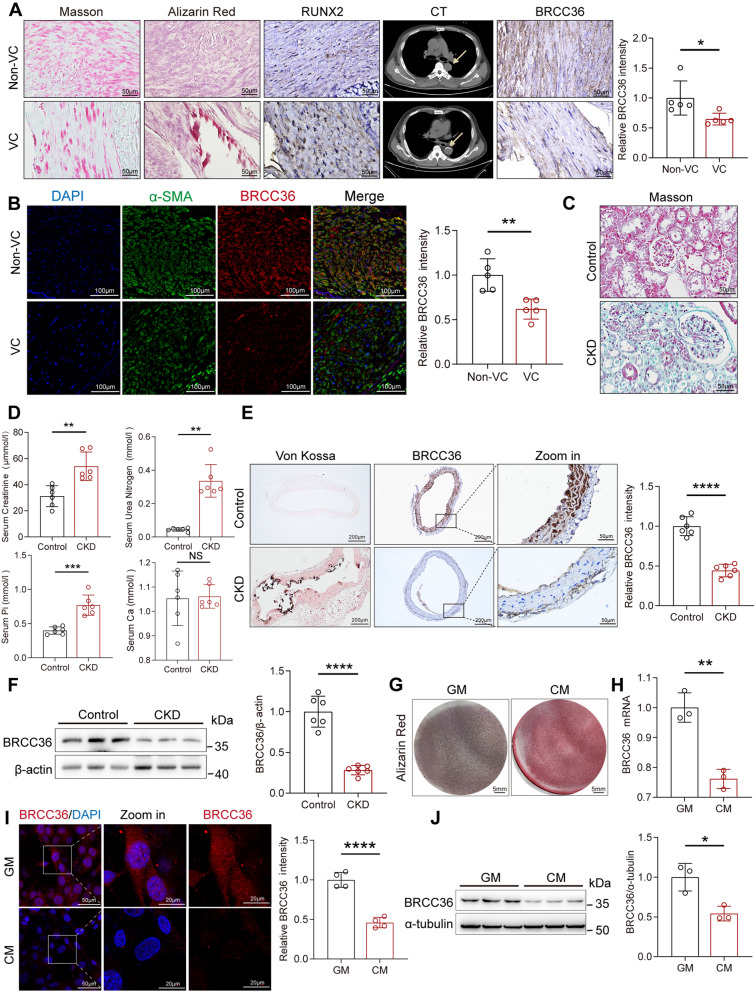
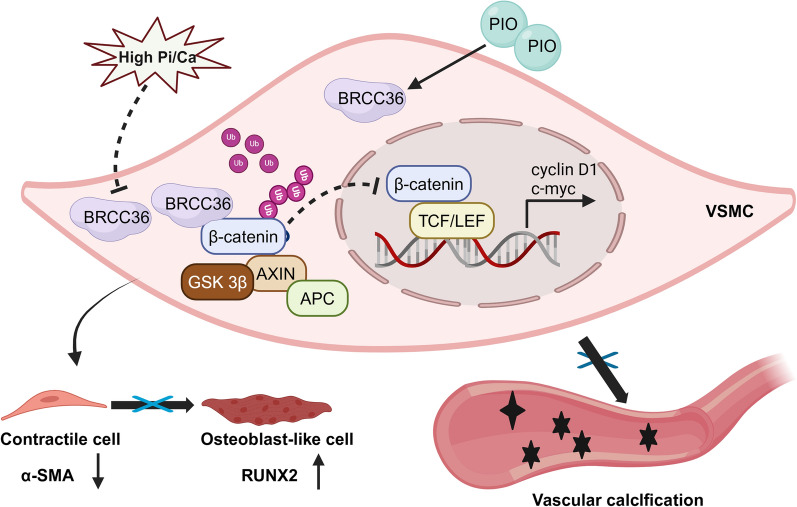
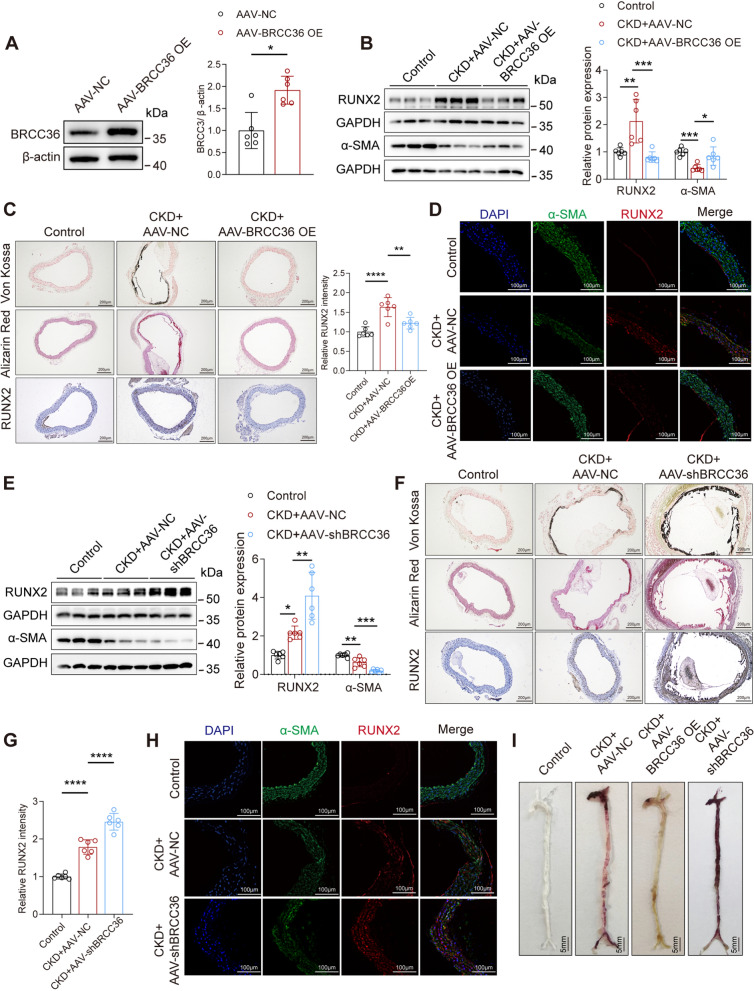
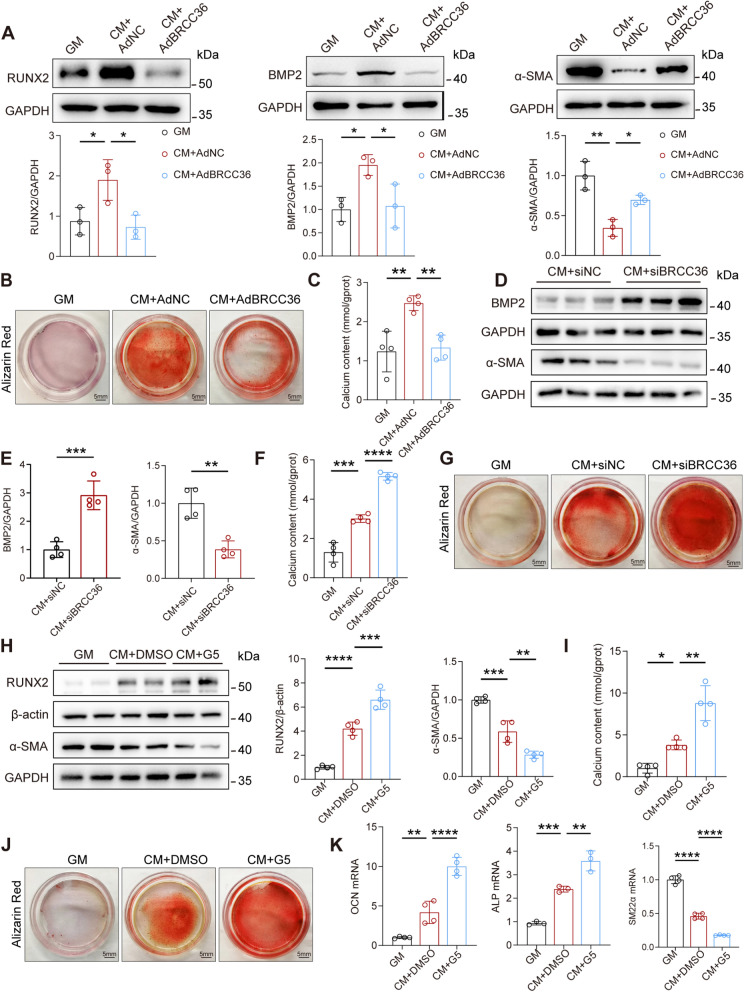
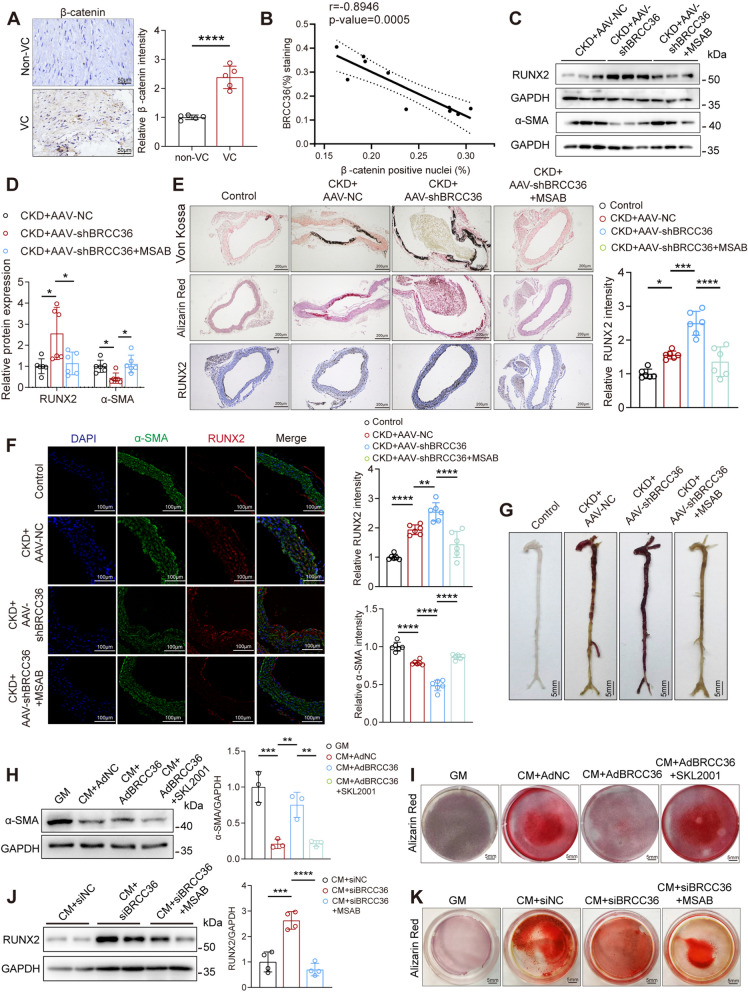
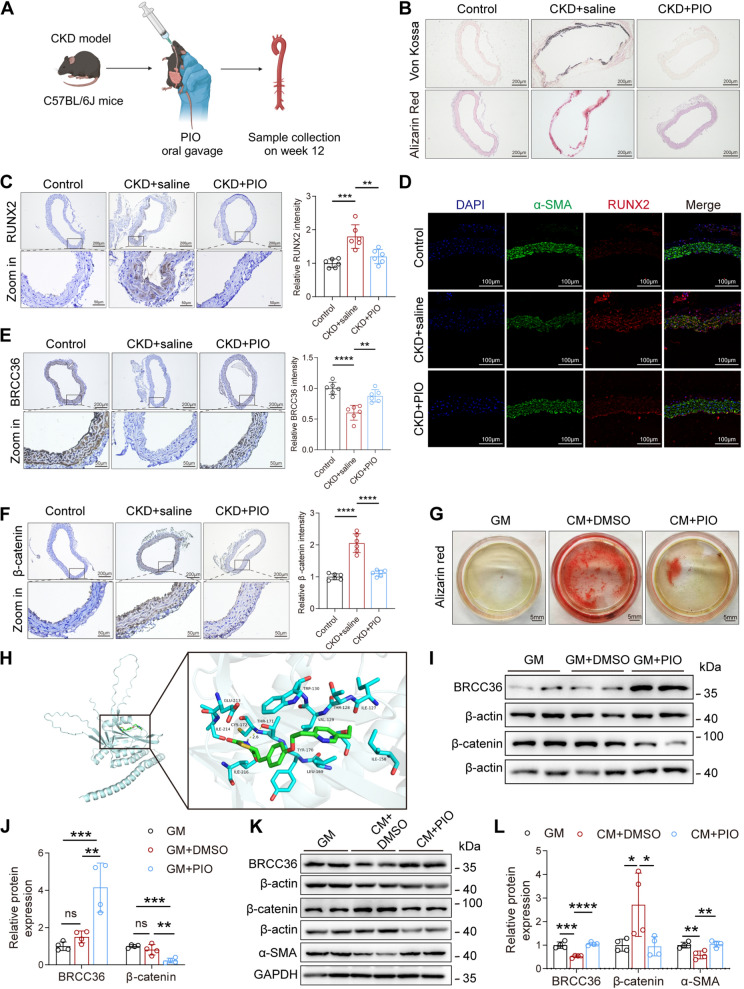
BRCC36 expression was downregulated in human calcified radial arteries, calcified aortas from CKD mice, and calcified VSMCs. VSMC-specific BRCC36 overexpression alleviated calcium deposition in the vasculature, whereas BRCC36 depletion aggravated VC progression. Furthermore, BRCC36 inhibited the osteogenic differentiation of VSMCs in vitro. Rescue experiments revealed that BRCC36 exerts the protective effects on VC partly by regulating the Wnt/β-catenin signalling pathway. Mechanistically, BRCC36 inhibited the Wnt/β-catenin pathway by decreasing the K63-linked ubiquitination of β-catenin. Additionally, pioglitazone attenuated VC partly through upregulating BRCC36 expression.
Our research results emphasize the critical role of the BRCC36-β-catenin axis in VC, suggesting that BRCC36 or β-catenin may be promising therapeutic targets to prevent the progression of VC in CKD patients.
慢性肾脏病(CKD)患者的血管钙化(VC)患病率仍然很高,但目前尚无有效的药物治疗方法。BRCA1/BRCA2 含有复合物亚基 36(BRCC36)已被牵连到成骨细胞成骨转化中;然而,其在 VC 中的具体作用仍有待充分阐明。本研究旨在探讨 BRCC36 在 VC 中的作用及其潜在机制。
在 CKD 患者的桡动脉、高腺嘌呤诱导的 CKD 小鼠和血管平滑肌细胞(VSMCs)中检测 BRCC36 表达与 VC 的相关性。采用 Western blot、实时聚合酶链反应、免疫荧光和免疫组织化学分析基因表达。进行增益和缺失功能实验,全面研究 BRCC36 对 VC 的影响。共免疫沉淀和 TOPFlash 荧光素酶测定进一步研究 BRCC36 对 Wnt/β-catenin 通路的调控作用。
BRCC36 表达在人钙化桡动脉、CKD 小鼠钙化主动脉和钙化 VSMCs 中下调。VSMC 特异性 BRCC36 过表达减轻了血管中的钙沉积,而 BRCC36 耗竭则加重了 VC 的进展。此外,BRCC36 抑制了体外 VSMCs 的成骨分化。挽救实验表明,BRCC36 通过调节 Wnt/β-catenin 信号通路部分发挥对 VC 的保护作用。机制上,BRCC36 通过降低β-catenin 的 K63 连接泛素化来抑制 Wnt/β-catenin 通路。此外,吡格列酮部分通过上调 BRCC36 表达来减轻 VC。
我们的研究结果强调了 BRCC36-β-catenin 轴在 VC 中的关键作用,表明 BRCC36 或β-catenin 可能是预防 CKD 患者 VC 进展的有前途的治疗靶点。