Myers Betsy, Hanks June
Department of Physical Therapy University of Tennessee at Chattanooga.
Int J Sports Phys Ther. 2024 Sep 1;19(9):1116-1125. doi: 10.26603/001c.122490. eCollection 2024.
While a high incidence of pickleball-related falls is reported, little is known regarding factors differentiating persons with and without a fall history during play.
This study aimed to determine differences between recreational pickleball players who fell while playing and those who did not. Additional aims were to determine reasons for falling and to investigate associations among assessed factors.
Cross-sectional study.
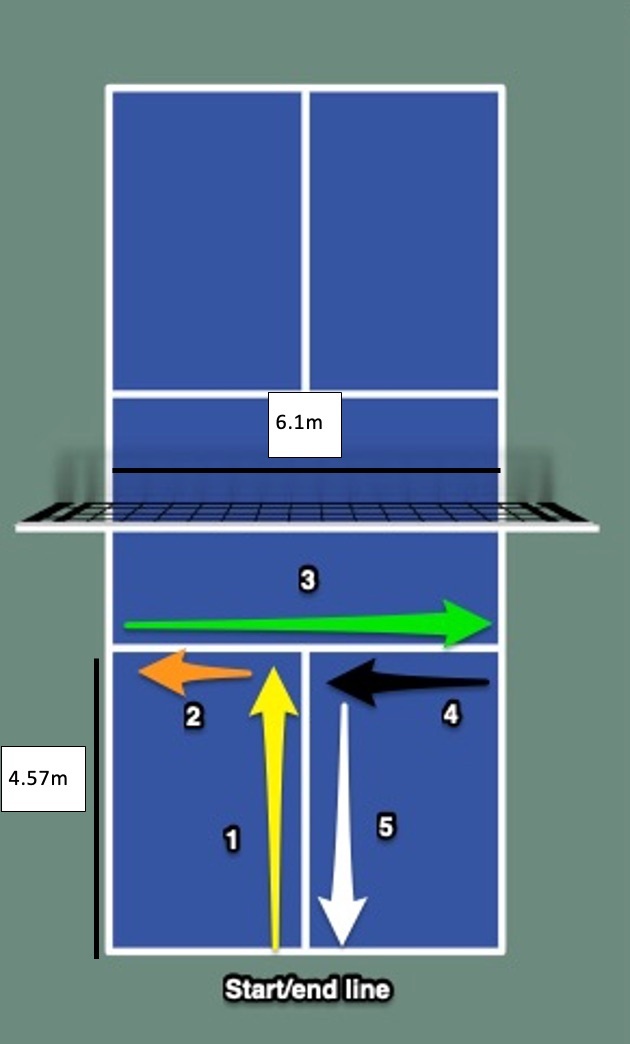
Participants completed a survey reporting age, fall history, and reasons for falling during play. Hip abduction strength, single leg squat form, ankle dorsiflexion, and change of direction time using a modified T-test on a pickleball court (i.e. pickleball T-test) were assessed.
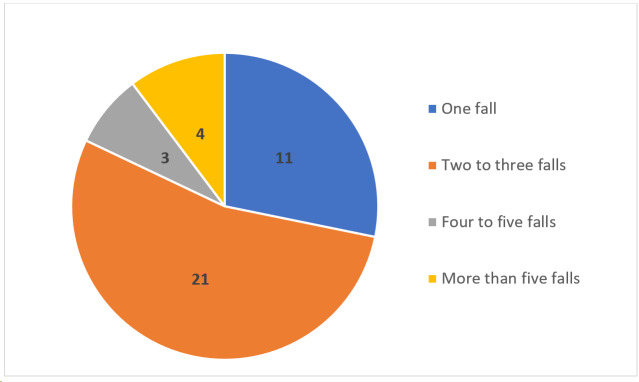
Among the 92 individuals participating in the study, 42% reported a fall while playing and 30% reported falling more than once. Leading reasons for reported falls were lunging and moving backward. Participants who reported falling were significantly older (z = -2.60, p = 0.009) and slower on the pickleball T-test (z = -2.10, p = 0.036) than those who did not report falling. Hip abduction strength was not associated with fall history but was associated with faster time on the pickleball T-test (left = -.41, p < 0.001, right = -.48, p < 0.001). Single leg squat form and dorsiflexion were not related to fall history.
Falls are common among recreational pickleball players, particularly older players. Fall prevention programs for pickleball players should be considered including multi-directional lunging, lower extremity strength and power development, and change of direction training that includes moving backward.
虽然有报道称与匹克球相关的跌倒发生率很高,但对于区分在打球时有跌倒史和无跌倒史的人的因素知之甚少。
本研究旨在确定在打球时跌倒的休闲匹克球运动员与未跌倒的运动员之间的差异。其他目的是确定跌倒的原因,并调查评估因素之间的关联。
横断面研究。
参与者完成了一项调查,报告年龄、跌倒史以及打球时跌倒的原因。评估了髋关节外展力量、单腿深蹲姿势、踝关节背屈,以及在匹克球场上使用改良T检验(即匹克球T检验)的变向时间。
在参与研究的92个人中,42%的人报告在打球时跌倒,30%的人报告跌倒不止一次。报告的跌倒主要原因是前冲和向后移动。报告跌倒的参与者比未报告跌倒的参与者年龄显著更大(z = -2.60,p = 0.009),并且在匹克球T检验中速度更慢(z = -2.10,p = 0.036)。髋关节外展力量与跌倒史无关,但与匹克球T检验中更快的时间相关(左侧 = -0.41,p < 0.001,右侧 = -0.48,p < 0.001)。单腿深蹲姿势和背屈与跌倒史无关。
跌倒在休闲匹克球运动员中很常见,尤其是老年运动员。应该考虑为匹克球运动员制定预防跌倒计划,包括多方向前冲、下肢力量和爆发力发展,以及包括向后移动的变向训练。
2级。