Department of Animal, poultry and aquatic life behavior and management, Faculty of Veterinary Medicine, Assiut University, Assiut, 71526, Egypt.
Physics Department, Faculty of Science, Assiut University, Assiut, 71516, Egypt.
BMC Vet Res. 2024 Sep 4;20(1):391. doi: 10.1186/s12917-024-04231-4.
Plasma-activated water (PAW) is an innovative promising technology which could be applied to improve poultry health. The current study investigated the effects of drinking water supply with PAW on quail behaviour, performance, biochemical parameters, carcass quality, intestinal microbial populations, and internal organs histopathology. A total of 54 twenty-one-day-old Japanese quail chicks were randomly allotted to three treatments provided with PAW at doses 0, 1 ml (PAW-1), and 2 ml (PAW-2) per one litter drinking water. Each treatment contained 6 replicates (3 birds/ cage; one male and two females).
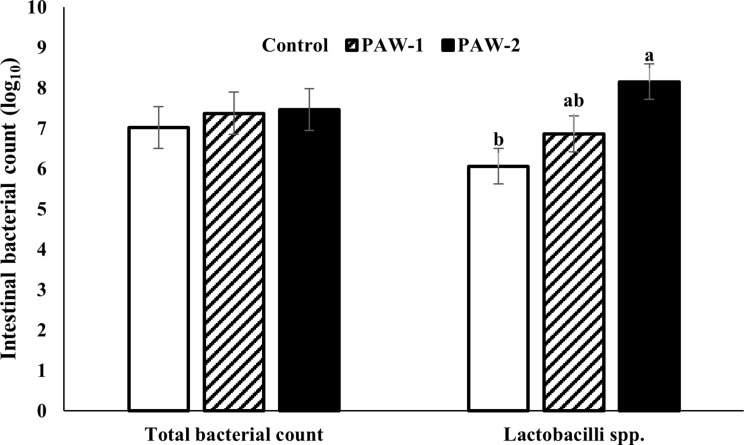
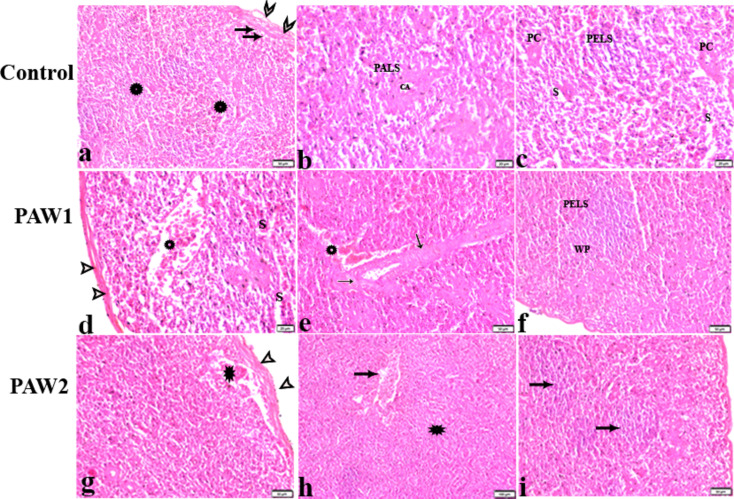
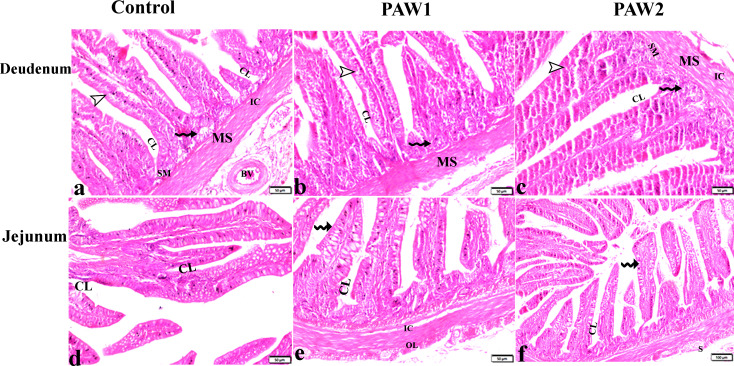
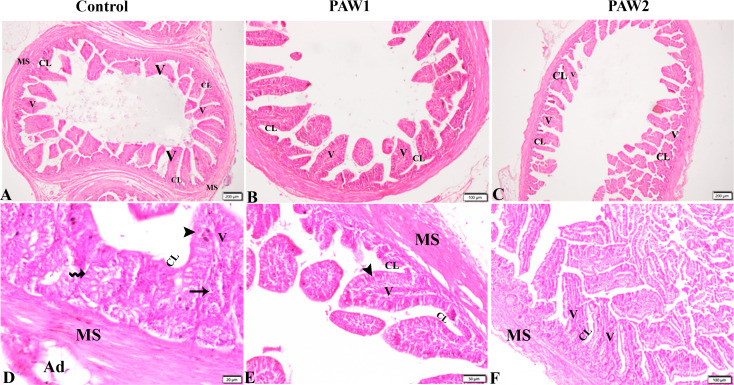
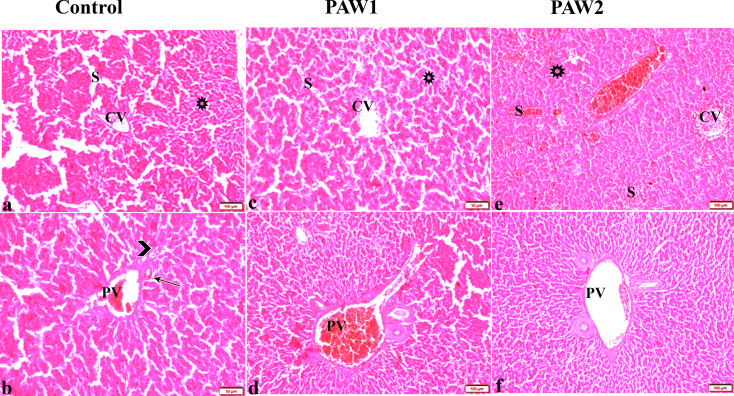
The results clarified that there were no significant (P > 0.05) changes in behaviour, and performance. For the biochemical indicators, the PAW-1 group showed significantly higher serum HO, total protein and globulin levels compared with the other groups (P = 0.015, < 0.001, and 0.019; respectively). PAW groups had significantly lower serum creatinine and urea levels than the control (P = 0.003). For the carcass quality, the internal organs relative weight between different treatments was not changed. In contrast, there was a significant increase in the meat colour, taste, and overall acceptance scores in PAW groups compared with the control one (P = 0.013, 0.001, and < 0.001; respectively). For the intestinal microbial population, lactobacilli count was significantly higher in PAW-2 compared with the control group (P = 0.014), while there were no changes in the total bacterial count between different treatment groups. Moreover, mild histological changes were recorded in the intestine, liver, and spleen of PAW groups especially PAW-2 compared with the control one.
PAW offered benefits, such as reducing creatine and urea levels, improving meat characteristics, and increasing lactobacilli count, all of which are crucial for sustainable quail farming. Therefore, further research is needed.
等离子体激活水 (PAW) 是一种创新的有前途的技术,可应用于改善家禽健康。本研究调查了饮用水供应 PAW 对鹌鹑行为、性能、生化参数、胴体质量、肠道微生物种群和内部器官组织病理学的影响。共有 54 只 21 日龄日本鹌鹑雏鸡被随机分配到三个处理组,每组分别提供 0、1 ml(PAW-1)和 2 ml(PAW-2)的 PAW 剂量。每个处理组包含 6 个重复(每个笼子 3 只鸟;1 只雄性和 2 只雌性)。
结果表明,行为和性能没有显著变化(P > 0.05)。对于生化指标,PAW-1 组的血清 HO、总蛋白和球蛋白水平明显高于其他组(P = 0.015、<0.001 和 0.019;分别)。PAW 组的血清肌酐和尿素水平明显低于对照组(P = 0.003)。对于胴体质量,不同处理之间的内脏器官相对重量没有变化。相比之下,PAW 组的肉色、口感和整体接受度评分明显高于对照组(P = 0.013、0.001 和 <0.001;分别)。对于肠道微生物种群,PAW-2 组的乳酸菌计数明显高于对照组(P = 0.014),而不同处理组之间的总细菌计数没有变化。此外,与对照组相比,PAW 组的肠道、肝脏和脾脏记录到轻微的组织学变化,尤其是 PAW-2 组。
PAW 提供了一些益处,例如降低肌酸和尿素水平、改善肉质特性和增加乳酸菌计数,这些对可持续鹌鹑养殖都很重要。因此,需要进一步研究。