SAMRC Extramural Unit for Stem Cell Research and Therapy, Department of Immunology, Faculty of Health Sciences, Institute for Cellular and Molecular Medicine, University of Pretoria, Room 5-64, Level 5, Pathology Building, 15 Bophelo Road (Cnr. Steve Biko and Dr. Savage Streets), Prinshof Campus, Gezina, Pretoria, South Africa.
Department of Paediatrics and Child Health, Division of Neonatology, Groote Schuur Hospital, University of Cape Town, Neonatal Unit, Cape Town, South Africa.
World J Pediatr. 2024 Nov;20(11):1105-1114. doi: 10.1007/s12519-024-00836-9. Epub 2024 Sep 6.
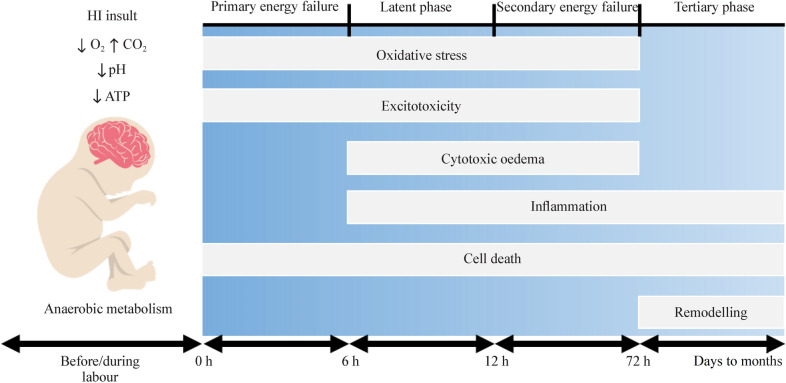
Neonatal encephalopathy (NE) due to suspected hypoxic-ischemic encephalopathy (HIE), referred to as NESHIE, is a clinical diagnosis in late preterm and term newborns. It occurs as a result of impaired cerebral blood flow and oxygen delivery during the peripartum period and is used until other causes of NE have been discounted and HIE is confirmed. Therapeutic hypothermia (TH) is the only evidence-based and clinically approved treatment modality for HIE. However, the limited efficacy and uncertain benefits of TH in some low- to middle-income countries (LMICs) and the associated need for intensive monitoring have prompted investigations into more accessible and effective stand-alone or additive treatment options.
This review describes the rationale and current evidence for alternative treatments in the context of the pathophysiology of HIE based on literatures from Pubmed and other online sources of published data.
The underlining mechanisms of neurotoxic effect, current clinically approved treatment, various categories of emerging treatments and clinical trials for NE are summarized in this review. Melatonin, caffeine citrate, autologous cord blood stem cells, Epoetin alfa and Allopurinal are being tested as potential neuroprotective agents currently.
This review describes the rationale and current evidence for alternative treatments in the context of the pathophysiology of HIE. Neuroprotective agents are currently only being investigated in high- and middle-income settings. Results from these trials will need to be interpreted and validated in LMIC settings. The focus of future research should therefore be on the development of inexpensive, accessible monotherapies and should include LMICs, where the highest burden of NESHIE exists.
由于疑似缺氧缺血性脑病(HIE)而导致的新生儿脑病(NE),称为 NESHIE,是一种在晚期早产儿和足月儿中出现的临床诊断。它是由于围产期脑血流和氧输送受损引起的,用于排除其他导致 NE 的原因并确认 HIE。治疗性低温(TH)是 HIE 的唯一基于证据和临床批准的治疗方式。然而,TH 在一些中低收入国家(LMICs)的疗效有限且不确定,且需要进行密集监测,这促使人们研究更易获得且有效的独立或附加治疗选择。
这篇综述根据 Pubmed 和其他已发表数据在线资源的文献,描述了基于 HIE 病理生理学的替代治疗的基本原理和当前证据。
该综述总结了神经毒性作用的潜在机制、目前临床批准的治疗方法、各种新兴治疗方法的类别以及 NE 的临床试验。褪黑素、柠檬酸咖啡因、自体脐带血干细胞、Epoetin alfa 和别嘌醇目前正在作为潜在的神经保护剂进行测试。
这篇综述描述了基于 HIE 病理生理学的替代治疗的基本原理和当前证据。神经保护剂目前仅在高收入和中等收入国家进行研究。这些试验的结果需要在 LMIC 环境中进行解释和验证。因此,未来研究的重点应放在开发廉价、可获得的单一疗法上,并应包括 NESHIE 负担最高的 LMIC 国家。