Sheng Li, Sun Jinyi, Huang Liyan, Yu Manshu, Meng Xiaohui, Shan Yun, Dai Huibo, Wang Funing, Shi Jun, Sheng Meixiao
Department of Nephrology, Affiliated Hospital of Nanjing University of Chinese Medicine, Nanjing, China.
First Clinic Medical School, Nanjing University of Chinese Medicine, Nanjing, China.
Front Pharmacol. 2024 Aug 22;15:1418485. doi: 10.3389/fphar.2024.1418485. eCollection 2024.
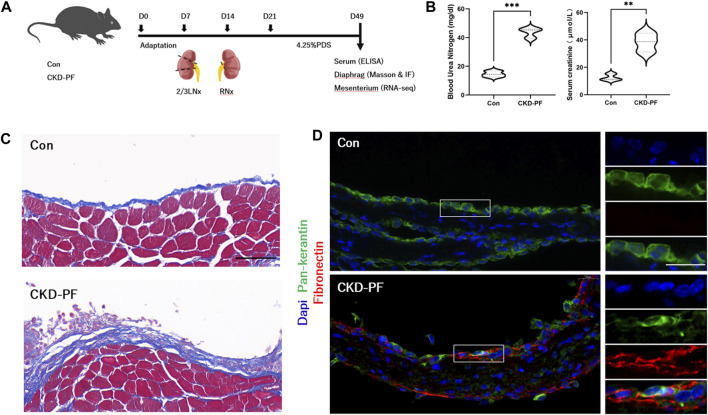
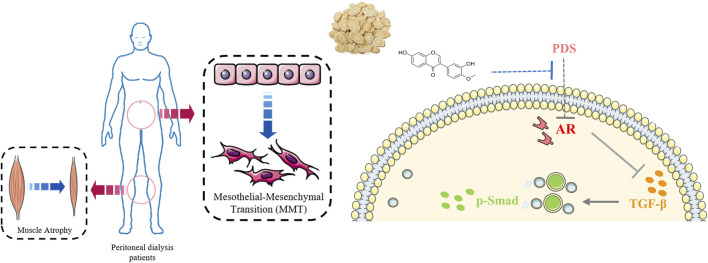
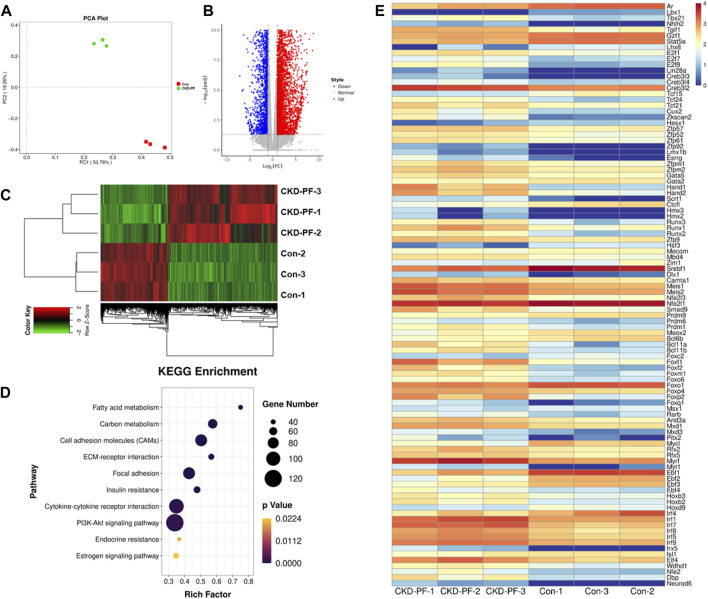
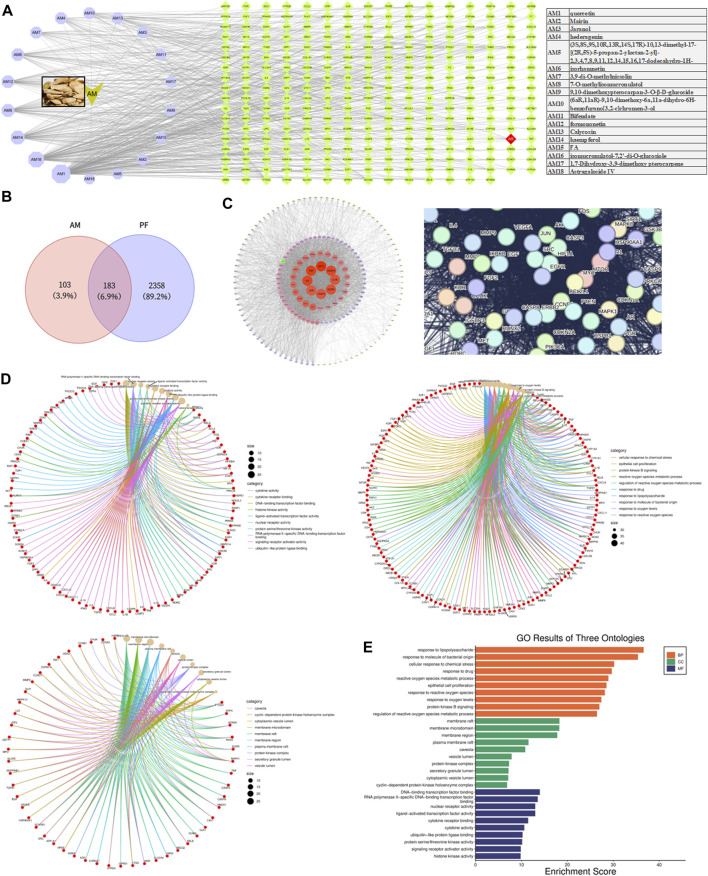
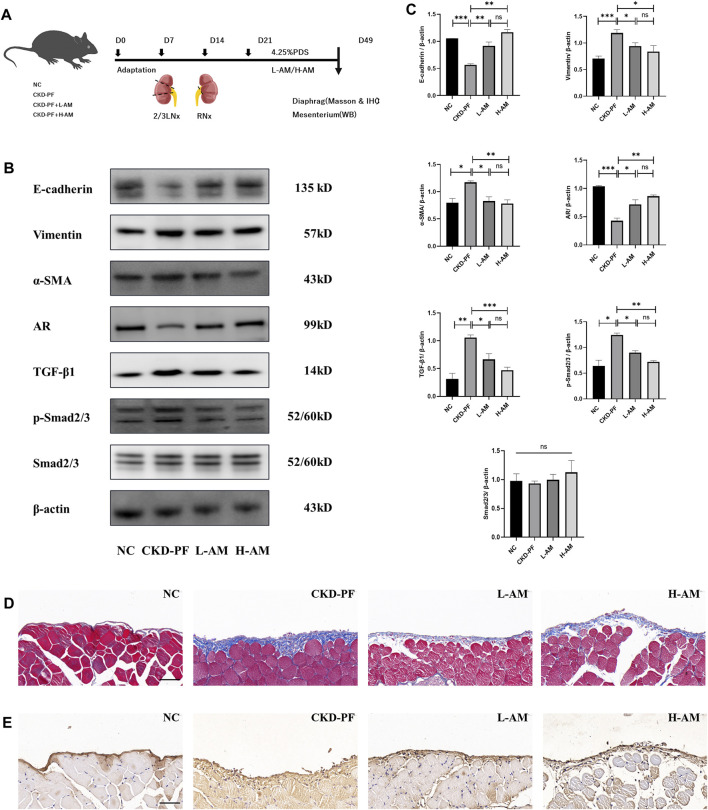
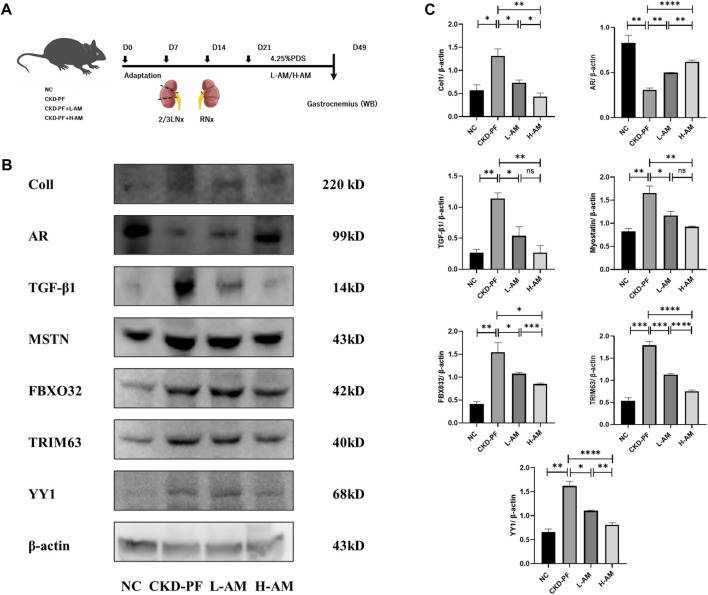
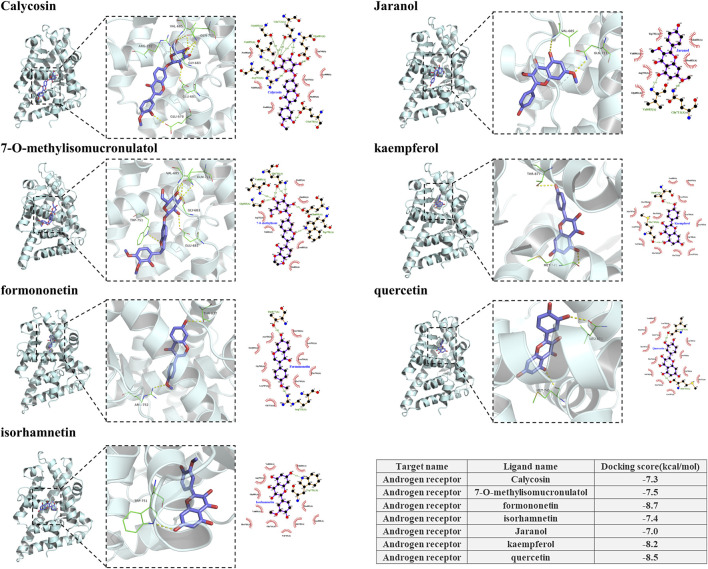
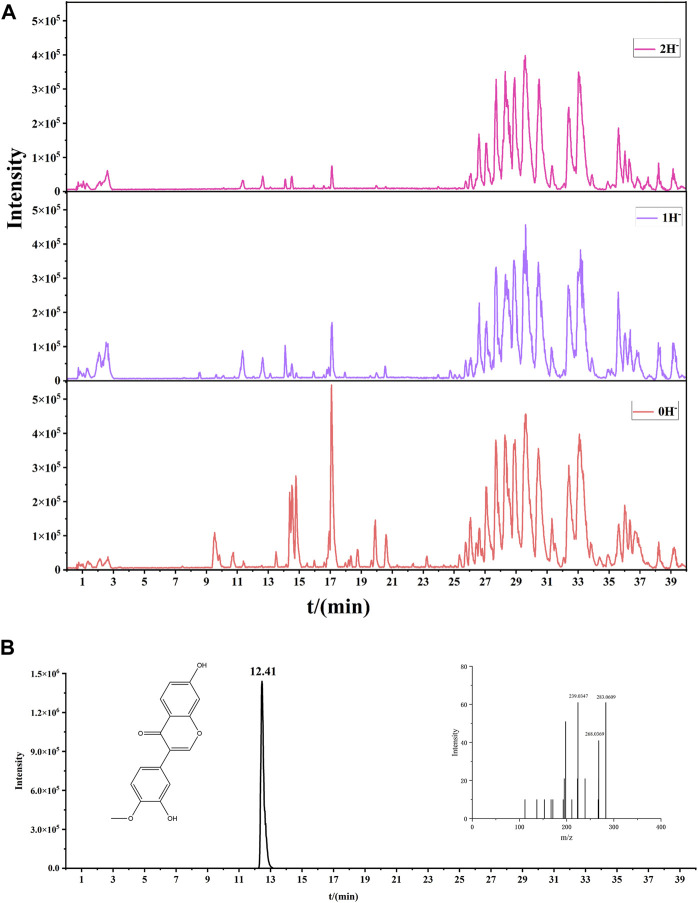
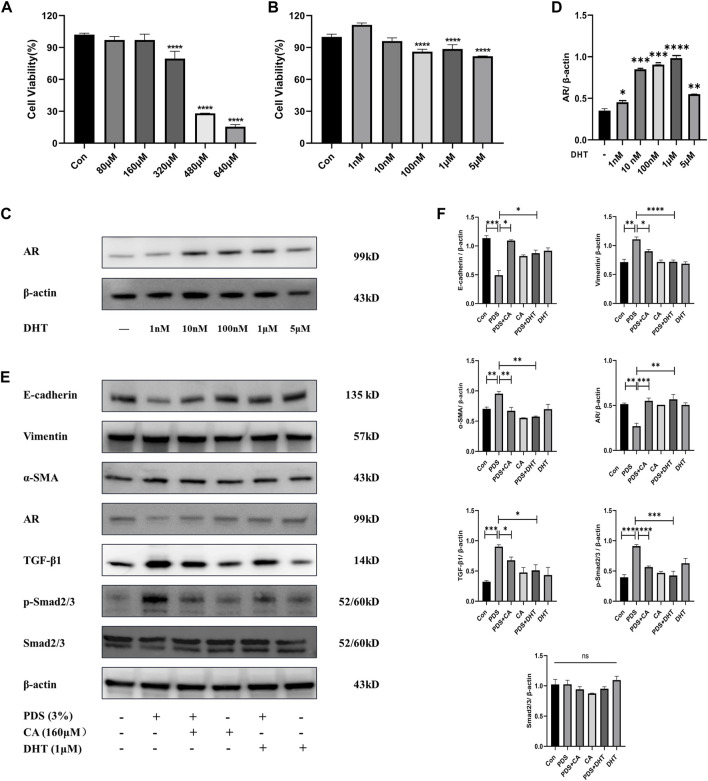
To anticipate the potential molecular mechanism of Astragalus membranaceus (AM) and its monomer, Calycosin, against peritoneal fibrosis (PF) and related muscle atrophy using mRNA-seq, network pharmacology, and serum pharmacochemistry. Animal tissues were examined to evaluate a CKD-PF mice model construction. mRNA sequencing was performed to find differential targets. The core target genes of AM against PF were screened through network pharmacology analysis, and CKD-PF mice models were given high- and low-dose AM to verify common genes. Serum pharmacochemistry was conducted to clarify which components of AM can enter the blood circulation, and the selected monomer was further validated through cell experiments for the effect on PF and mesothelial mesenchymal transition (MMT) of peritoneal mesothelial cells (PMCs). The CKD-PF mice models were successfully constructed. A total of 31,184 genes were detected in the blank and CKD-PF groups, and 228 transcription factors had significant differences between the groups. Combined with network pharmacology analysis, a total of 228 AM-PF-related targets were identified. Androgen receptor (AR) was the remarkable transcription factor involved in regulating transforming growth factor-β1 (TGF-β1). AM may be involved in regulating the AR/TGF-β1 signaling pathway and may alleviate peritoneal dialysis-related fibrosis and muscle atrophy in CKD-PF mice. In 3% peritoneal dialysis solution-stimulated HMrSV5 cells, AR expression levels were dramatically reduced, whereas TGF-β1/p-smads expression levels were considerably increased. AM could ameliorate PF and related muscle atrophy via the co-target AR and modulated AR/TGF-β1 pathway. Calycosin, a monomer of AM, could partially reverse PMC MMT via the AR/TGF-β1/smads pathway. This study explored the traditional Chinese medicine theory of "same treatment for different diseases," and supplied the pharmacological evidence of "AM can treat flaccidity syndrome."
运用mRNA测序、网络药理学和血清药物化学方法,预测黄芪及其单体毛蕊异黄酮对腹膜纤维化(PF)及相关肌肉萎缩的潜在分子机制。检测动物组织以评估慢性肾脏病-腹膜纤维化(CKD-PF)小鼠模型的构建情况。进行mRNA测序以寻找差异靶点。通过网络药理学分析筛选黄芪抗PF的核心靶基因,并给予CKD-PF小鼠模型高剂量和低剂量黄芪以验证共同基因。开展血清药物化学研究以阐明黄芪的哪些成分能够进入血液循环,并通过细胞实验进一步验证所选单体对腹膜间皮细胞(PMC)的PF和间皮-间充质转化(MMT)的影响。成功构建了CKD-PF小鼠模型。在空白组和CKD-PF组中共检测到31184个基因,两组间有228个转录因子存在显著差异。结合网络药理学分析,共鉴定出228个黄芪-腹膜纤维化相关靶点。雄激素受体(AR)是参与调节转化生长因子-β1(TGF-β1)的重要转录因子。黄芪可能参与调节AR/TGF-β1信号通路,并可能减轻CKD-PF小鼠的腹膜透析相关纤维化和肌肉萎缩。在3%腹膜透析液刺激的HMrSV5细胞中,AR表达水平显著降低,而TGF-β1/p-smads表达水平显著升高。黄芪可通过共同靶点AR改善PF及相关肌肉萎缩,并调节AR/TGF-β1通路。黄芪单体毛蕊异黄酮可通过AR/TGF-β1/smads途径部分逆转PMC的MMT。本研究探索了中医“异病同治”理论,为“黄芪可治痿证”提供了药理学证据。