Department of Molecular and Cellular Oncology, The University of Texas MD Anderson Cancer Center, Houston, TX, USA.
Department of Genomic Medicine, The University of Texas MD Anderson Cancer Center, Houston, TX, USA.
Gut Microbes. 2024 Jan-Dec;16(1):2399260. doi: 10.1080/19490976.2024.2399260. Epub 2024 Sep 6.
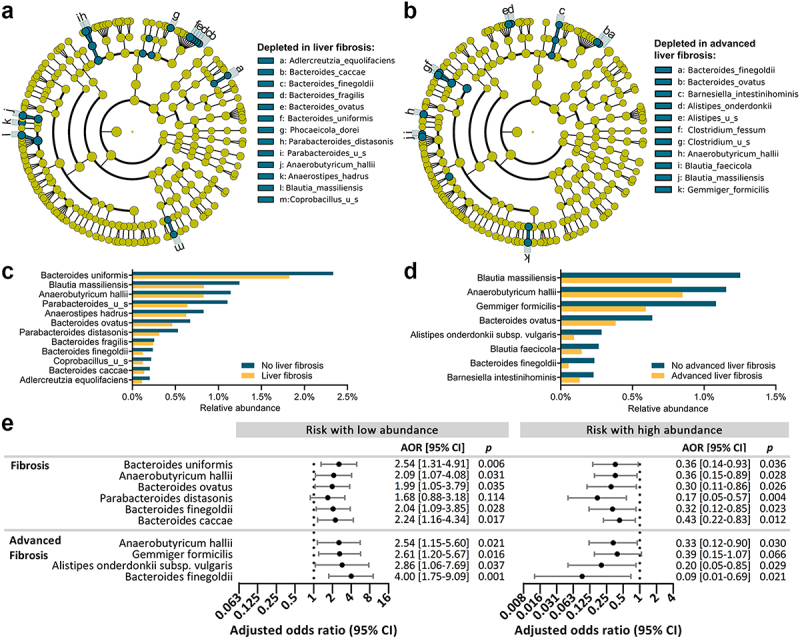
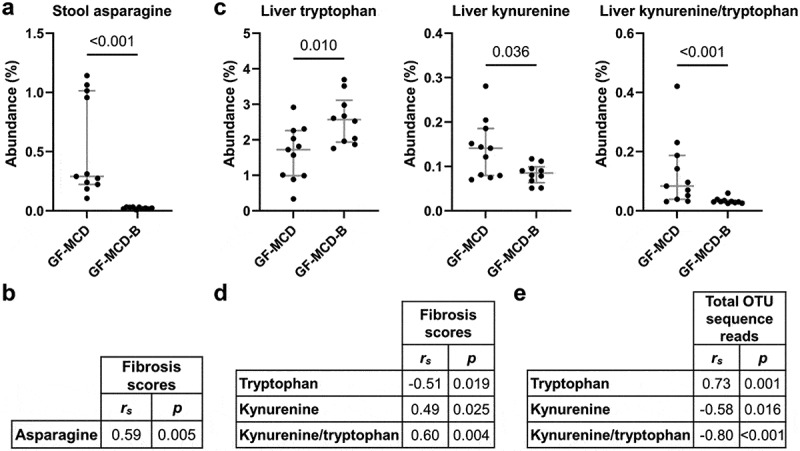
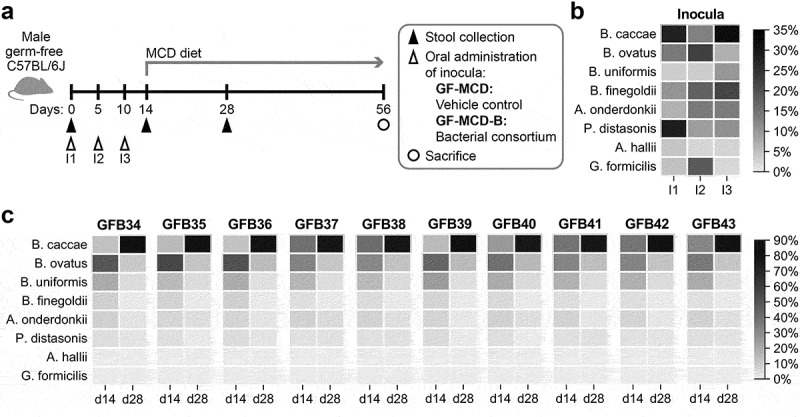
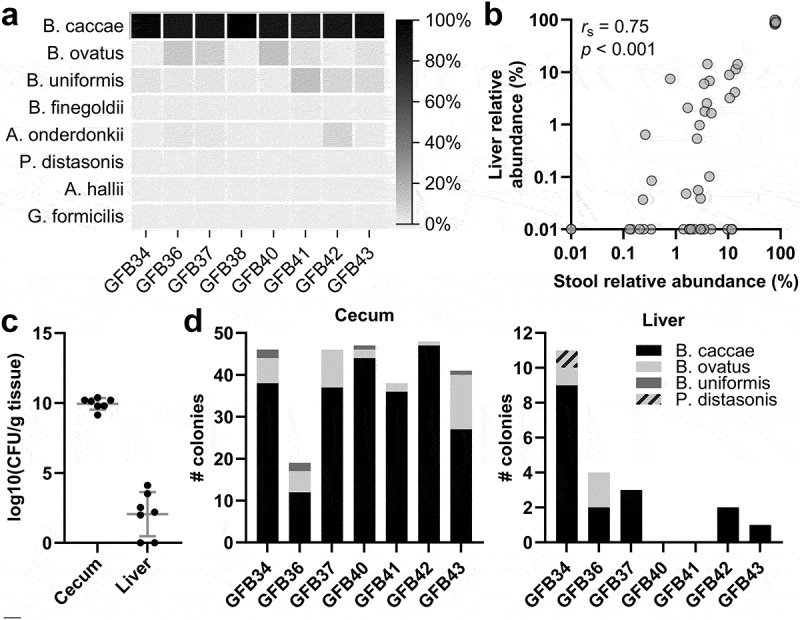
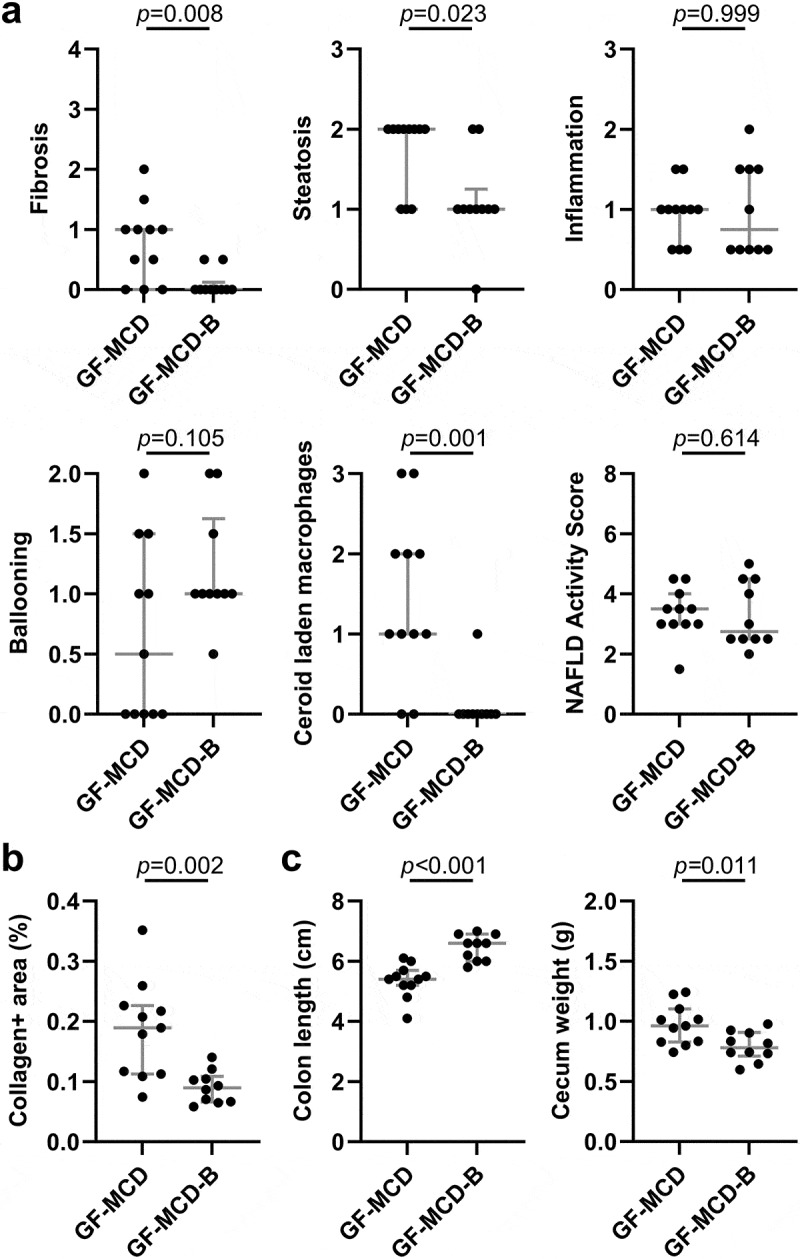
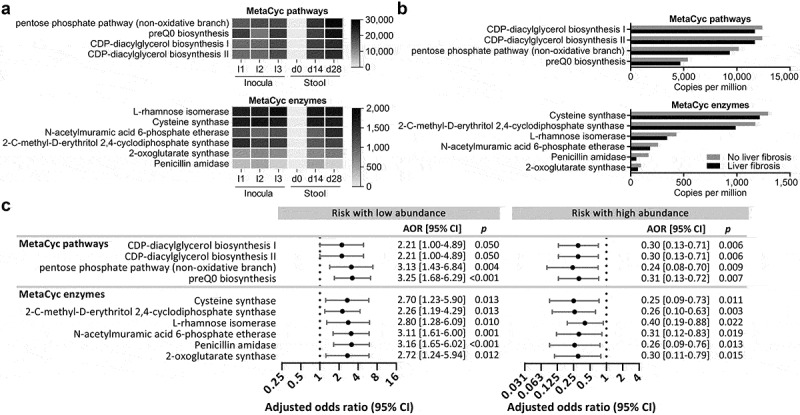
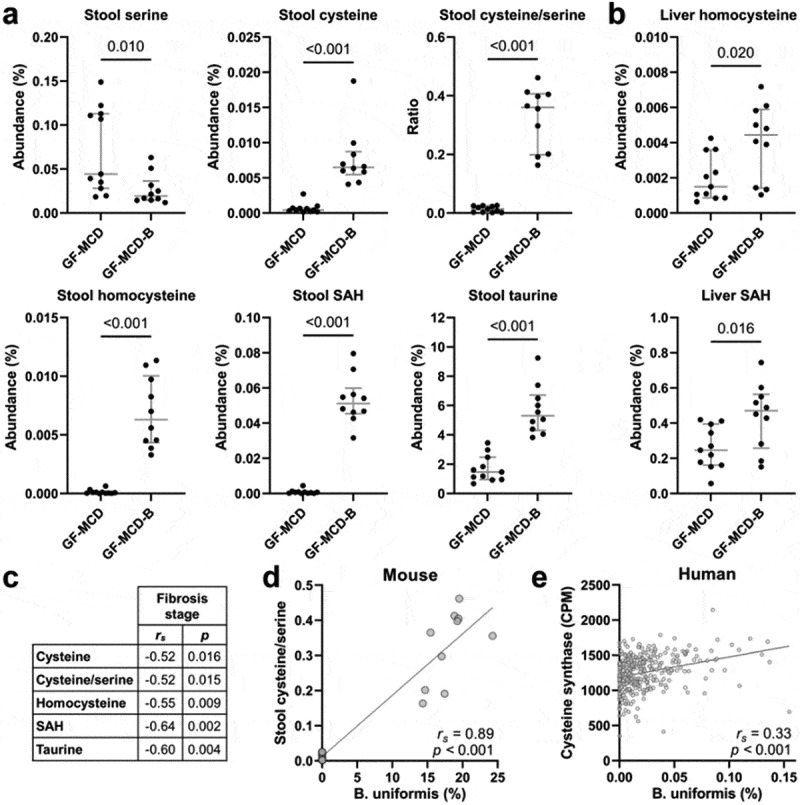
The gut microbiota drives progression to liver fibrosis, the main determinant of mortality in metabolic dysfunction-associated steatohepatitis (MASH). In this study, we aimed to identify bacterial species associated with protection against liver fibrosis in a high-risk population, and test their potential to protect against liver fibrosis . Based on stool shotgun metagenomic sequencing of 340 subjects from a population cohort disproportionally affected by MASH, we identified bacterial species from the and orders associated with reduced risk of liver fibrosis. A bacterial consortium was subsequently tested in a mouse model of MASH, which demonstrated protective effects against liver fibrosis. Six of the eight inoculated bacteria were detected in mouse stool and liver. Intrahepatic presence of bacteria was further confirmed by bacterial culture of mouse liver tissue. Changes in liver histological parameters, gut functional profiles, and amino acid profiles were additionally assessed. Comparison between fibrosis-associated human metagenome and bacteria-induced metagenome changes in mice identified microbial functions likely to mediate the protective effect against liver fibrosis. Amino acid profiling confirmed an increase in cysteine synthase activity, associated with reduced fibrosis. Other microbiota-induced changes in amino acids associated with reduced fibrosis included increased gut asparaginase activity and decreased hepatic tryptophan-to-kynurenine conversion. This human-to-mouse study identified bacterial species and their effects on amino acid metabolism as innovative strategies to protect against liver fibrosis in MASH.
肠道微生物群驱动向肝纤维化的进展,肝纤维化是代谢功能障碍相关脂肪性肝炎(MASH)患者死亡的主要决定因素。在这项研究中,我们旨在鉴定与高风险人群肝纤维化保护相关的细菌物种,并测试它们预防肝纤维化的潜力。基于对来自 MASH 受影响比例较高的人群队列的 340 名受试者的粪便宏基因组 shotgun 测序,我们鉴定出了来自 和 目与降低肝纤维化风险相关的细菌物种。随后,在 MASH 的小鼠模型中测试了细菌联合体,结果显示其具有预防肝纤维化的作用。在小鼠粪便和肝脏中检测到接种的 8 种细菌中的 6 种。通过对小鼠肝组织的细菌培养进一步证实了肝内细菌的存在。还评估了肝组织学参数、肠道功能谱和氨基酸谱的变化。将与纤维化相关的人类宏基因组与小鼠中细菌诱导的宏基因组变化进行比较,确定了可能介导对肝纤维化的保护作用的微生物功能。氨基酸谱分析证实了半胱氨酸合酶活性增加,与纤维化减少有关。与纤维化减少相关的其他由微生物群诱导的氨基酸变化包括肠道天冬酰胺酶活性增加和肝色氨酸向犬尿氨酸转化减少。这项从人到鼠的研究鉴定出了细菌物种及其对氨基酸代谢的影响,为预防 MASH 中的肝纤维化提供了创新策略。