Division of Infectious Diseases, Department of Medicine, Brigham and Women's Hospital, Boston, Massachusetts, United States of America.
Department of Microbiology, Harvard Medical School, Boston, Massachusetts, United States of America.
PLoS Pathog. 2024 Sep 6;20(9):e1012525. doi: 10.1371/journal.ppat.1012525. eCollection 2024 Sep.
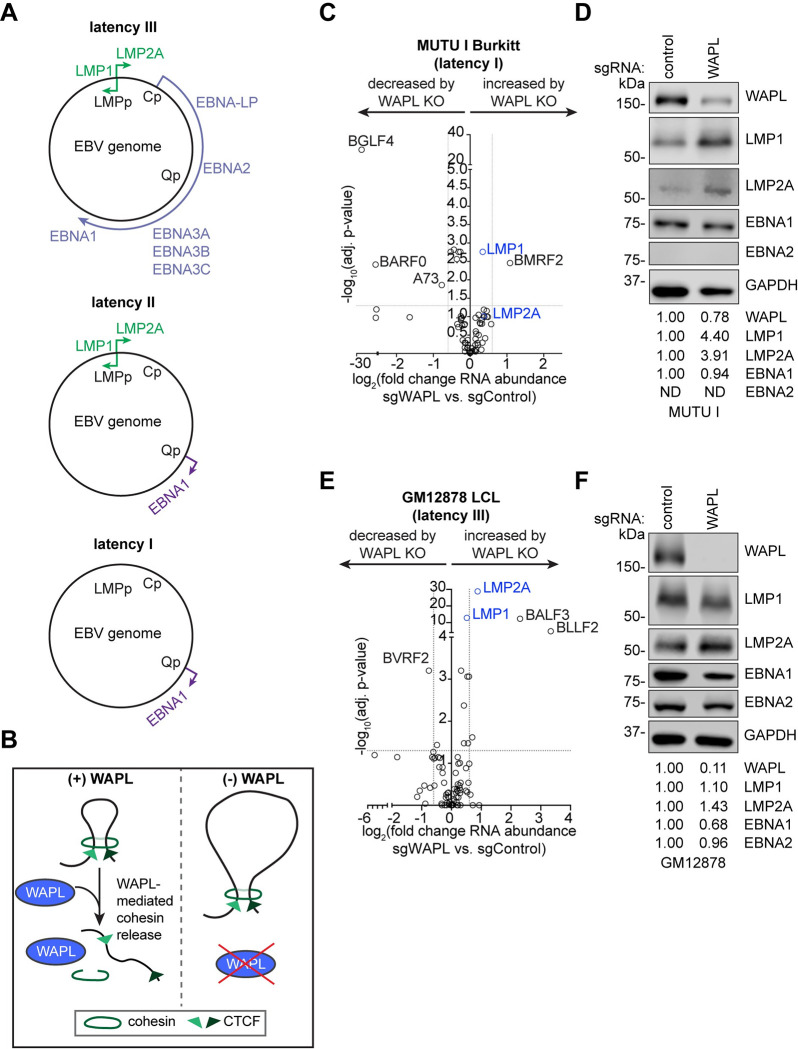
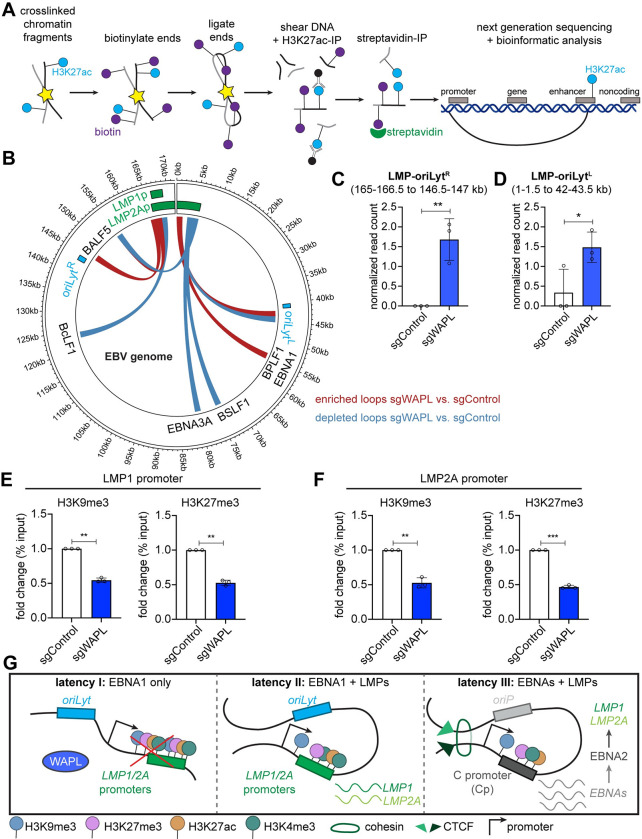
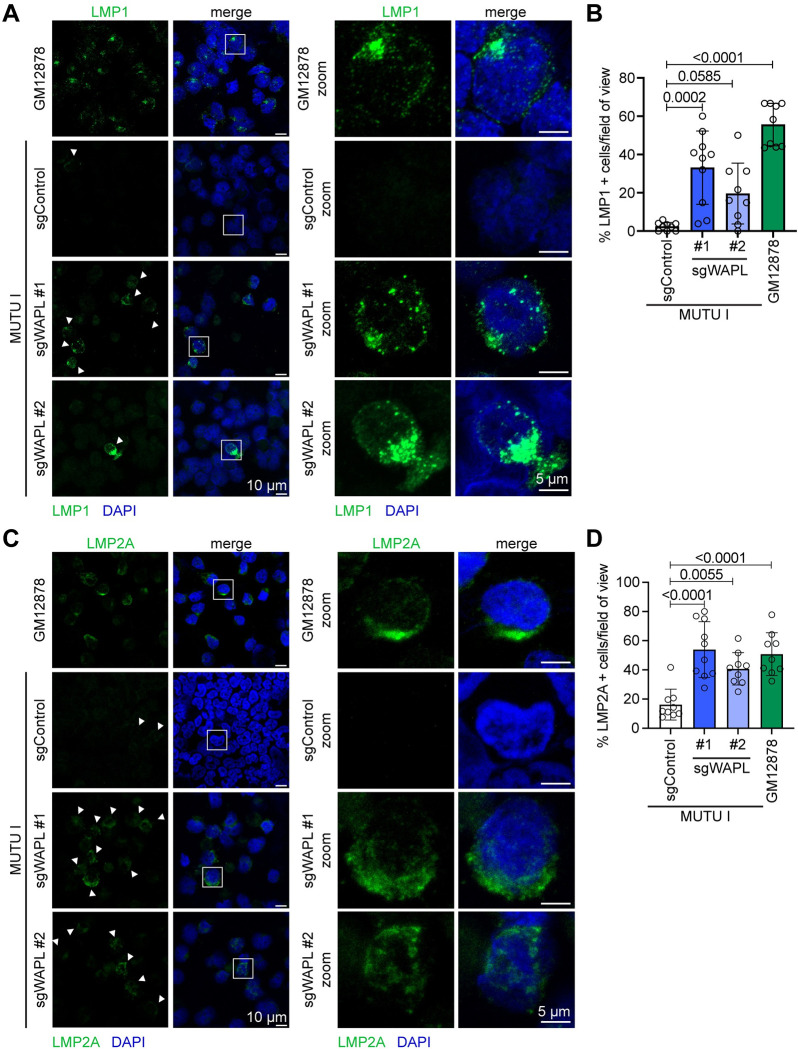
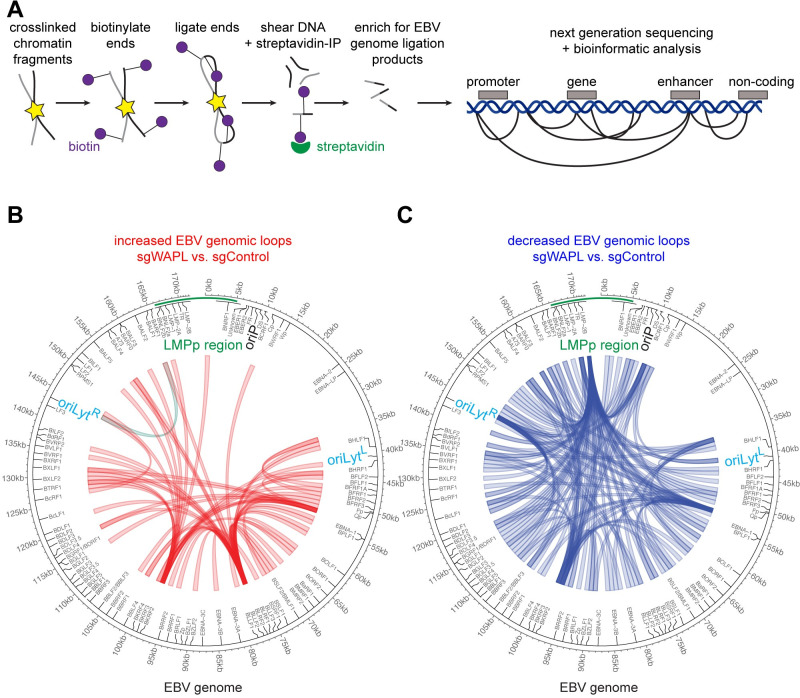
Epstein-Barr virus (EBV) uses latency programs to colonize the memory B-cell reservoir, and each program is associated with human malignancies. However, knowledge remains incomplete of epigenetic mechanisms that maintain the highly restricted latency I program, present in memory and Burkitt lymphoma cells, in which EBNA1 is the only EBV-encoded protein expressed. Given increasing appreciation that higher order chromatin architecture is an important determinant of viral and host gene expression, we investigated roles of Wings Apart-Like Protein Homolog (WAPL), a host factor that unloads cohesin to control DNA loop size and that was discovered as an EBNA2-associated protein. WAPL knockout (KO) in Burkitt cells de-repressed LMP1 and LMP2A expression, but not other EBV oncogenes, to yield a viral program reminiscent of EBV latency II, which is rarely observed in B-cells. WAPL KO also increased LMP1/2A levels in latency III lymphoblastoid cells. WAPL KO altered EBV genome architecture, triggering formation of DNA loops between the LMP promoter region and the EBV origins of lytic replication (oriLyt). Hi-C analysis further demonstrated that WAPL KO reprogrammed EBV genomic DNA looping. LMP1 and LMP2A de-repression correlated with decreased histone repressive marks at their promoters. We propose that EBV coopts WAPL to negatively regulate latent membrane protein expression to maintain Burkitt latency I.
EBV(Epstein-Barr 病毒)利用潜伏期程序来殖民记忆 B 细胞库,并且每个程序都与人类恶性肿瘤有关。然而,对于维持高度受限的潜伏期 I 程序的表观遗传机制,我们的了解仍然不完整,该程序存在于记忆 B 细胞和伯基特淋巴瘤细胞中,其中 EBNA1 是唯一表达的 EBV 编码蛋白。鉴于人们越来越认识到高级染色质结构是病毒和宿主基因表达的重要决定因素,我们研究了 Wings Apart-Like Protein Homolog(WAPL)的作用,WAPL 是一种宿主因子,可卸载黏连蛋白以控制 DNA 环大小,它是作为 EBNA2 相关蛋白被发现的。伯基特细胞中的 WAPL 敲除(KO)解除了 LMP1 和 LMP2A 的表达抑制,但没有解除其他 EBV 癌基因的表达抑制,从而产生类似于 EBV 潜伏期 II 的病毒程序,而在 B 细胞中很少观察到这种程序。WAPL KO 还增加了潜伏 III 淋巴母细胞中的 LMP1/2A 水平。WAPL KO 改变了 EBV 基因组结构,引发了 LMP 启动子区域和 EBV 裂解复制原点(oriLyt)之间的 DNA 环形成。Hi-C 分析进一步证明,WAPL KO 重新编程了 EBV 基因组 DNA 环化。LMP1 和 LMP2A 的去抑制与它们启动子上的组蛋白抑制标记减少相关。我们提出,EBV 利用 WAPL 来负调控潜伏膜蛋白的表达,以维持伯基特氏潜伏期 I。