Taizhou University, City of Taizhou, China.
BMC Psychol. 2024 Sep 6;12(1):472. doi: 10.1186/s40359-024-01977-2.
The process of revising writing has provided valuable insights into both learners' written output and their cognitive processes during revision. Research has acknowledged the emotional dimension of writing revision, yet no studies have delved into models that connect all of these domains. Given the interplay between these domains, it is crucial to explore potential associations between writing revision and writing quality in terms of emotions.
This study aims to shed light on the emotional shifts that occur as learners transition from a focus on form to an emphasis on content, refining fundamental aspects of writing revision, and investigating potential challenges and strategies.
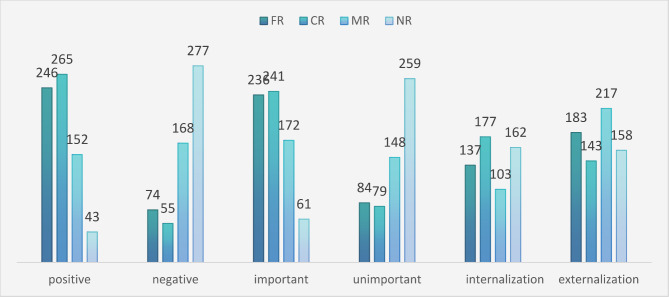
A total of 320 Chinese-speaking learners (188 female and 132 male) participated in weekly writing classes. We used subsequent investigation aimed to probe the specific writing revision practices contributing to both form and content revisions and semi-structured interview from collection, representation, marking, and stimulated recall to elicit participants' perspectives on various aspects, including the number of writing revisions, recurring errors, emotional processes, efficacy of writing revision, cognition of writing revision, attitudes towards writing revision, and emotional changes.
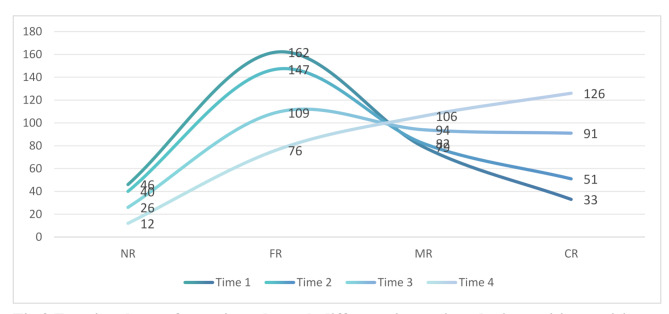
The findings reveal a positive correlation between writing revision and the quality of writing. EFL learners' rationale for revising centered on the imperative need to address new structural nuances or incorporate additional elements such as vocabulary, spelling, and punctuation. Additionally, form revision garnered significantly lower scores compared to content revision. Finally, EFL learners deduced the form revision governing target content through repeated revisions of the manuscript throughout the time points.
The results indicate that the outcomes of form-focused revision or content-oriented approaches are linked to the quality of writing and contribute to the development of writing skills. Moreover, psychological processes assist English as a Foreign Language (EFL) learners in enhancing their self-efficacy in language acquisition.
This study contributes to the existing body of knowledge by highlighting the importance of understanding the emotional dimensions of writing revision. The practical implications of these findings extend to both learners and educators, offering insights into how to enhance self-efficacy in language learning and teaching.
写作修改过程为学习者的书面输出和修改过程中的认知过程提供了有价值的见解。研究已经承认了写作修改的情感维度,但没有研究深入探讨将这些领域联系起来的模型。鉴于这些领域的相互作用,探索写作修改和写作质量之间在情感方面的潜在关联至关重要。
本研究旨在揭示学习者从注重形式到强调内容的过渡过程中情绪的变化,以及完善写作修改的基本方面,并研究潜在的挑战和策略。
共有 320 名说汉语的学习者(188 名女性,132 名男性)参加了每周的写作课程。我们使用后续调查来探究对形式和内容修改都有贡献的具体写作修改实践,并通过收集、表示、标记和激发回忆进行半结构化访谈,以引出参与者对各个方面的看法,包括写作修改的次数、反复出现的错误、情绪过程、写作修改的效果、写作修改的认知、对写作修改的态度和情绪变化。
研究结果显示,写作修改与写作质量呈正相关。EFL 学习者修改的理由主要是必须解决新的结构细微差别或纳入词汇、拼写和标点等额外元素。此外,与内容修改相比,形式修改的得分显著较低。最后,EFL 学习者通过在各个时间点反复修改手稿来推断出指导目标内容的形式修改。
研究结果表明,以形式为重点的修改或内容为导向的方法的结果与写作质量有关,并有助于写作技能的发展。此外,心理过程有助于英语作为外语(EFL)学习者增强他们在语言习得中的自我效能感。
本研究通过强调理解写作修改的情感维度的重要性,为现有知识体系做出了贡献。这些发现的实际意义不仅延伸到学习者和教育者,还为如何增强语言学习和教学中的自我效能感提供了启示。