Department of Veterinary and Biomedical Sciences, Pennsylvania State University, University Park, Pennsylvania, USA.
Huck Institutes of Life Sciences, Pennsylvania State University, University Park, Pennsylvania, USA.
mBio. 2024 Oct 16;15(10):e0216124. doi: 10.1128/mbio.02161-24. Epub 2024 Sep 9.
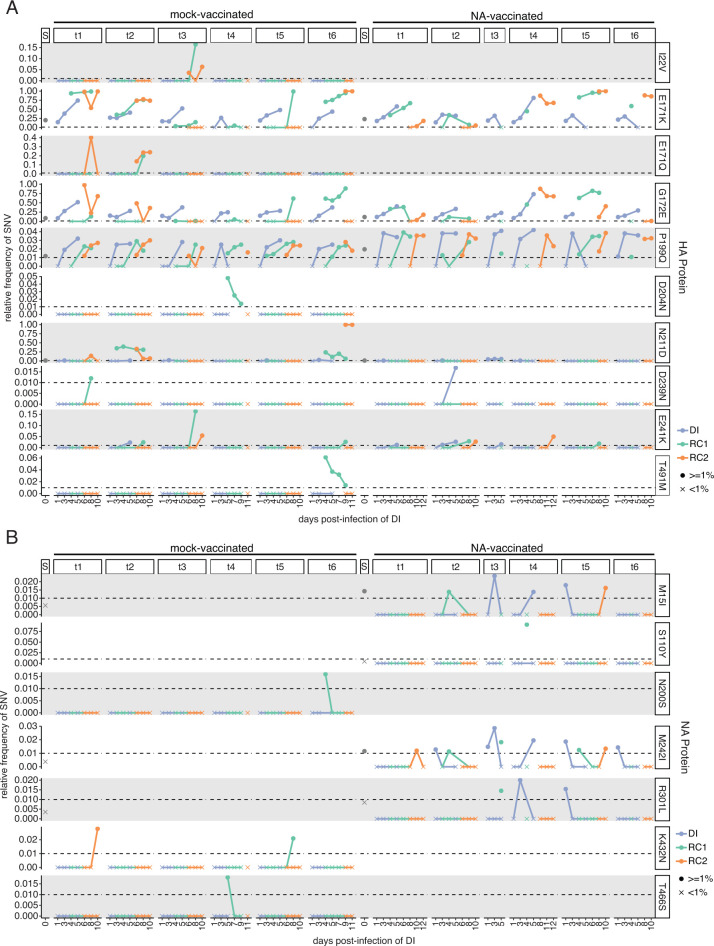
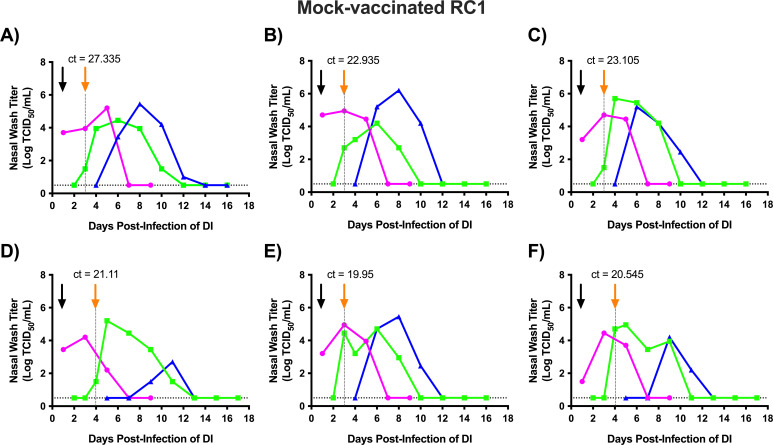
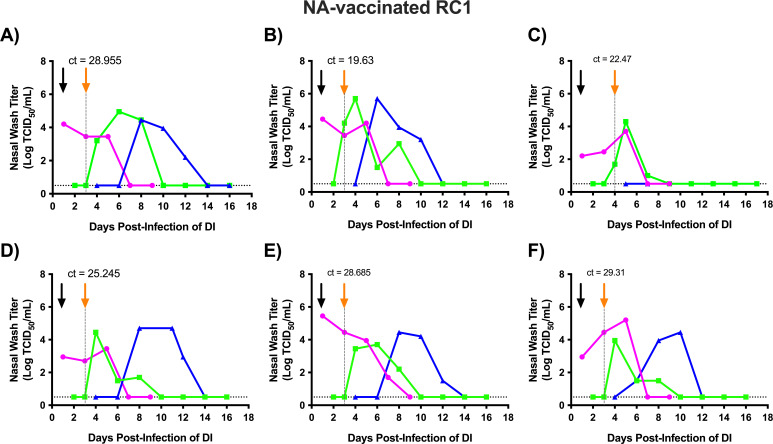
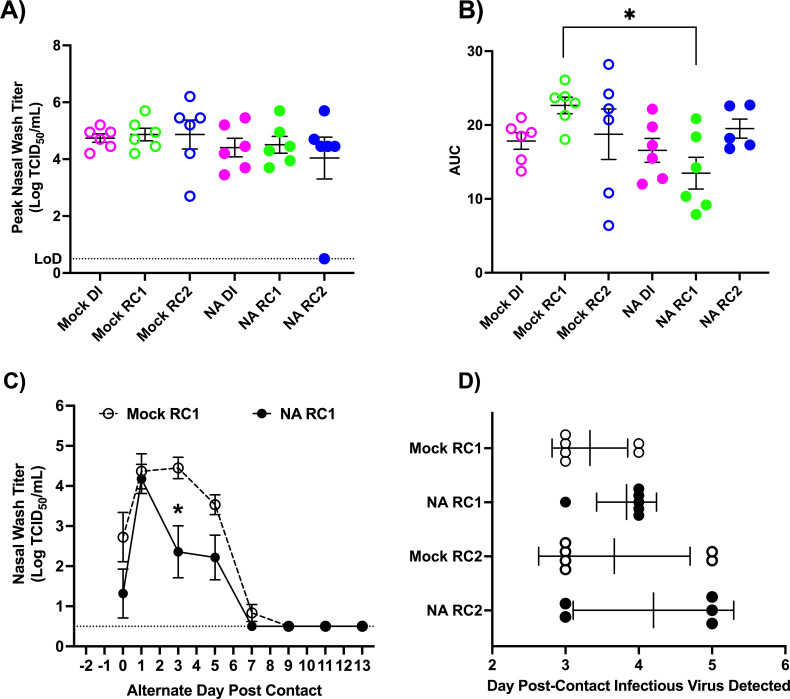
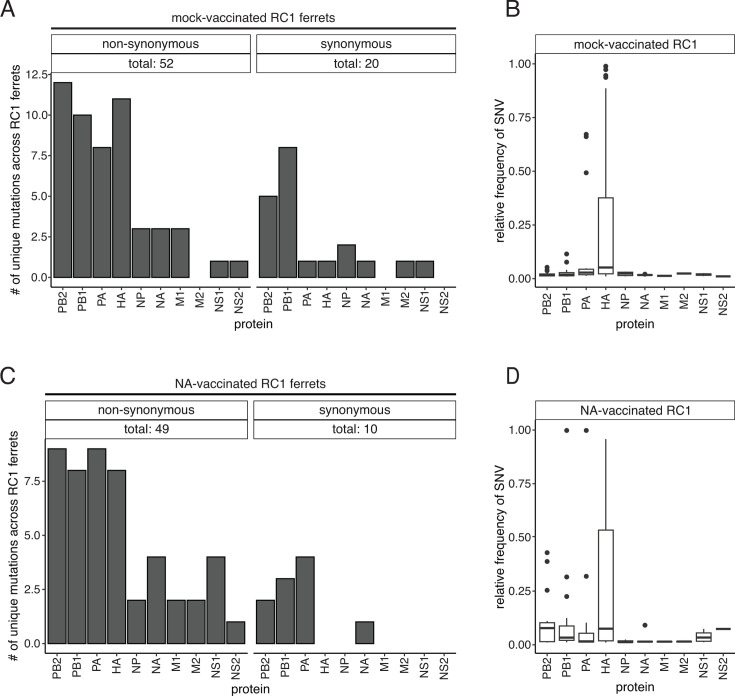
Split-virion-inactivated influenza vaccines are formulated based on viral hemagglutinin content. These vaccines also contain the viral neuraminidase (NA) protein, but NA content is not standardized and varies between manufacturers. In clinical studies and animal models, antibodies directed toward NA reduced disease severity and viral load; however, the impact of vaccine-induced NA immunity on airborne transmission of influenza A viruses is not well characterized. Therefore, we evaluated if vaccination against NA could disrupt chains of airborne transmission for the 2009 pandemic H1N1 virus in ferrets. Immunologically naïve donor ferrets were infected with the 2009 pandemic H1N1 virus and then paired in transmission cages with mock- or NA-vaccinated respiratory contacts. The mock- and NA-vaccinated animals were then monitored daily for infection, and once infected, these animals were paired with a naive secondary respiratory contact. In these studies, all mock- and NA-vaccinated animals became infected; however, NA-vaccinated animals shed significantly less virus for fewer days relative to mock-vaccinated animals. For the secondary contacts, 6/6 and 5/6 animals became infected after exposure to mock- and NA-vaccinated animals, respectively. To determine if vaccine-induced immune pressure selected for escape variants, we sequenced viruses recovered from ferrets. No mutations in NA became enriched during transmission. These findings indicate that despite reducing viral load, vaccine-induced NA immunity does not prevent infection during continuous airborne exposure and subsequent onward airborne transmission of the 2009 pandemic H1N1 virus.
In humans and animal models, immunity against neuraminidase (NA) reduces disease severity and viral replication during influenza infection. However, we have a limited understanding of the impact of NA immunity on viral transmission. Using chains of airborne transmission in ferrets as a strategy to simulate a more natural route of infection, we assessed if vaccine-induced NA immunity could disrupt transmission of the 2009 pandemic H1N1 virus. The 2009 pandemic H1N1 virus transmitted efficiently through chains of transmission in the presence of NA immunity, but NA-vaccinated animals shed significantly less virus and had accelerated viral clearance. To determine if immune pressure led to the generation of escape variants, viruses in ferret nasal wash samples were sequenced, and no mutations in NA were identified. These findings demonstrate that vaccine-induced NA immunity is not sufficient to prevent infection via airborne exposure and onward airborne transmission of the 2009 pandemic H1N1 virus.
基于病毒血凝素含量,配制了裂解病毒灭活流感疫苗。这些疫苗还含有病毒神经氨酸酶(NA)蛋白,但 NA 含量没有标准化,并且在制造商之间存在差异。在临床研究和动物模型中,针对 NA 的抗体可降低疾病严重程度和病毒载量;然而,疫苗诱导的 NA 免疫对甲型流感病毒空气传播的影响尚未得到很好的描述。因此,我们评估了针对 NA 的疫苗接种是否可以破坏 2009 年大流行 H1N1 病毒在雪貂中的空气传播链。免疫原性未致敏的供体雪貂感染了 2009 年大流行 H1N1 病毒,然后与模拟或 NA 疫苗接种的呼吸道接触者配对在传播笼中。然后每天监测模拟和 NA 疫苗接种的动物是否感染,一旦感染,这些动物就与未感染的二次呼吸道接触者配对。在这些研究中,所有模拟和 NA 疫苗接种的动物都被感染;然而,与模拟疫苗接种的动物相比,NA 疫苗接种的动物病毒载量降低且持续时间更短。对于二次接触者,暴露于模拟和 NA 疫苗接种动物后,分别有 6/6 和 5/6 的动物被感染。为了确定疫苗诱导的免疫压力是否选择了逃逸变体,我们对从雪貂中回收的病毒进行了测序。在传播过程中,NA 中没有发现富集的突变。这些发现表明,尽管降低了病毒载量,但疫苗诱导的 NA 免疫并不能防止连续空气暴露和随后的 2009 年大流行 H1N1 病毒的空气传播感染。
在人类和动物模型中,针对神经氨酸酶(NA)的免疫可降低流感感染期间的疾病严重程度和病毒复制。然而,我们对 NA 免疫对病毒传播的影响知之甚少。我们使用雪貂中的空气传播链作为模拟更自然感染途径的策略,评估了疫苗诱导的 NA 免疫是否可以破坏 2009 年大流行 H1N1 病毒的传播。在存在 NA 免疫的情况下,2009 年大流行 H1N1 病毒通过传播链高效传播,但 NA 疫苗接种的动物病毒载量显著降低,病毒清除速度加快。为了确定免疫压力是否导致了逃逸变体的产生,我们对雪貂鼻洗液样本中的病毒进行了测序,未发现 NA 中的突变。这些发现表明,疫苗诱导的 NA 免疫不足以防止通过空气暴露和随后的 2009 年大流行 H1N1 病毒的空气传播感染。