Department of Minimal Invasive Intervention, Henan Cancer Hospital, The Affiliated Cancer Hospital of Zhengzhou University, Zhengzhou, 450003, China.
BMC Cancer. 2024 Sep 9;24(1):1120. doi: 10.1186/s12885-024-12876-5.
Transcatheter arterial chemoembolization (TACE) combined with targeted therapy and immunotherapy can significantly improve the prognosis of patients with hepatocellular carcinoma (HCC). T-cell immunoreceptor with immunoglobulin and immunoreceptor tyrosine-based inhibitory motif domains (TIGIT) is a novel immunosuppressive molecule. This study aimed to analyze the clinical correlation between TIGIT expression on T cells and patients with HCC.
Clinical data from 140 patients with HCC were retrospectively collected, and TIGIT expression on T cells was examined in each patient. Patients were subsequently divided into high- and low-expression groups, and their prognosis was analyzed.
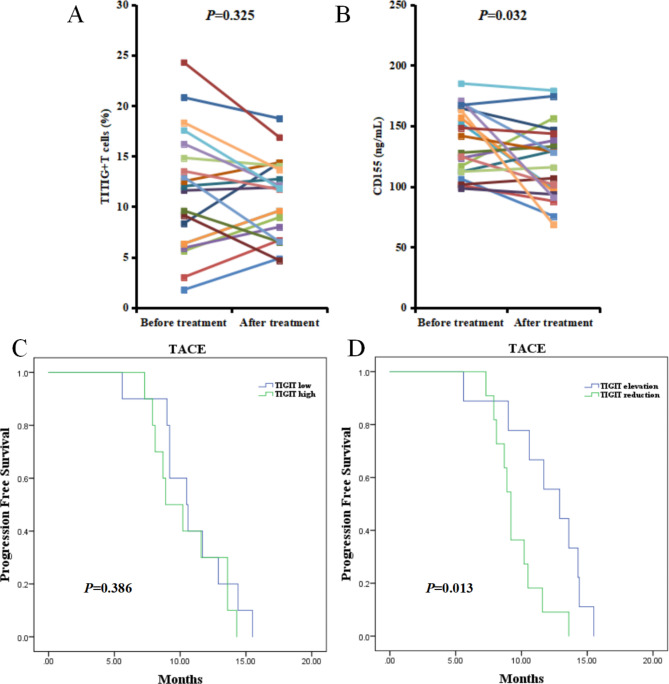
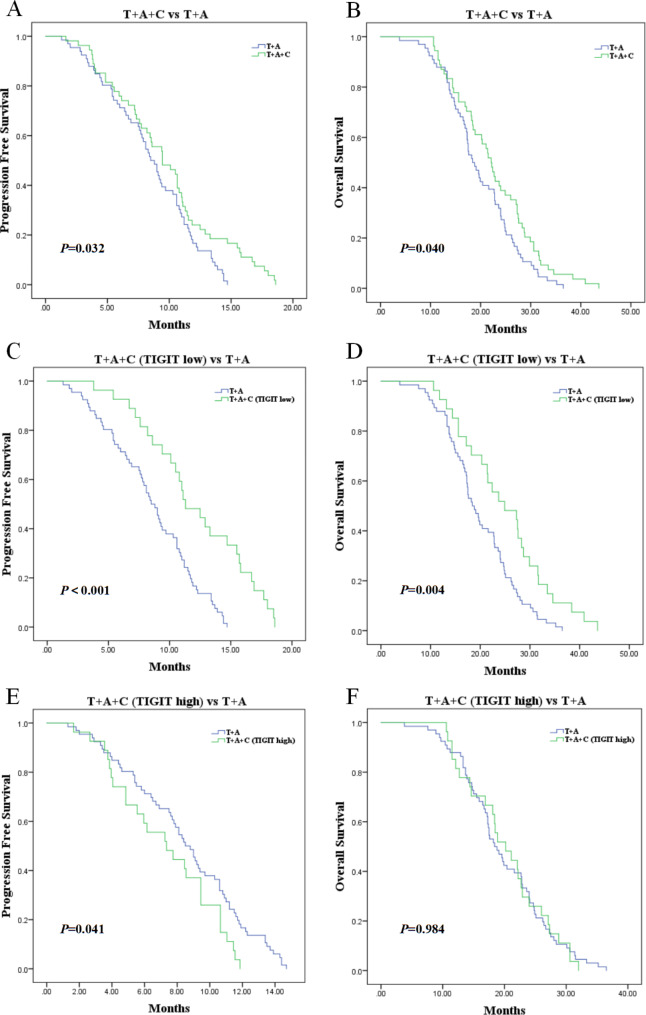
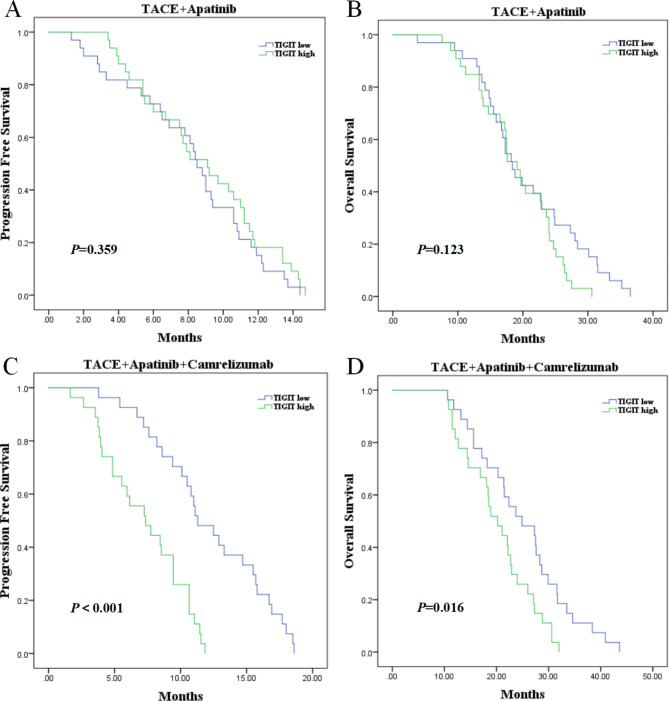
Patients with a high TIGIT expression on their T cells at baseline had a larger tumor volume, later staging, higher proportion of regulatory T cells, higher blood concentrations of interleukin (IL)-6 and IL-10, and lower interferon-γ concentrations. Following TACE, CD155 concentration decreased; however, TACE did not affect TIGIT expression on T cells. Additionally, among patients receiving TACE combined with apatinib and camrelizumab treatment, patients with a high TIGIT expression on T cells had significantly shorter progression-free survival (PFS) and overall survival times than those of patients in the low-expression group. Patients receiving TACE combined with apatinib and camrelizumab treatment with higher TIGIT expression have shorter PFS time than those receiving TACE combined with apatinib treatment.
Patients with HCC that have a high TIGIT expression on their T cells exhibited poorer baseline characteristics, immunosuppressive status, and prognosis after receiving TACE combined with apatinib and camrelizumab and maybe more suited to receive TACE combined with apatinib treatment instead.
经导管动脉化疗栓塞术(TACE)联合靶向治疗和免疫治疗可以显著改善肝细胞癌(HCC)患者的预后。T 细胞免疫受体免疫球蛋白和免疫受体酪氨酸抑制基序结构域(TIGIT)是一种新型的免疫抑制分子。本研究旨在分析 T 细胞上 TIGIT 表达与 HCC 患者的临床相关性。
回顾性收集了 140 例 HCC 患者的临床资料,并检测了每位患者 T 细胞上的 TIGIT 表达。随后,根据 TIGIT 表达将患者分为高表达组和低表达组,分析其预后。
基线时 T 细胞上 TIGIT 高表达的患者肿瘤体积较大,分期较晚,调节性 T 细胞比例较高,血清白细胞介素(IL)-6 和 IL-10 浓度较高,干扰素-γ浓度较低。TACE 后 CD155 浓度降低;但 TACE 不影响 T 细胞上 TIGIT 的表达。此外,在接受 TACE 联合阿帕替尼和卡瑞利珠单抗治疗的患者中,T 细胞上 TIGIT 高表达的患者无进展生存期(PFS)和总生存期均明显短于低表达组患者。接受 TACE 联合阿帕替尼和卡瑞利珠单抗治疗且 TIGIT 高表达的患者 PFS 时间短于接受 TACE 联合阿帕替尼治疗的患者。
T 细胞上 TIGIT 高表达的 HCC 患者基线特征、免疫抑制状态和 TACE 联合阿帕替尼和卡瑞利珠单抗治疗后的预后较差,可能更适合接受 TACE 联合阿帕替尼治疗。