Gao Zhen, Geng Yong, Gao Ziyan, Liang Zhou, Wei Wendong
School of Environmental Science and Engineering, Shanghai Jiao Tong University, No.800 Dongchuan Road, Shanghai, 200240, China.
School of International and Public Affairs, Shanghai Jiao Tong University, No.1954 Huashan Road, Shanghai, 200030, China.
Heliyon. 2024 Aug 15;10(16):e36336. doi: 10.1016/j.heliyon.2024.e36336. eCollection 2024 Aug 30.
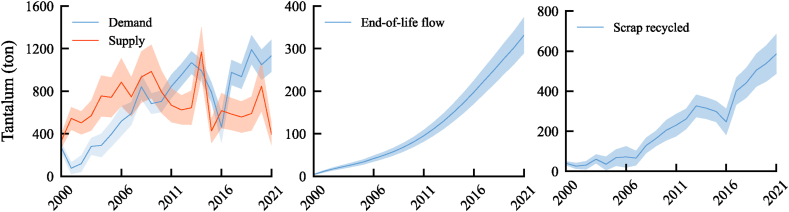
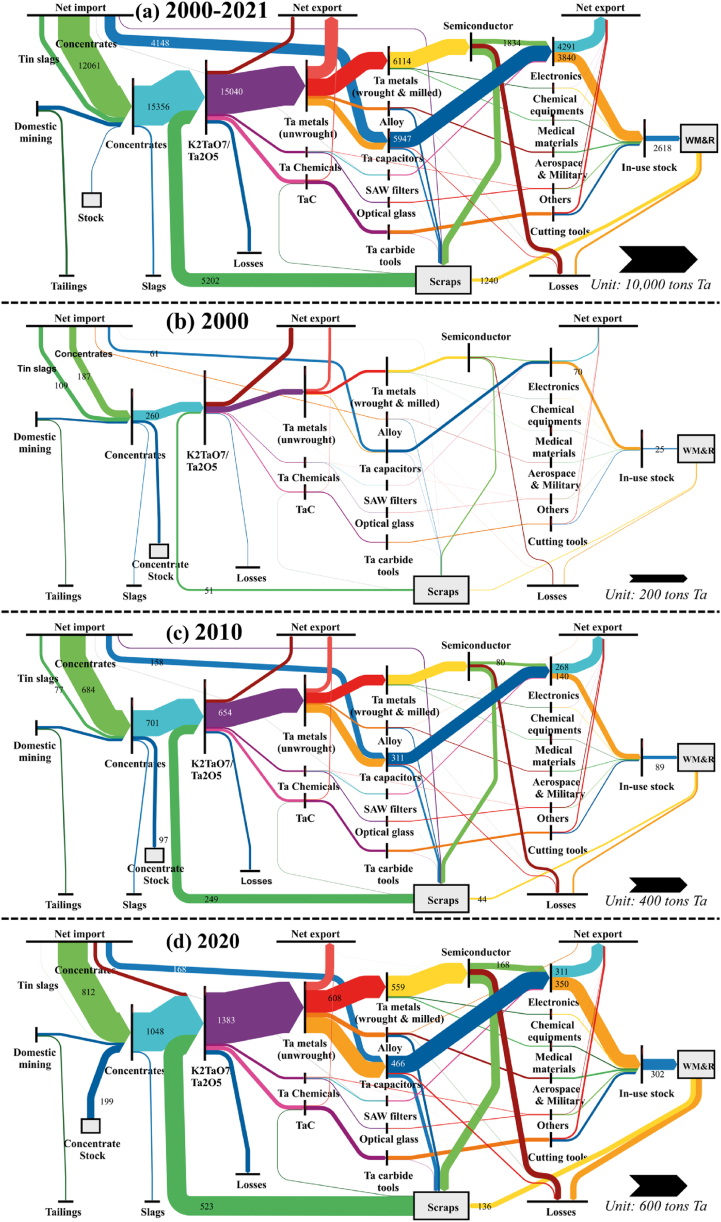
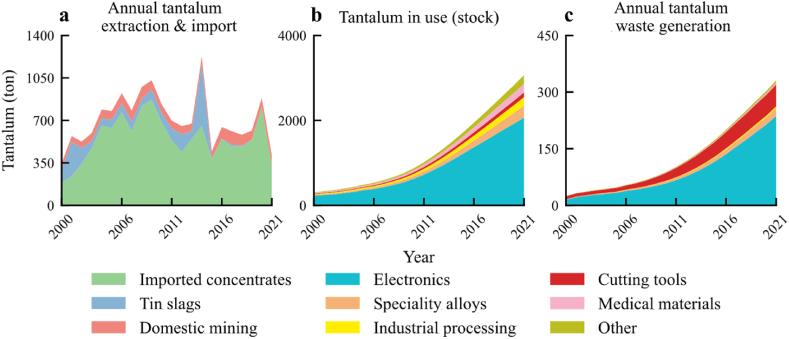
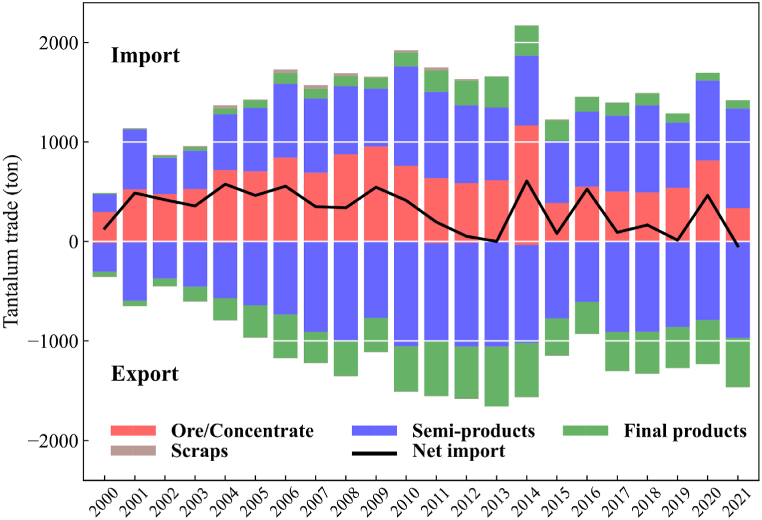
Tantalum is not only one of the critical metals applied in various advanced industries such as electronics, aerospace, military, and medical applications, but also is considered a conflict mineral, posing a threat to its global supply security. China plays a significant role in the tantalum industrial chain; however, the complete picture of its anthropogenic tantalum cycle remains unknown. This study investigates the tantalum cycles in China from 2000 to 2021 by conducting a dynamic material flow analysis. The results reveal that China's domestic tantalum consumption surged from 91 tons in 2000 to 580 tons in 2021. China heavily relied on importing tantalum minerals to support its domestic production, with a trade dependence rate of 90 %. Moreover, the trade volume of tantalum-related commodities experienced substantial growth from 2000 to 2014 and then fluctuated, with tantalum concentrates as the primary imported goods and electronic products as the primary exported goods. Approximately 24.9 % of the overall tantalum demand was met with secondary tantalum, in which 80 % of such secondary material being recovered during the refining and production stages. Policy recommendations are proposed accordingly, including diversifying tantalum mineral resources and increasing the recovery rates from end-of-life products. These policies can significantly contribute to achieving sufficient tantalum supply and maintaining sustainable tantalum supply chain in China.
钽不仅是电子、航空航天、军事和医疗应用等各种先进产业中应用的关键金属之一,还被视为冲突矿产,对其全球供应安全构成威胁。中国在钽产业链中发挥着重要作用;然而,其人为钽循环的全貌仍不为人知。本研究通过进行动态物质流分析,调查了2000年至2021年中国的钽循环情况。结果显示,中国国内钽消费量从2000年的91吨激增至2021年的580吨。中国严重依赖进口钽矿来支持国内生产,贸易依存度为90%。此外,2000年至2014年期间,钽相关商品的贸易量大幅增长,之后有所波动,钽精矿是主要进口商品,电子产品是主要出口商品。约24.9%的钽总需求由二次钽满足,其中80%的此类二次材料在精炼和生产阶段回收。据此提出了政策建议,包括使钽矿资源多样化以及提高报废产品的回收率。这些政策可显著有助于实现中国钽的充足供应并维持可持续的钽供应链。