Department of Cardiac Surgery, The First Affiliated Hospital of China Medical University, Liaoning, Shenyang, China.
Department of Medical Oncology, The First Affiliated Hospital of China Medical University, Liaoning, Shenyang, China.
Front Endocrinol (Lausanne). 2024 Aug 27;15:1446863. doi: 10.3389/fendo.2024.1446863. eCollection 2024.
Lung adenocarcinoma (LUAD) is the most common type of lung cancer, and its pathogenesis remains not fully elucidated. Inflammation and metabolic dysregulation are considered to play crucial roles in LUAD development, but their causal relationships and specific mechanisms remain unclear.
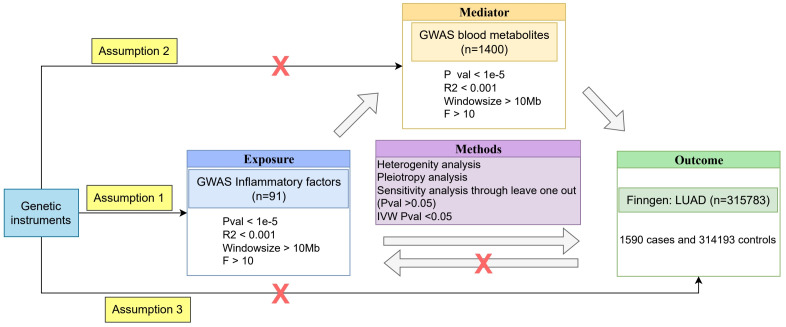
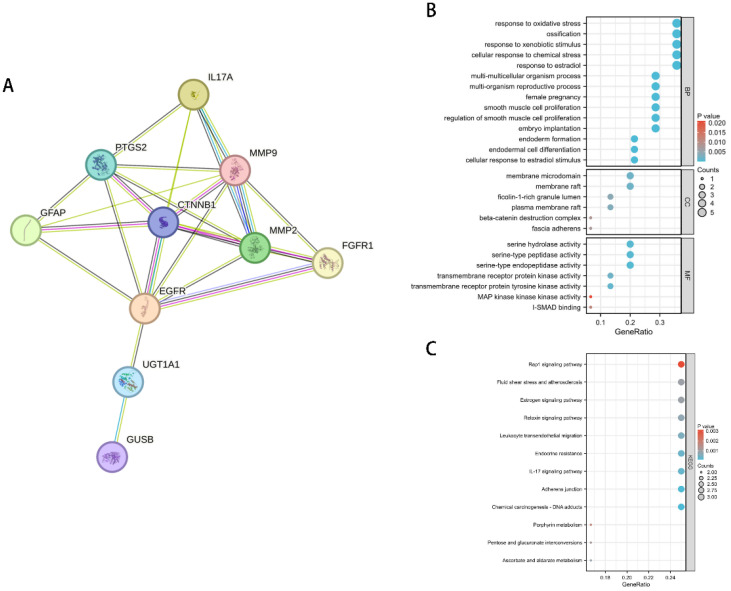
This study employed a two-sample Mendelian randomization (MR) approach to systematically evaluate the causal associations between 91 circulating inflammatory factors, 1,400 serum metabolites, and LUAD. We utilized LUAD genome-wide association studies (GWAS) data from the FinnGen biobank and GWAS data of metabolites and inflammatory factors from the GWAS catalog to conduct two-sample MR analyses. For the identified key metabolites, we further used mediator MR to investigate their mediating effects in the influence of IL-17A on LUAD and explored potential mechanisms through protein-protein interaction and functional enrichment analyses.
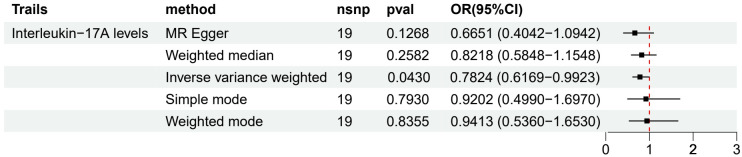
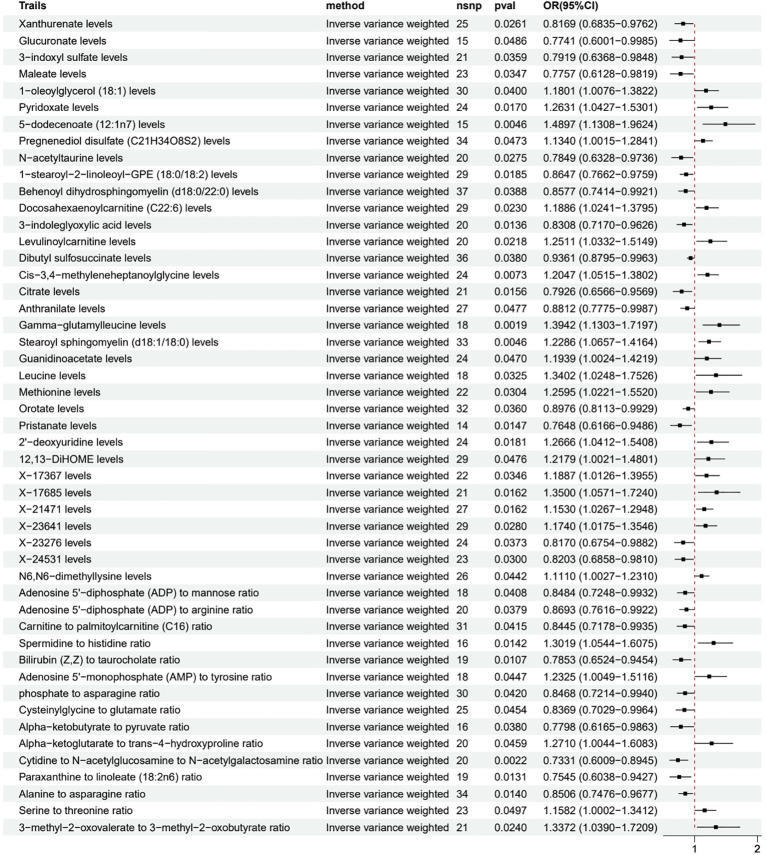
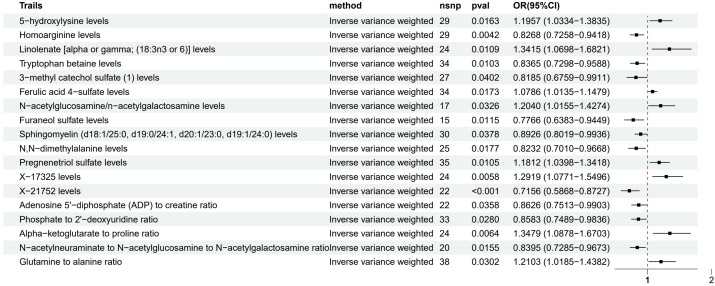
The MR analyses revealed that IL-17A (OR 0.78, 95%CI 0.62-0.99) was negatively associated with LUAD, while 71 metabolites were significantly associated with LUAD. Among them, ferulic acid 4-sulfate may play a crucial mediating role in the suppression of LUAD by IL-17A (OR 0.87, 95%CI 0.78-0.97). IL-17A may exert its anti-LUAD effects through extensive interactions with genes related to ferulic acid 4-sulfate metabolism (such as SULT1A1, CYP1A1, etc.), inhibiting oxidative stress and inflammatory responses, as well as downstream tumor-related pathways of ferulic acid 4-sulfate (such as MAPK, NF-κB, etc.).
This study discovered causal associations between IL-17A, multiple serum metabolites, and LUAD occurrence, revealing the key role of inflammatory and metabolic dysregulation in LUAD pathogenesis. Our findings provide new evidence-based medical support for specific inflammatory factors and metabolites as early predictive and risk assessment biomarkers for LUAD, offering important clues for subsequent mechanistic studies and precision medicine applications.
肺腺癌(LUAD)是最常见的肺癌类型,其发病机制仍不完全清楚。炎症和代谢失调被认为在 LUAD 发展中起着至关重要的作用,但它们的因果关系和具体机制尚不清楚。
本研究采用两样本孟德尔随机化(MR)方法系统评估了 91 种循环炎症因子、1400 种血清代谢物与 LUAD 之间的因果关系。我们利用 FinnGen 生物库中的 LUAD 全基因组关联研究(GWAS)数据和 GWAS 目录中的代谢物和炎症因子 GWAS 数据进行两样本 MR 分析。对于鉴定出的关键代谢物,我们进一步使用中介物 MR 研究了它们在 IL-17A 对 LUAD 影响中的中介作用,并通过蛋白质-蛋白质相互作用和功能富集分析探索了潜在的机制。
MR 分析表明,IL-17A(OR 0.78,95%CI 0.62-0.99)与 LUAD 呈负相关,而 71 种代谢物与 LUAD 显著相关。其中,阿魏酸 4-硫酸盐可能在 IL-17A 抑制 LUAD 中发挥关键的中介作用(OR 0.87,95%CI 0.78-0.97)。IL-17A 可能通过与阿魏酸 4-硫酸盐代谢相关的基因(如 SULT1A1、CYP1A1 等)的广泛相互作用,抑制氧化应激和炎症反应,以及阿魏酸 4-硫酸盐的下游肿瘤相关途径(如 MAPK、NF-κB 等),发挥其抗 LUAD 作用。
本研究发现了 IL-17A、多种血清代谢物与 LUAD 发生之间的因果关系,揭示了炎症和代谢失调在 LUAD 发病机制中的关键作用。我们的研究结果为特定炎症因子和代谢物作为 LUAD 的早期预测和风险评估生物标志物提供了新的循证医学支持,为后续的机制研究和精准医学应用提供了重要线索。