Crane Janet, Zhang Weixin, Otte Arryn, Barik Sisir, Wan Mei, Cao Xu
Johns Hopkins Univeristy School of Medicine.
The Johns Hopkins University School of Medicine.
Res Sq. 2024 Aug 31:rs.3.rs-4823095. doi: 10.21203/rs.3.rs-4823095/v1.
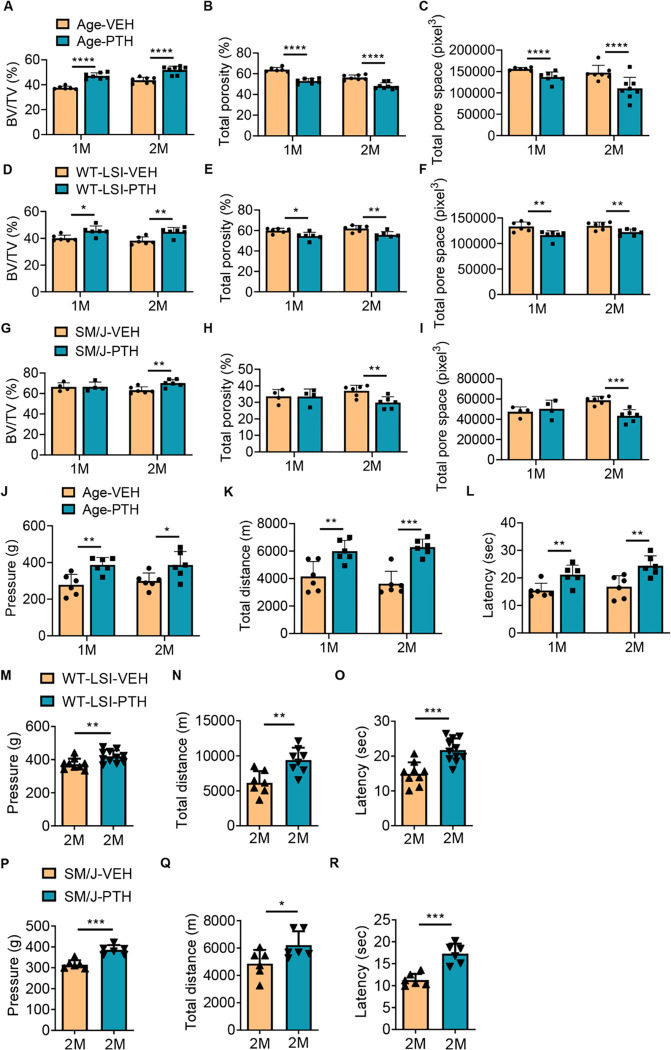
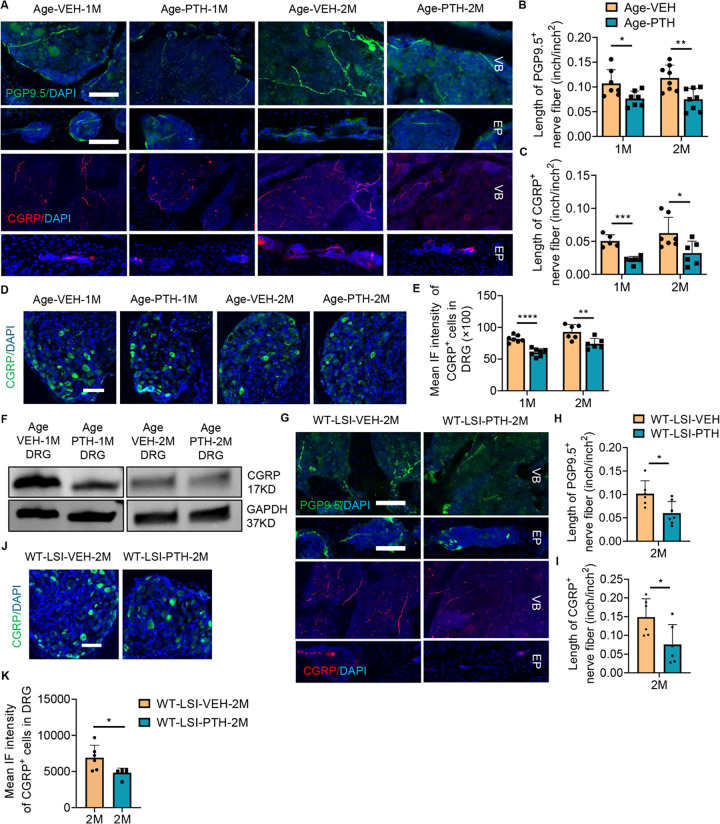
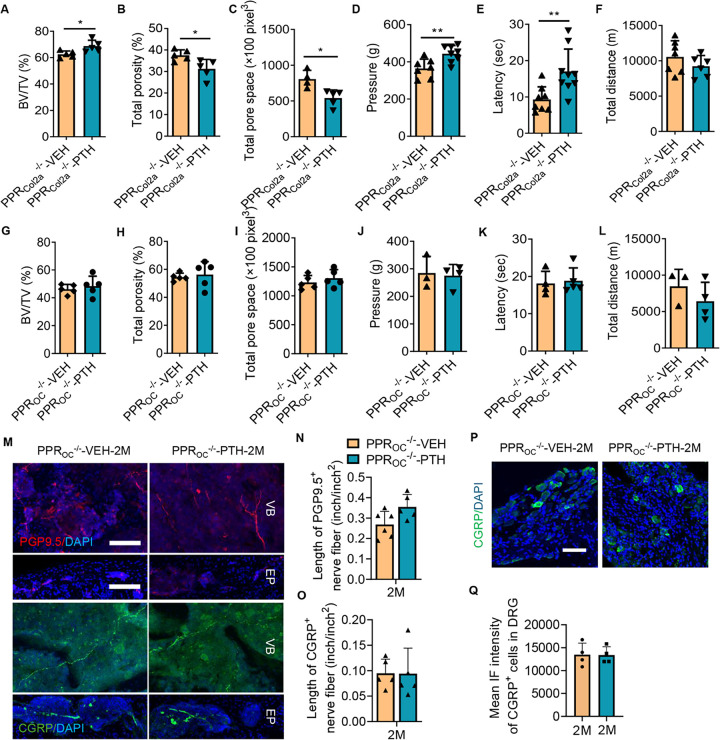
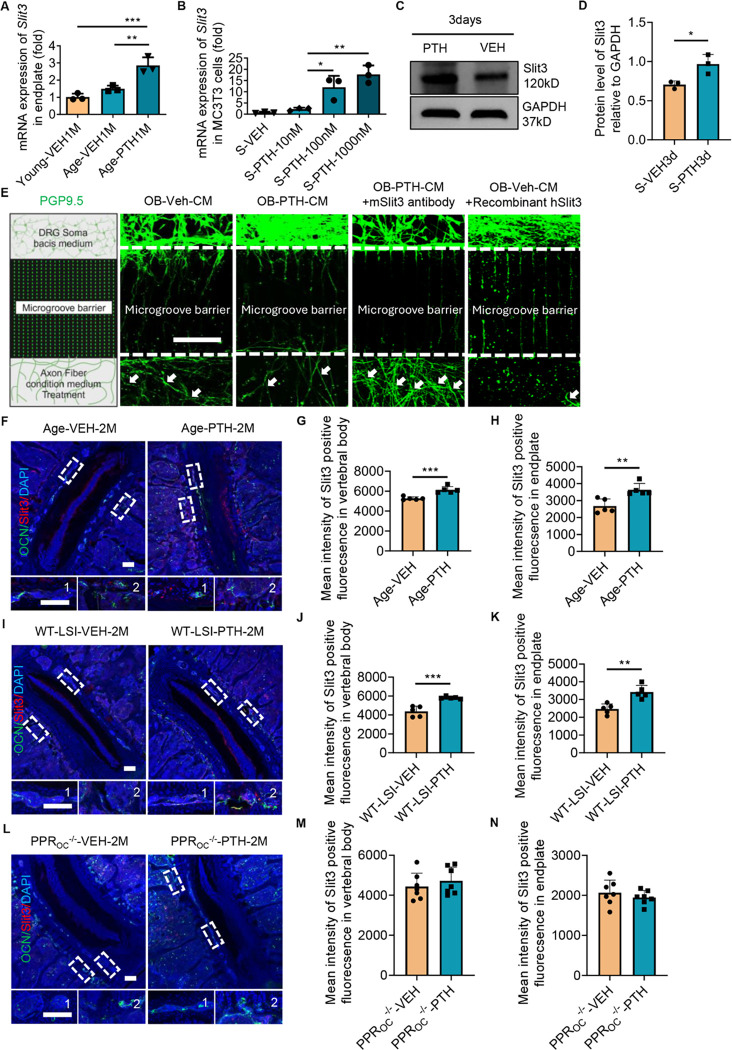
During aging, the spine undergoes degenerative changes, particularly with vertebral endplate bone expansion and sclerosis, that is associated with nonspecific low back pain (LBP). We reported that parathyroid hormone (PTH) treatment could reduce vertebral endplate sclerosis and improve pain behaviors in aging, SM/J and young lumbar spine instability (LSI) mice. Aberrant innervation noted in the vertebral body and endplate during spinal degeneration was reduced with PTH treatment in aging and LSI mice as quantified by PGP9.5 and CGRP nerve fibers, as well as CGRP expression in dorsal root ganglia (DRG). The neuronal repulsion factor Slit3 significantly increased in response to PTH treatment mediated by transcriptional factor FoxA2. PTH type1 receptor (PPR) and Slit3 deletion in osteoblasts prevented PTH-reduction of endplate porosity and improvement in behavior tests, whereas PPR deletion in chondrocytes continued to respond to PTH. Altogether, PTH stimulates Slit3 to repel sensory nerve innervation and provides symptomatic relief of LBP associated with spinal degeneration.
在衰老过程中,脊柱会发生退行性变化,尤其是椎体终板骨扩张和硬化,这与非特异性下腰痛(LBP)相关。我们报道,甲状旁腺激素(PTH)治疗可减轻衰老的SM/J小鼠和年轻腰椎不稳(LSI)小鼠的椎体终板硬化,并改善疼痛行为。通过PGP9.5和降钙素基因相关肽(CGRP)神经纤维以及背根神经节(DRG)中CGRP的表达定量分析发现,衰老和LSI小鼠在接受PTH治疗后,脊柱退变过程中椎体和终板中出现的异常神经支配减少。神经元排斥因子Slit3在转录因子FoxA2介导的PTH治疗后显著增加。成骨细胞中PTH 1型受体(PPR)和Slit3缺失可阻止PTH降低终板孔隙率以及改善行为测试,而软骨细胞中PPR缺失则继续对PTH产生反应。总之,PTH刺激Slit3排斥感觉神经支配,并缓解与脊柱退变相关的LBP症状。