Chen Junyu, Yuan Yupei, Hu Ying, Liang Liang
Department of Psychology, The Fourth Affiliated Hospital of Xinjiang Medical University, Urumqi, Xinjiang, People's Republic of China.
Department of Cardiology, Renmin Hospital of Wuhan University, Wuhan, Hubei, People's Republic of China.
Neuropsychiatr Dis Treat. 2024 Sep 6;20:1667-1675. doi: 10.2147/NDT.S480921. eCollection 2024.
The adjunctive therapeutic potential of simvastatin in schizophrenia treatment has generated interest due to its anti-inflammatory and neuroprotective properties. This meta-analysis aims to assess the efficacy of simvastatin as an adjunct treatment for schizophrenia, synthesizing results from various controlled trials.
We performed a comprehensive search of databases including PubMed, Embase, and the Cochrane Library for randomized controlled trials (RCTs) evaluating the efficacy of simvastatin as an adjunct therapy in patients with schizophrenia. The primary outcome measures were improvements in the Positive and Negative Syndrome Scale (PANSS) scores. Secondary outcomes included changes in overall clinical condition and level of functioning. Data were pooled using random-effects models, and heterogeneity was assessed through I² statistics.
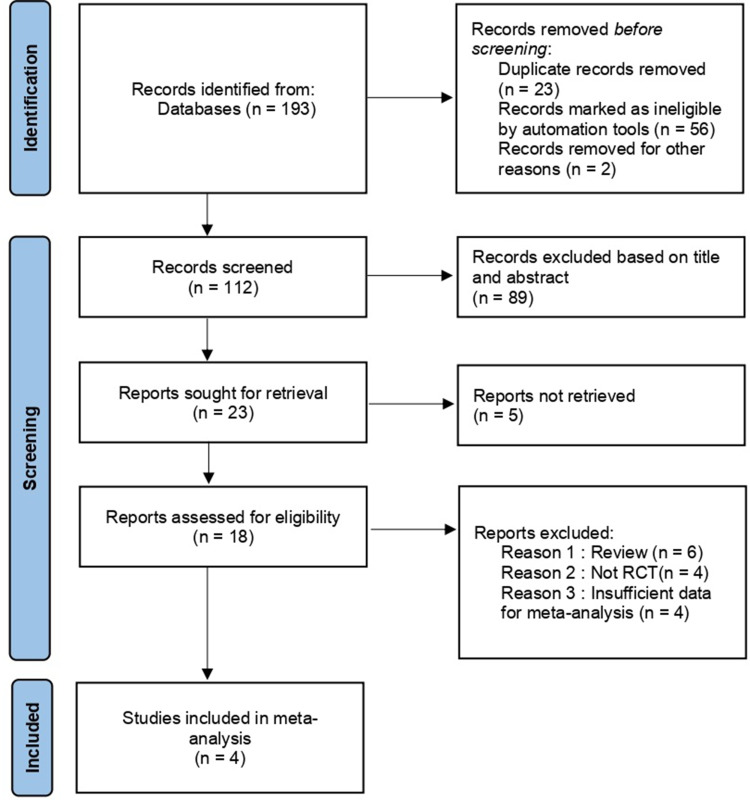
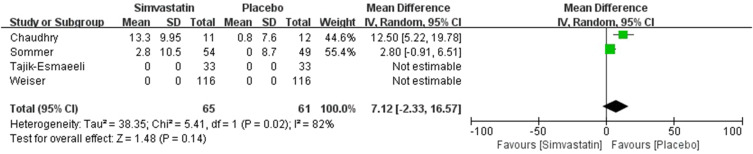
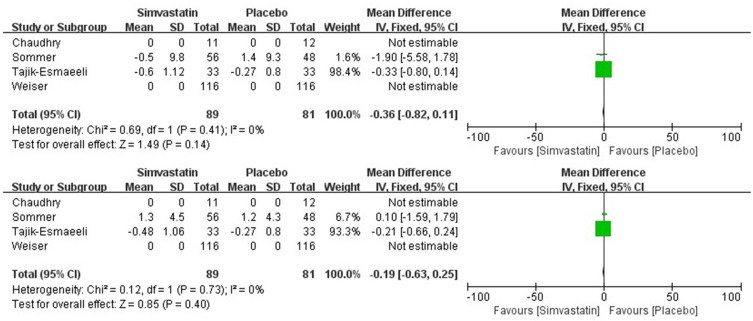
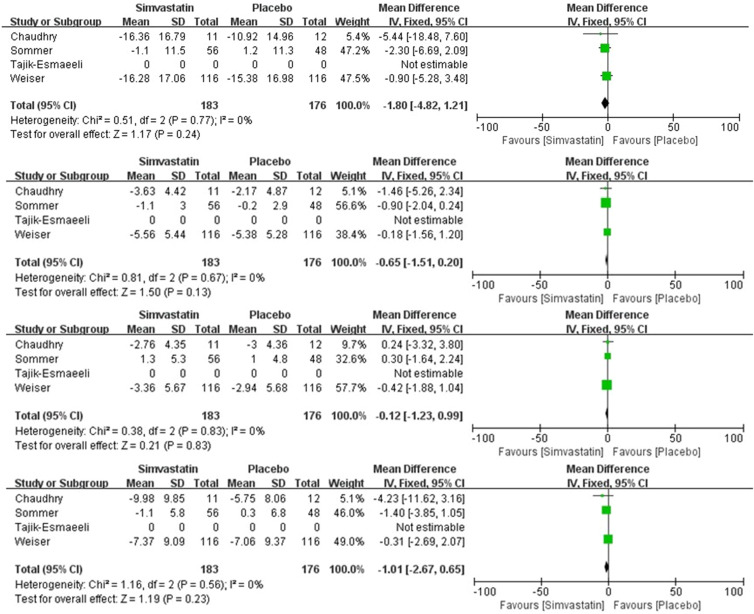
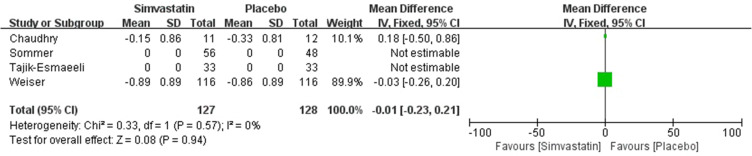
The four RCTs included in the analysis represented 425 participants. The combined results demonstrated no significant advantage of simvastatin over placebo in reducing PANSS total scores with a pooled effect size (Standard Mean Difference, SMD) of -0.36 (95% Confidence Interval, CI: -0.82 to 0.11) at 1 month, and -1.80 (95% Confidence Interval, CI: -4.82 to 1.21) at 3 months, indicating minimal to no effect. Similarly, analyses of secondary outcomes showed no significant improvements in overall clinical condition and level of functioning. The studies exhibited low heterogeneity (I² = 0%).
This meta-analysis provides evidence that simvastatin, used as adjunctive therapy, does not significantly improve the symptomatic outcomes of schizophrenia compared to placebo. Although simvastatin is well-tolerated, its role in enhancing antipsychotic treatment efficacy in patients with schizophrenia appears limited. These findings suggest that simvastatin should not be recommended as an adjunctive treatment in the clinical management of schizophrenia. Further research may explore the potential subgroups that could benefit from such treatment or identify the biological reasons for the lack of efficacy.
辛伐他汀因其抗炎和神经保护特性,在精神分裂症治疗中的辅助治疗潜力引发了关注。本荟萃分析旨在评估辛伐他汀作为精神分裂症辅助治疗的疗效,综合各种对照试验的结果。
我们全面检索了包括PubMed、Embase和Cochrane图书馆在内的数据库,以查找评估辛伐他汀作为精神分裂症患者辅助治疗疗效的随机对照试验(RCT)。主要结局指标为阳性和阴性症状量表(PANSS)评分的改善情况。次要结局包括整体临床状况和功能水平的变化。使用随机效应模型汇总数据,并通过I²统计量评估异质性。
分析中纳入的四项RCT共有425名参与者。综合结果显示,在1个月时,辛伐他汀在降低PANSS总分方面与安慰剂相比无显著优势,合并效应量(标准均差,SMD)为-0.36(95%置信区间,CI:-0.82至0.11);在3个月时,合并效应量为-1.80(95%置信区间,CI:-4.82至1.21),表明效果甚微或无效果。同样,次要结局分析显示整体临床状况和功能水平无显著改善。这些研究的异质性较低(I² = 0%)。
本荟萃分析提供的证据表明,与安慰剂相比,作为辅助治疗使用的辛伐他汀并不能显著改善精神分裂症的症状结局。尽管辛伐他汀耐受性良好,但其在提高精神分裂症患者抗精神病治疗疗效方面的作用似乎有限。这些发现表明,在精神分裂症的临床管理中,不应推荐辛伐他汀作为辅助治疗。进一步的研究可以探索可能从这种治疗中获益的潜在亚组,或确定疗效缺乏的生物学原因。