Wei Xi, Bjarkadottir Briet D, Nadjaja Devi, Sheikh Sairah, Fatum Muhammad, Lane Sheila, Williams Suzannah A
Nuffield Department of Women's and Reproductive Health, Women's Centre, John Radcliffe Hospital, University of Oxford, Oxford, United Kingdom.
Oxford Fertility, Institute of Reproductive Sciences, Oxford, United Kingdom.
Front Cell Dev Biol. 2024 Aug 27;12:1449156. doi: 10.3389/fcell.2024.1449156. eCollection 2024.
Survival rates of the childhood cancer patients are improving, however cancer treatments such as chemotherapy may lead to infertility due to loss of the primordial follicle (PMF) reserve. Doxorubicin (DXR) is a gonadotoxic chemotherapy agent commonly used in childhood cancers. Anti-Müllerian Hormone (AMH) has been reported to have a protective effect on the mouse ovarian reserve against DXR . However, whether AMH can prevent PMF loss in conjunction with DXR in human ovarian tissue has not been determined.
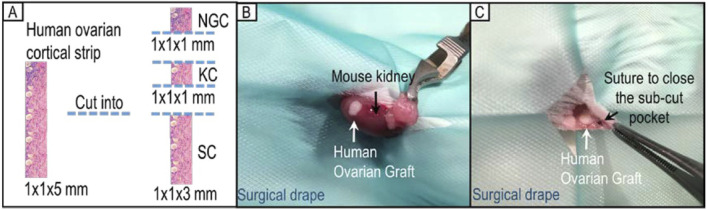
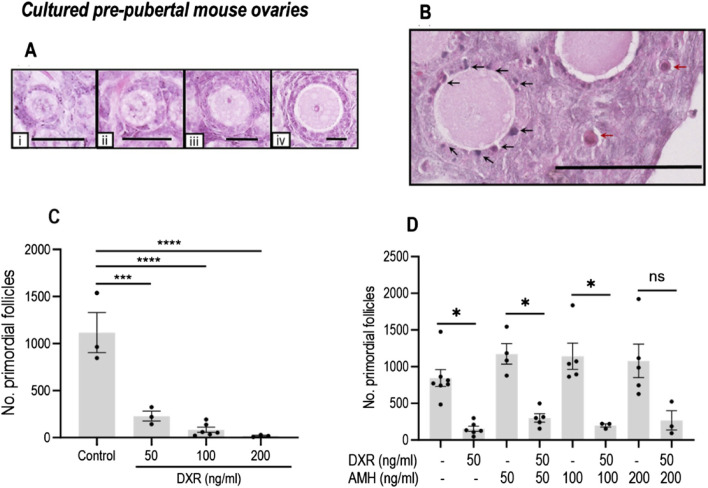
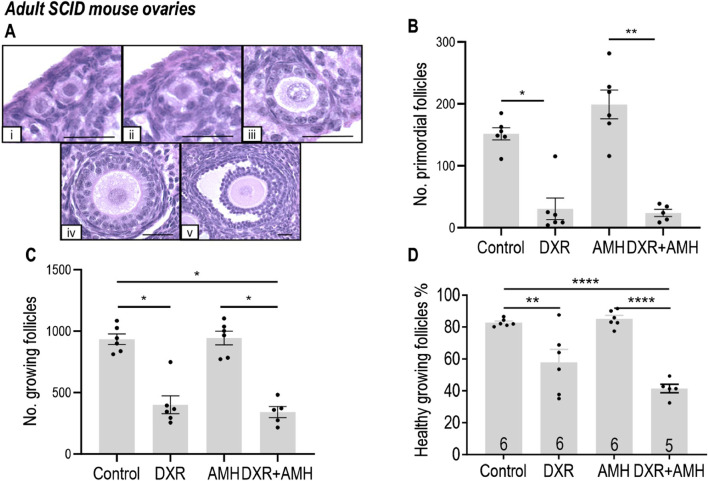
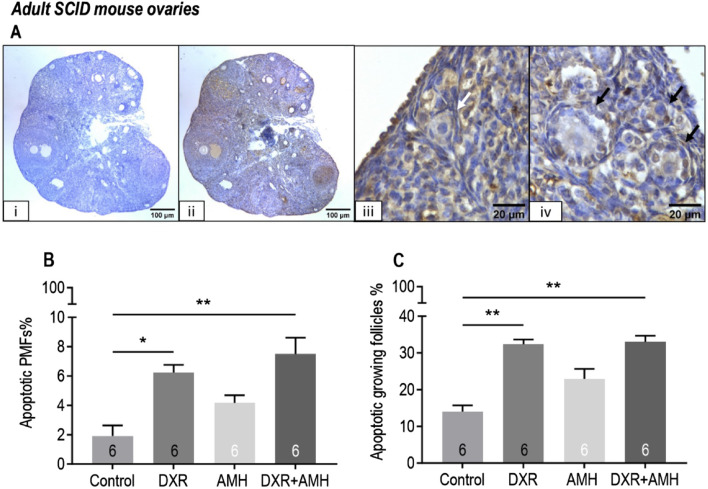
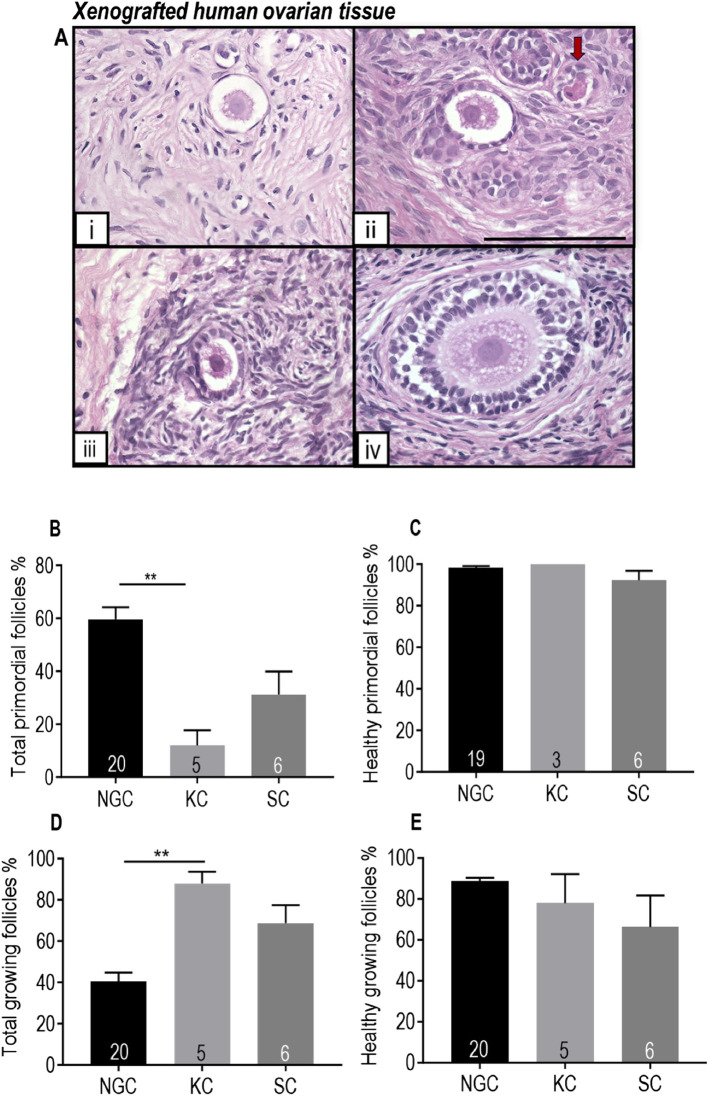
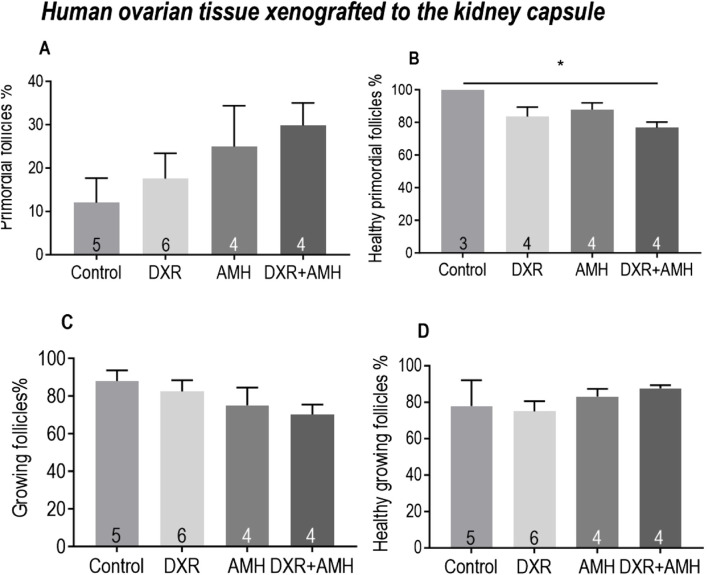
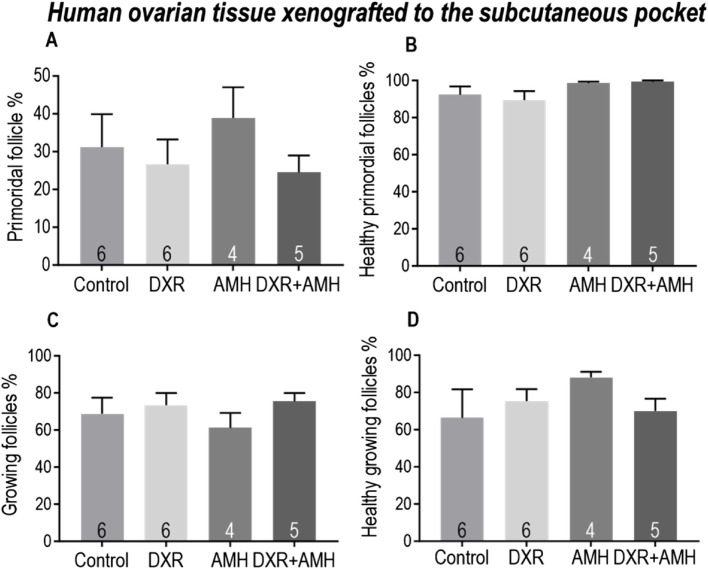
In order to investigate this, we first established an optimum dose of DXR that induced PMF loss in cultured mouse ovaries and investigated the efficacy of AMH on reducing DXR-induced PMF loss in mice . Second, we investigated the effects of DXR on pre-pubertal human ovarian tissue and the ability of AMH to prevent DXR-induced damage comparing using a mouse xenograft model with different transplantation sites.
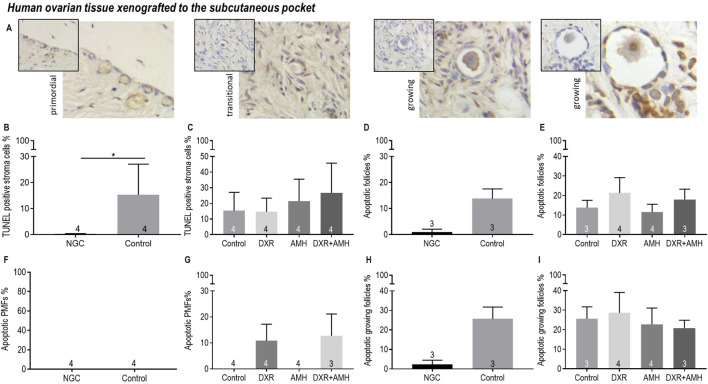
Mouse ovaries treated with DXR and had reduced PMF populations and damaged follicle health. We did not observe effect of DXR-induced PMF loss or damage to follicle/stromal health in human ovarian cortex, this might have been due to an insufficient dose or duration of DXR. Although AMH does not prevent DXR-induced PMF loss in pre-pubertal and adult mouse ovaries, in mouse ovaries treated with higher concentration of AMH , DXR did not cause a significant loss in PMFs. This is the first study to illustrate an effect of AMH on DXR-induced PMF loss on pre-pubertal mouse ovaries. However, more experiments with higher doses of AMH and larger sample size are needed to confirm this finding.
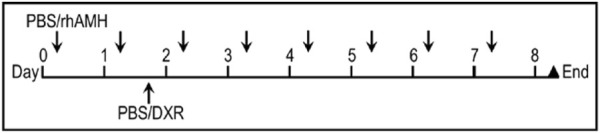
We did not observe that AMH could prevent DXR-induced PMF loss in mouse ovaries . Further studies are warranted to investigate whether AMH has a protective effect against DXR in xenotransplanted human ovarian tissue. Thus, to obtain robust evidence about the potential of AMH in fertility preservation during chemotherapy treatment, alternative AMH administration strategies need to be explored alongside DXR administration to fully interrogate the effect of DXR and AMH on human xenografted tissues.
儿童癌症患者的存活率正在提高,然而化疗等癌症治疗可能会因原始卵泡(PMF)储备的丧失而导致不孕。阿霉素(DXR)是一种常用于儿童癌症的性腺毒性化疗药物。据报道,抗苗勒管激素(AMH)对小鼠卵巢储备具有保护作用,可抵抗DXR。然而,AMH能否与DXR联合预防人卵巢组织中的PMF丧失尚未确定。
为了研究这一问题,我们首先确定了在培养的小鼠卵巢中诱导PMF丧失的DXR最佳剂量,并研究了AMH对减少小鼠中DXR诱导的PMF丧失的功效。其次,我们研究了DXR对青春期前人类卵巢组织的影响,以及AMH通过使用具有不同移植部位的小鼠异种移植模型来预防DXR诱导的损伤的能力。
用DXR处理的小鼠卵巢中PMF数量减少,卵泡健康受损。我们未观察到DXR诱导的PMF丧失或对人卵巢皮质中卵泡/基质健康的损害,这可能是由于DXR剂量不足或持续时间不够。虽然AMH不能预防青春期前和成年小鼠卵巢中DXR诱导的PMF丧失,但在用较高浓度AMH处理的小鼠卵巢中,DXR并未导致PMF显著丧失。这是第一项说明AMH对青春期前小鼠卵巢中DXR诱导的PMF丧失有影响的研究。然而,需要更多使用更高剂量AMH和更大样本量的实验来证实这一发现。
我们未观察到AMH能预防小鼠卵巢中DXR诱导的PMF丧失。有必要进一步研究AMH在异种移植的人卵巢组织中对DXR是否具有保护作用。因此,为了获得关于AMH在化疗期间生育力保存潜力的有力证据,需要探索与DXR给药一起的替代AMH给药策略,以充分研究DXR和AMH对人异种移植组织的影响。