Emory National Primate Research Center, Emory University, Atlanta, Georgia, USA.
Department of Pathology and Laboratory Medicine, Emory School of Medicine, Emory University, Atlanta, Georgia, USA.
mBio. 2024 Oct 16;15(10):e0163924. doi: 10.1128/mbio.01639-24. Epub 2024 Sep 11.
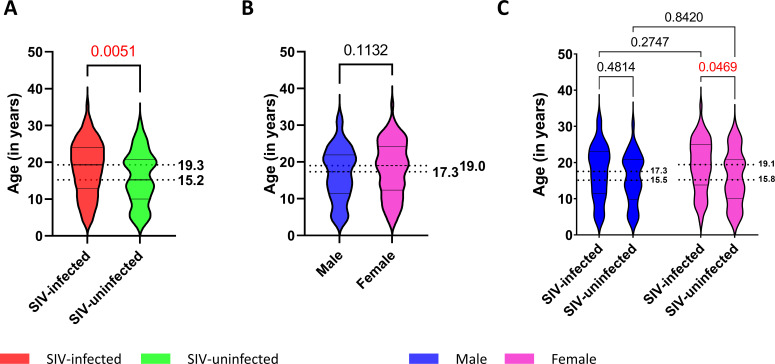
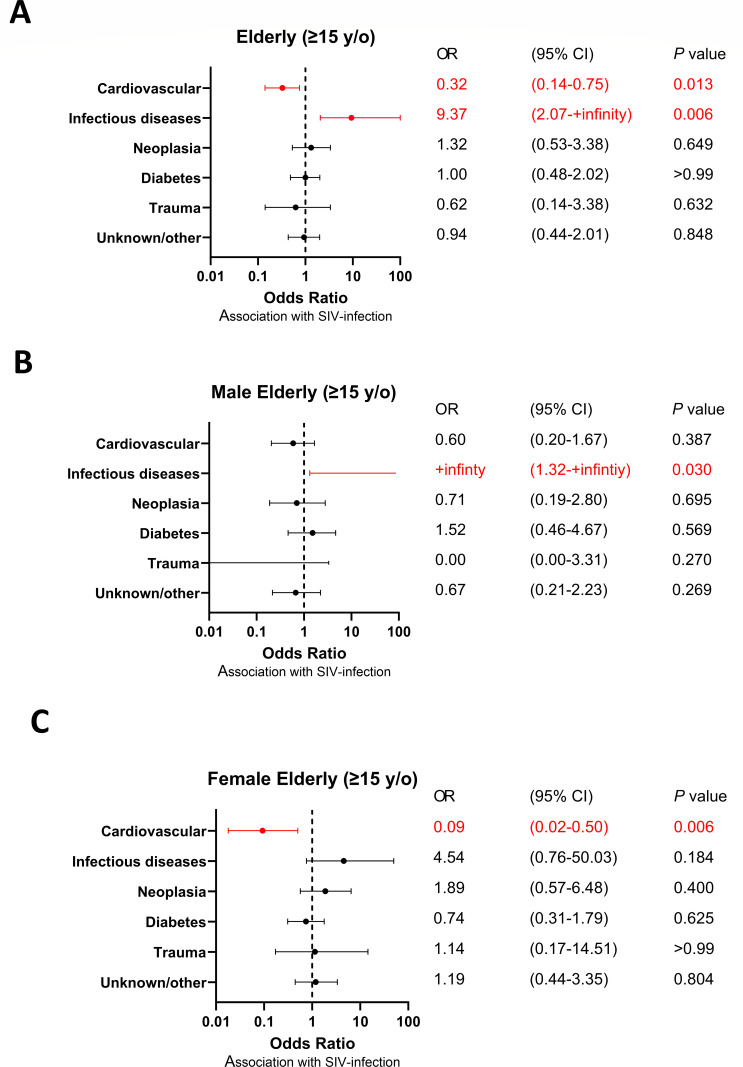
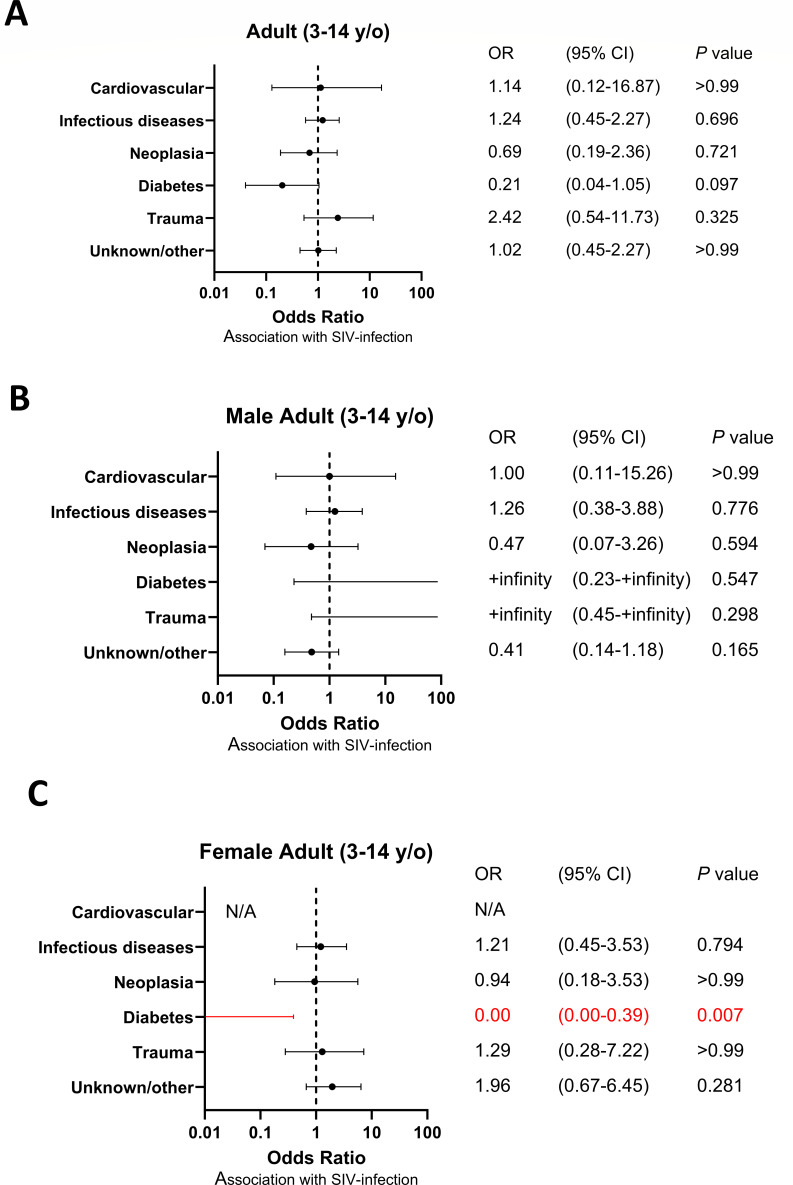
Sooty mangabeys (SMs) are natural hosts of simian immunodeficiency virus (SIV) and do not progress to AIDS despite high viral replication. The main factors involved in the benign nature of this infection are (i) low level of immune activation, (ii) relative preservation of specific CD4+ T-cell subsets from direct virus infection, and (iii) absence of microbial translocation from the gut to the systemic circulation. To determine the impact of SIV infection on underlying cause of death, we retrospectively analyzed data from 307 SMs (219 SIV infected and 88 uninfected) housed at the Emory Primate Center that have died between 1986 and 2022. Interestingly, we found that SIV-infected SMs live ~4 years longer than SIV-uninfected SMs, although this result is hard to interpret due to differences in how animals were housed and assigned to specific experimental studies. While the causes of death were not different between SIV-infected and uninfected SMs that died before age 15 (i.e., adult), we found significant differences in the relative frequency of specific causes of death in the elderly population (≥15 years old). Specifically, we observed that SIV-infected SMs were more likely to die from infections but less likely to die from cardiovascular disease (and diabetes in female animals) as compared to uninfected SMs. While confirming the non-pathogenic nature of SIV infection in SMs, these data reveal, for the first time, a qualitative impact of SIV infection on the host physiology that induces a significant change in the mortality pattern in these natural SIV hosts.
In this study, we demonstrate, for the first time, that the natural, non-pathogenic SIV infection of the African monkey SM has a clinical impact which is revealed in terms of main causes of mortality, which are significantly different in the infected animals as compared to the uninfected ones. Indeed, SIV-infected SMs are at higher risk of dying of infectious diseases but appear to be somewhat protected from cardiovascular causes of death. The identification of a specific pattern of mortality associated with the infection suggests that the host-pathogen interaction between SIV and the SM immune system, while non-pathogenic in nature, has a detectable impact on the overall health status of the animals.
黑眉长尾猴是猴免疫缺陷病毒(SIV)的天然宿主,尽管病毒复制水平很高,但它们不会发展为艾滋病。这种感染呈良性的主要因素包括:(i)免疫激活水平低;(ii)特定 CD4+T 细胞亚群免受病毒直接感染的相对保留;以及(iii)肠道到全身循环的微生物易位缺失。为了确定 SIV 感染对根本死因的影响,我们回顾性分析了 1986 年至 2022 年期间在埃默里灵长类动物中心死亡的 307 只黑眉长尾猴(219 只感染 SIV 和 88 只未感染)的数据。有趣的是,我们发现,感染 SIV 的黑眉长尾猴比未感染 SIV 的黑眉长尾猴的寿命长约 4 年,尽管由于动物的饲养方式和分配到特定实验研究的方式存在差异,这一结果难以解释。虽然在 15 岁之前(即成年)死亡的感染 SIV 和未感染 SIV 的黑眉长尾猴的死因没有差异,但我们发现老年人群(≥15 岁)中特定死因的相对频率存在显著差异。具体而言,我们观察到,与未感染的黑眉长尾猴相比,感染 SIV 的黑眉长尾猴更有可能死于感染,但死于心血管疾病(以及雌性动物的糖尿病)的可能性较小。这些数据证实了 SIV 在黑眉长尾猴中的非致病性感染,首次揭示了 SIV 感染对宿主生理学的定性影响,这种影响导致这些天然 SIV 宿主的死亡率模式发生显著变化。
在这项研究中,我们首次证明,非洲猴 SIV 的天然、非致病性感染具有临床影响,这体现在主要死因方面,与未感染的动物相比,感染动物的死因存在显著差异。事实上,感染 SIV 的黑眉长尾猴死于传染病的风险更高,但似乎在一定程度上免受心血管疾病导致的死亡。与感染相关的特定死亡模式的识别表明,SIV 与黑眉长尾猴免疫系统之间的宿主-病原体相互作用,尽管本质上是无害的,但对动物的整体健康状况有可检测的影响。