Department of Obstetrics and Gynecology, University of Texas Health San Antonio, San Antonio, Texas.
Greehey Children's Cancer Research Institute, University of Texas Health San Antonio, San Antonio, Texas.
Cancer Res Commun. 2024 Oct 1;4(10):2610-2620. doi: 10.1158/2767-9764.CRC-24-0173.
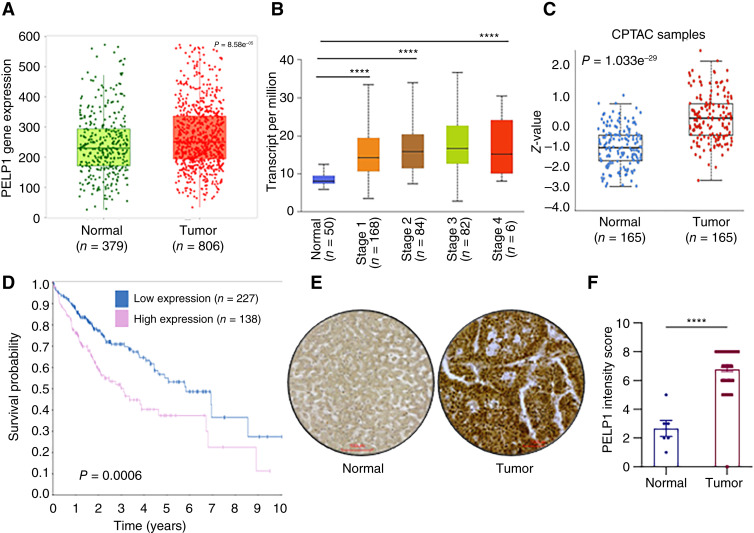
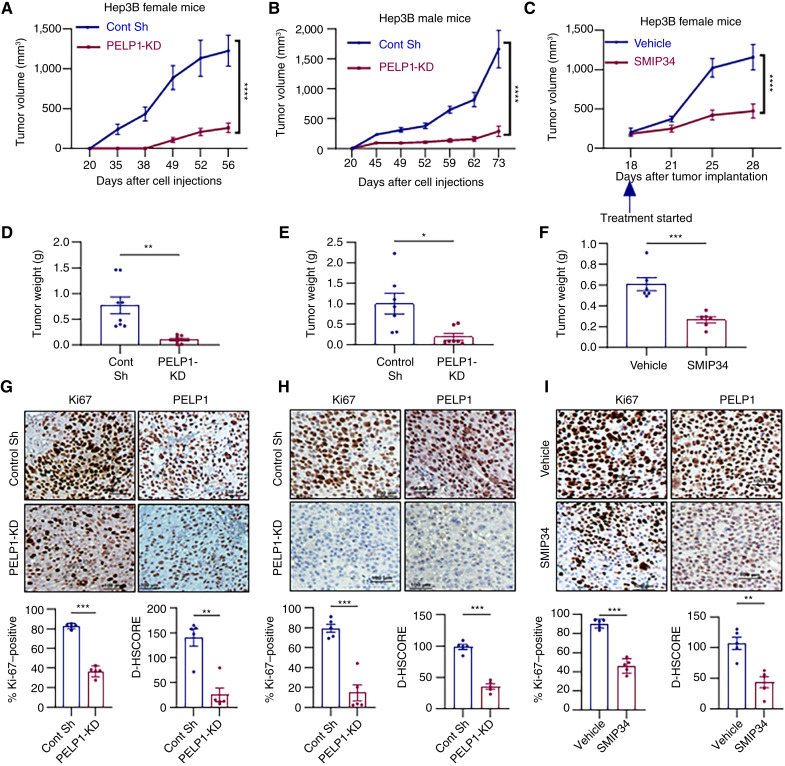
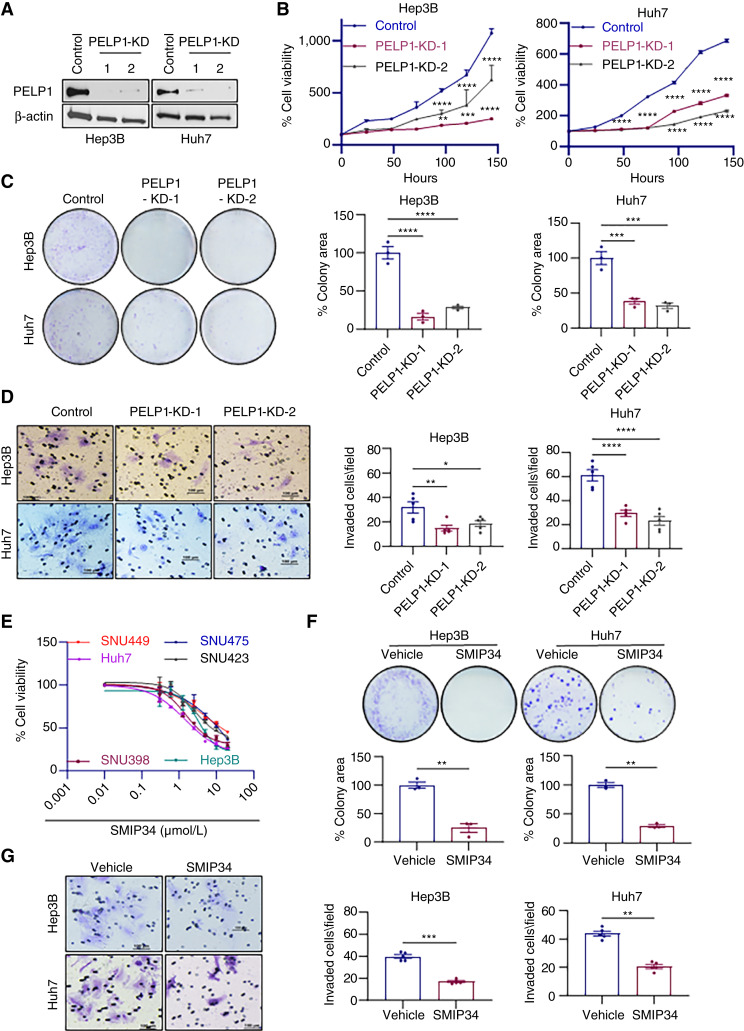
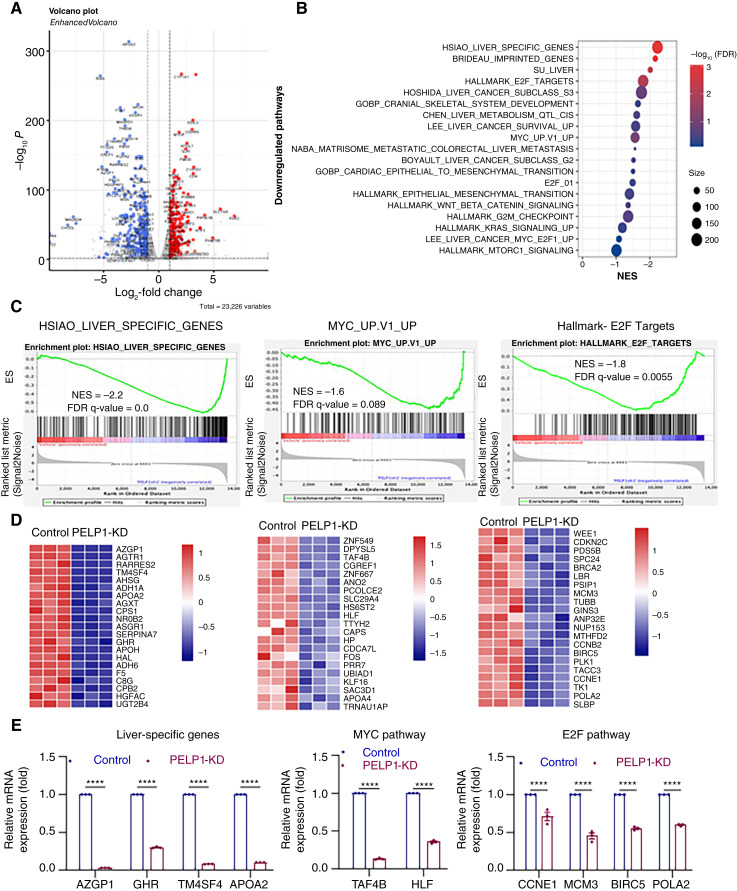
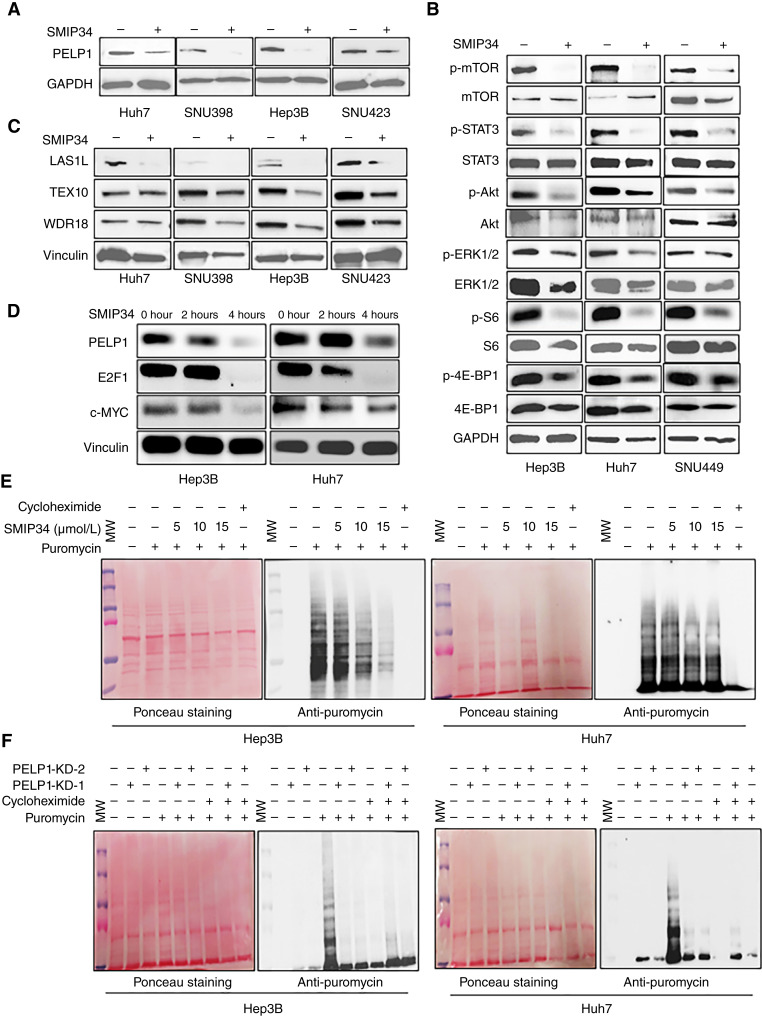
Hepatocellular carcinoma (HCC) is one of the leading causes of cancer-related deaths in the United States, with a median survival period of approximately 10 months. There is an urgent need for the development of effective targeted therapies for the treatment of HCC. Proline-, glutamic acid-, and leucine-rich protein 1 (PELP1) signaling is implicated in the progression of many cancers, although its specific contribution to the progression of HCC is not yet well understood. Analysis of The Cancer Genome Atlas HCC gene expression data sets and IHC analysis of HCC tissue microarray revealed that HCC tumors had elevated expression of PELP1 compared with normal tissues, and high expression of PELP1 is associated with unfavorable survival outcomes. Suppression of PELP1 expression using short hairpin RNA significantly reduced the cell viability, clonogenicity, and invasion of HCC cells. Importantly, SMIP34, a first-in-class small-molecule inhibitor targeting PELP1, effectively decreased the cell viability, clonogenic survival, and invasiveness of HCC cells. Gene expression analysis using RNA sequencing revealed that PELP1 knockdown cells exhibited a decrease in c-Myc, E2F, and other oncogenic pathways related to HCC. Mechanistic studies showed that SMIP34 treatment impaired the Rix complex, a critical component of ribosomal biogenesis, in HCC cells. Furthermore, the knockdown or pharmacologic inhibition of PELP1 significantly decelerated the HCC tumor growth in xenograft models. In summary, our study findings indicate that PELP1 could serve as a promising target for therapeutic intervention in HCC.
HCC is one of the leading causes of cancer fatalities in the United States. Effective targeted therapeutics for HCC are urgently needed. In this study, we show that PELP1 proto-oncogene is crucial to HCC progression and that PELP1 inhibition reduced HCC cell proliferation in vitro and in vivo. Our results imply that PELP1-targeted drugs like SMIP34 may be useful as new therapeutic agents for HCC treatment.
肝细胞癌(HCC)是美国癌症相关死亡的主要原因之一,中位生存期约为 10 个月。迫切需要开发有效的靶向治疗方法来治疗 HCC。脯氨酸、谷氨酸和亮氨酸丰富蛋白 1(PELP1)信号转导与许多癌症的进展有关,尽管其对 HCC 进展的具体贡献尚不清楚。分析癌症基因组图谱 HCC 基因表达数据集和 HCC 组织微阵列的 IHC 分析显示,与正常组织相比,HCC 肿瘤中 PELP1 的表达升高,并且 PELP1 的高表达与不良的生存结局相关。使用短发夹 RNA 抑制 PELP1 的表达显著降低了 HCC 细胞的活力、集落形成能力和侵袭能力。重要的是,SMIP34,一种针对 PELP1 的首创小分子抑制剂,有效降低了 HCC 细胞的活力、集落形成存活和侵袭性。使用 RNA 测序进行基因表达分析显示,PELP1 敲低细胞中 c-Myc、E2F 和其他与 HCC 相关的致癌途径相关基因的表达降低。机制研究表明,SMIP34 处理会损害 HCC 细胞中的 Rix 复合物,这是核糖体生物发生的关键组成部分。此外,PELP1 的敲低或药物抑制显著减缓了异种移植模型中的 HCC 肿瘤生长。总之,我们的研究结果表明,PELP1 可作为 HCC 治疗干预的有前途的靶点。
HCC 是美国癌症死亡的主要原因之一。迫切需要针对 HCC 的有效靶向治疗方法。在这项研究中,我们表明 PELP1 原癌基因对 HCC 的进展至关重要,PELP1 抑制可减少 HCC 细胞在体外和体内的增殖。我们的结果表明,像 SMIP34 这样的针对 PELP1 的药物可能是治疗 HCC 的新的治疗剂。