Model Animal Research Center, Medical School, Nanjing University, Nanjing, Jiangsu, China.
Hongqiao International Institute of Medicine, Tongren Hospital, Shanghai Jiao Tong University School of Medicine, Shanghai, China.
Redox Biol. 2024 Oct;76:103346. doi: 10.1016/j.redox.2024.103346. Epub 2024 Sep 7.
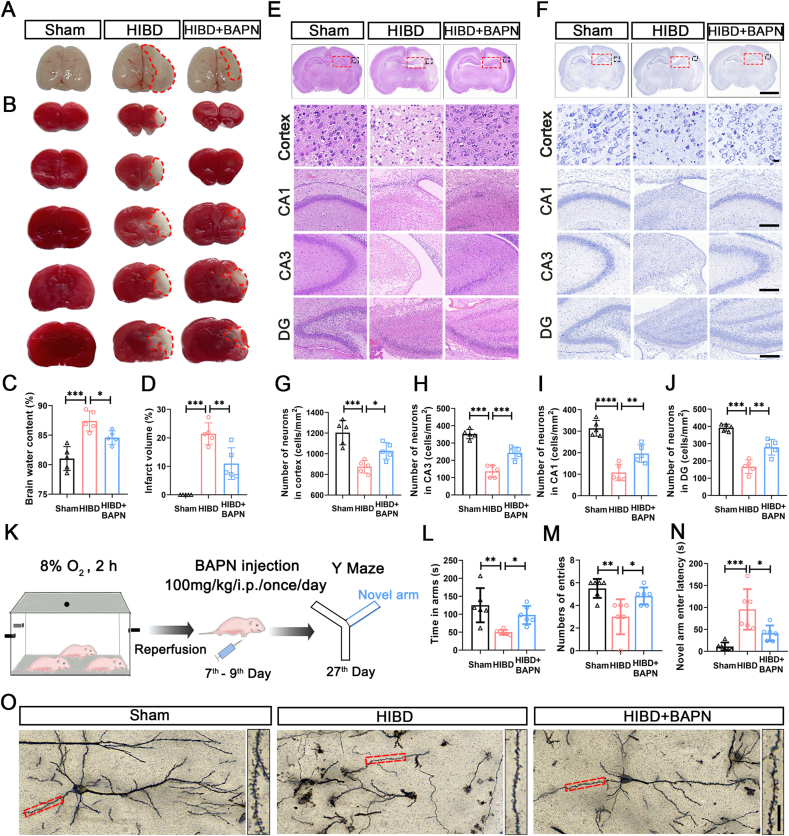
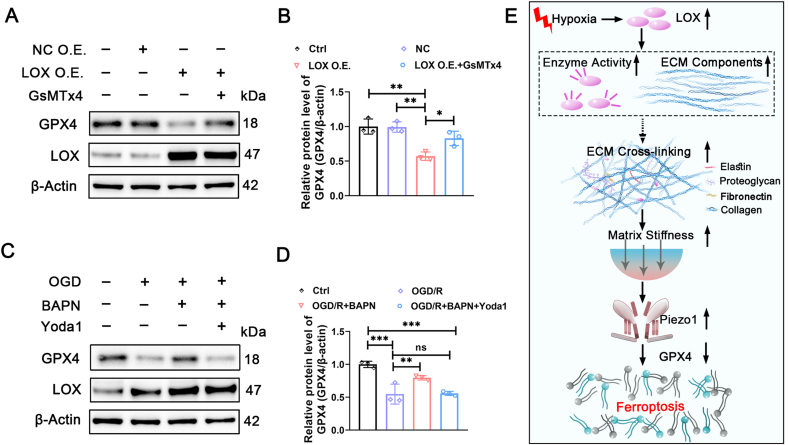
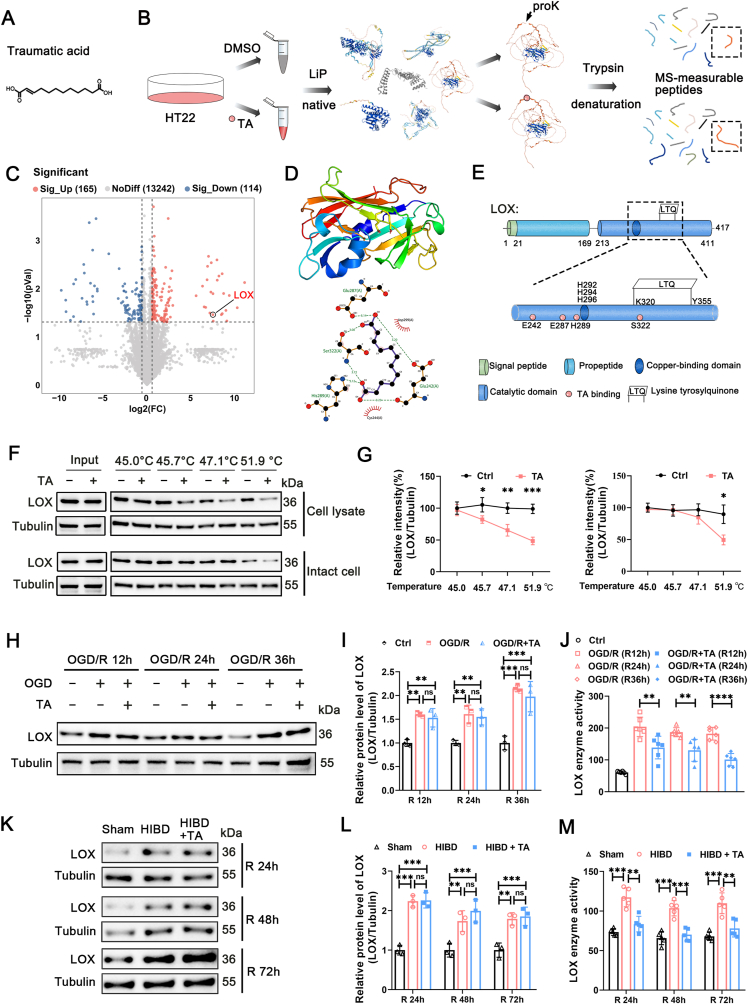
Hypoxic-ischemic encephalopathy (HIE) poses a significant challenge in neonatal medicine, often resulting in profound and lasting neurological deficits. Current therapeutic strategies for hypoxia-ischemia brain damage (HIBD) remain limited. Ferroptosis has been reported to play a crucial role in HIE and serves as a potential therapeutic target. However, the mechanisms underlying ferroptosis in HIBD remain largely unclear. In this study, we found that elevated lysyl oxidase (LOX) expression correlates closely with the severity of HIE, suggesting LOX as a potential biomarker for HIE. LOX expression levels and enzymatic activity were significantly increased in HI-induced neuronal models both in vitro and in vivo. Notably, we discovered that HI-induced brain tissue injury results in increased stiffness and observed a selective upregulation of the mechanosensitive ion channel Piezo1 in both brain tissue of HIBD and primary cortex neurons. Mechanistically, LOX increases its catalytic substrates, the Collagen I/III components, promoting extracellular matrix (ECM) remodeling and possibly mediating ECM cross-linking, which leads to increased stiffness at the site of injury and subsequent activation of the Piezo1 channel. Piezo1 senses these stiffness stimuli and then induces neuronal ferroptosis in a GPX4-dependent manner. Pharmacological inhibition of LOX or Piezo1 ameliorated brain neuronal ferroptosis and improved learning and memory impairments. Furthermore, we identified traumatic acid (TA) as a novel LOX inhibitor that effectively suppresses LOX enzymatic activity, mitigating neuronal ferroptosis and promoting synaptic plasticity. In conclusion, our findings elucidate a critical role for LOX-mediated ECM mechanical stress-induced Piezo1 activation in regulating ferroptotic cell death in HIBD. This mechanistic insight provides a basis for developing targeted therapies aimed at ameliorating neurological outcomes in neonates affected by HIBD.
缺氧缺血性脑病(HIE)是新生儿医学中的一个重大挑战,常导致严重且持久的神经功能缺损。目前针对缺氧缺血性脑损伤(HIBD)的治疗策略仍然有限。铁死亡在 HIE 中起着关键作用,并可能成为治疗靶点。然而,HIBD 中铁死亡的机制在很大程度上仍不清楚。在本研究中,我们发现,赖氨酰氧化酶(LOX)表达水平升高与 HIE 的严重程度密切相关,提示 LOX 可能是 HIE 的一个潜在生物标志物。在体外和体内的 HI 诱导的神经元模型中,LOX 表达水平和酶活性均显著升高。值得注意的是,我们发现 HI 诱导的脑组织损伤导致组织硬度增加,并观察到机械敏感离子通道 Piezo1 在 HIBD 脑组织和原代皮质神经元中选择性上调。在机制上,LOX 增加其催化底物胶原 I/III 成分,促进细胞外基质(ECM)重塑,并可能介导 ECM 交联,导致损伤部位硬度增加,随后 Piezo1 通道激活。Piezo1 感知这些机械刺激,然后以 GPX4 依赖的方式诱导神经元铁死亡。LOX 或 Piezo1 的药理学抑制可改善脑神经元铁死亡,并改善学习和记忆障碍。此外,我们确定了创伤酸(TA)是一种新的 LOX 抑制剂,可有效抑制 LOX 酶活性,减轻神经元铁死亡并促进突触可塑性。总之,我们的研究结果表明,LOX 介导的 ECM 机械应激诱导的 Piezo1 激活在调节 HIBD 中的铁死亡细胞死亡中起关键作用。这一机制见解为开发旨在改善 HIBD 新生儿神经预后的靶向治疗提供了基础。