ICMR- National Institute of Malaria Research, New Delhi, India; Academy of Scientific and Innovative Research (AcSIR), Ghaziabad, Uttar Pradesh, India.
International Centre for Genetic Engineering and Biotechnology, New Delhi, India.
J Biol Chem. 2024 Oct;300(10):107759. doi: 10.1016/j.jbc.2024.107759. Epub 2024 Sep 10.
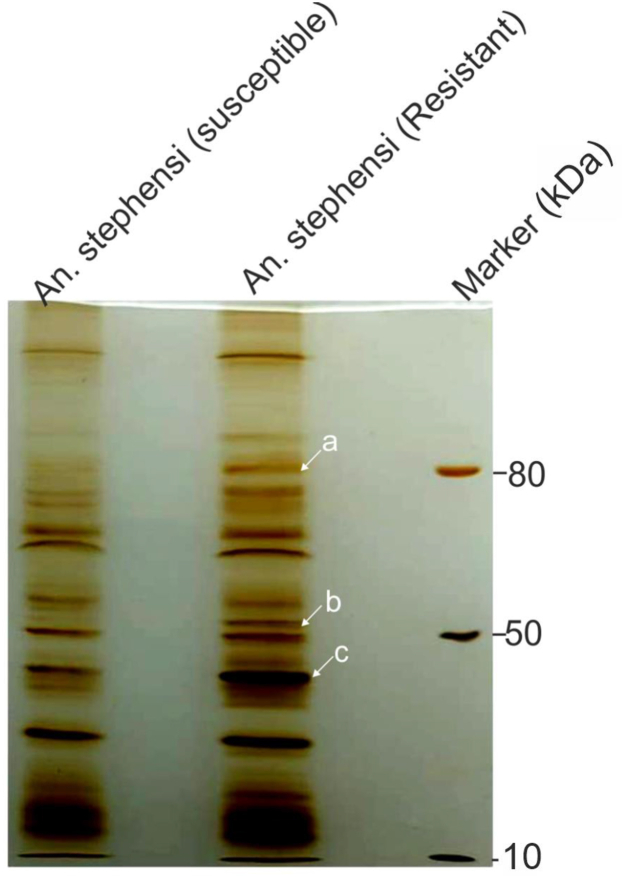
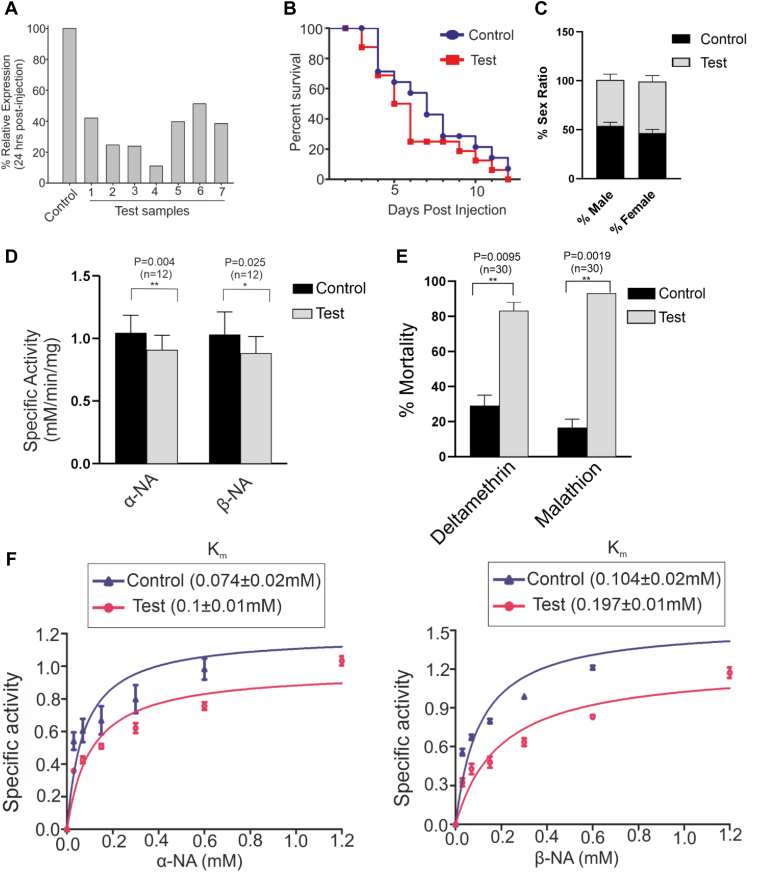
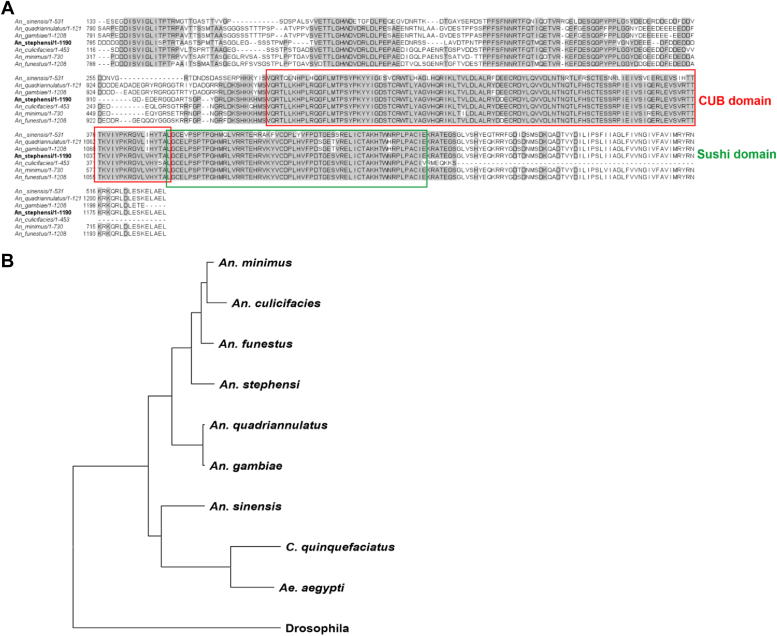
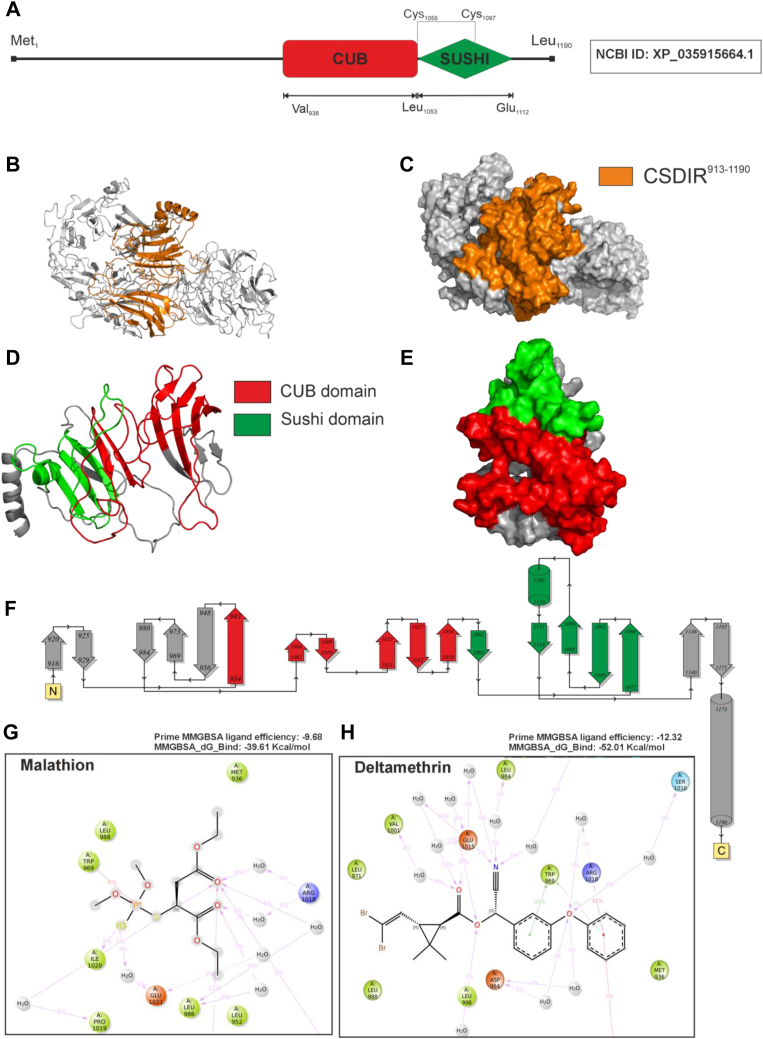
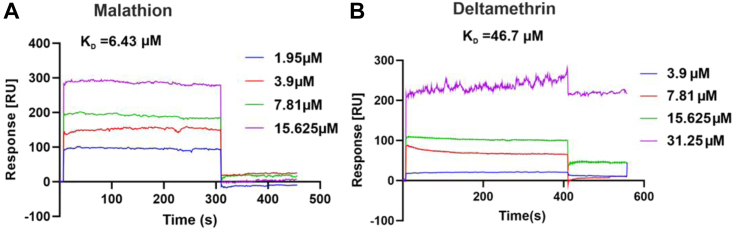
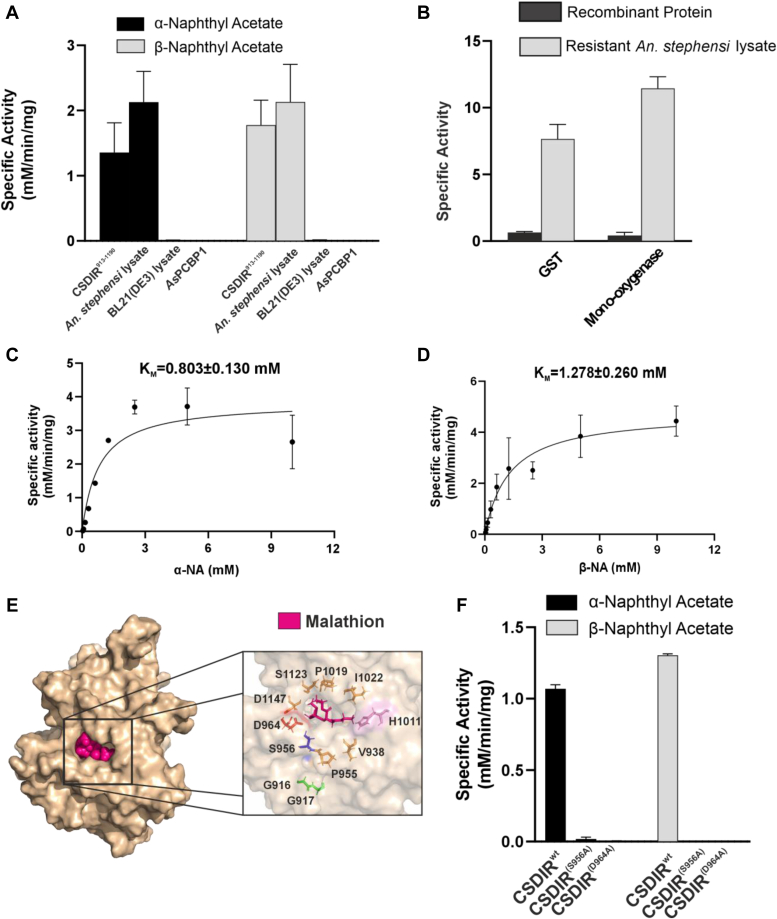
Chemical insecticides (organophosphates and pyrethroids) in the form of IRS (Indoor Residual Sprays) and LLINs (Long Lasting Insecticidal Nets) are the cornerstone for vector control, globally. However, their incessant use has resulted in widespread development of resistance in mosquito vectors, warranting continuous monitoring and investigation of the underlying mechanisms of resistance. Here, we identified a previously uncharacterized- Cub and Sushi Domain containing Insecticide Resistance (CSDIR) protein and generated evidence for its role in mediating insecticide resistance in the Anopheles stephensi. A strong binding affinity of the CSDIR protein towards different classes of insecticide molecules-malathion (K 6.43 μM) and deltamethrin (K 46.7 μM) were demonstrated using MD simulation studies and Surface Plasmon Resonance (SPR) experiments. Further, the recombinant CSDIR protein exhibited potent esterase-like activity (α-naphthyl acetate (α-NA)- 1.356 ± 0.262 mM/min/mg and β-naphthyl acetate (β -NA)- 1.777 ± 0.220 mM/min/mg). Interestingly, dsRNA-mediated gene silencing of the CSDIR transcripts caused >60% mortality in resistant An. stephensi upon 1-h exposure to deltamethrin and malathion insecticides, compared to the control group. A significant reduction in the esterase-like activity was also observed against α-NA (p = 0.004) and β-NA (p = 0.025) in CSDIR silenced mosquitoes compared to the control group. Using computational analysis and experimental data, our results provided significant evidence of the involvement of the CSDIR protein in mediating insecticide resistance in Anopheles mosquitoes. Thereby making the CSDIR protein, a novel candidate for exploration of novel insecticide molecules. These data would also be helpful in further understanding the development of metabolic resistance by the Anopheles vector.
化学杀虫剂(有机磷和拟除虫菊酯)以 IRS(室内滞留喷雾)和 LLINs(长效杀虫蚊帐)的形式是全球病媒控制的基石。然而,它们的不断使用导致了蚊子媒介中广泛的抗药性发展,因此需要不断监测和调查抗药性的潜在机制。在这里,我们鉴定了一个以前未被描述的 Cub 和 Sushi 结构域包含的杀虫剂抗性(CSDIR)蛋白,并为其在介导按蚊抗药性方面的作用提供了证据。使用 MD 模拟研究和表面等离子体共振(SPR)实验证明了 CSDIR 蛋白与不同类别的杀虫剂分子——马拉硫磷(K 6.43 μM)和溴氰菊酯(K 46.7 μM)具有很强的结合亲和力。此外,重组 CSDIR 蛋白表现出很强的酯酶样活性(α-萘乙酸酯(α-NA)-1.356±0.262 mM/min/mg 和 β-萘乙酸酯(β-NA)-1.777±0.220 mM/min/mg)。有趣的是,与对照组相比,dsRNA 介导的 CSDIR 转录物基因沉默导致对马拉硫磷和溴氰菊酯杀虫剂 1 小时暴露后,抗性按蚊的死亡率超过 60%。与对照组相比,在 CSDIR 沉默的蚊子中,α-NA(p=0.004)和β-NA(p=0.025)的酯酶样活性也显著降低。利用计算分析和实验数据,我们的结果为 CSDIR 蛋白在介导按蚊抗药性方面提供了重要证据。从而使 CSDIR 蛋白成为探索新型杀虫剂分子的新候选物。这些数据还有助于进一步了解按蚊媒介代谢抗性的发展。