Endodontist, Samsun Central Dental Hospital, Samsun, Türkiye, Turkey.
Faculty of Dentistry, Department of Endodontics, Ondokuz Mayıs University, Samsun, Turkey.
BMC Oral Health. 2024 Sep 11;24(1):1067. doi: 10.1186/s12903-024-04833-2.
Root canal retreatment is necessary when initial treatment fails. Nickel-titanium systems help remove filling materials; however, some methods can cause canal content extrusion, resulting in inflammation and delayed healing. This study aimed to examine the impact of different preparation techniques and endodontic file systems on apical debris volume to limit material dispersion to periradicular tissues.
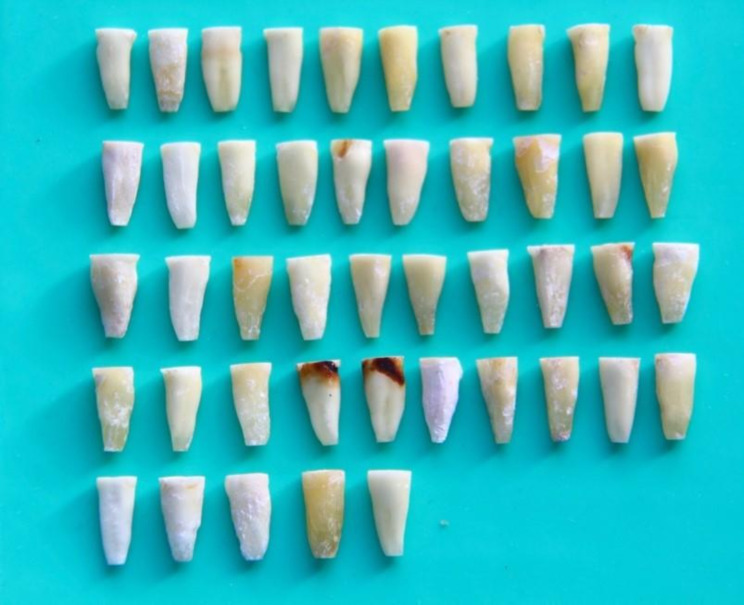
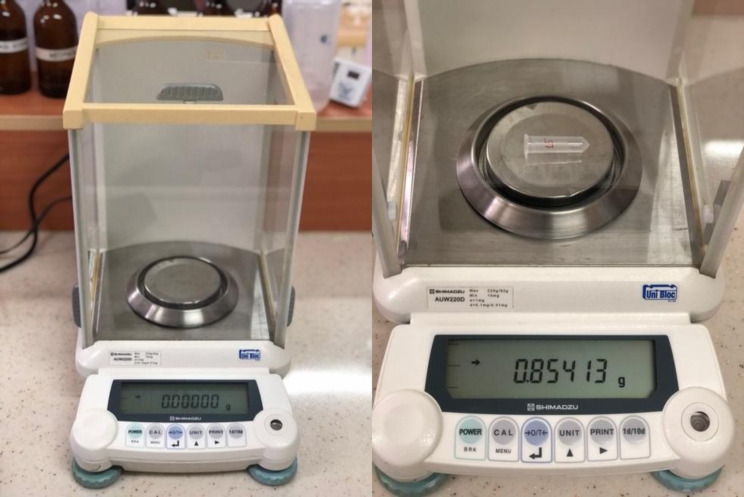
Ninety extracted maxillary incisors were evaluated. Simulated apical root resorption was created by removing the apical 2 mm of the root. The teeth were divided into two groups: one filled with a single cone and the other with cold lateral compaction (CLC). Each group was further divided into three subgroups (n = 15 each): Subgroup 1 used Reciproc R25 for removal and R50 for final preparation; Subgroup 2 used ProTaper Universal Retreatment (PTUR) files D1, D2, and D3 for removal and ProTaper Next X5 for finalization; and Subgroup 3 used VDW.Rotate Retreatment (VDW.RotateR) for removal and VDW.Rotate 50.04 for completion. Debris from retreatment was collected in pre-weighed tubes to determine the amount. The apical extrusion data underwent a two-way analysis of variance.
The Reciproc group had a mean extruded debris weight of 0.54 ± 0.24 mg, higher than the PTUR (0.28 ± 0.15 mg) and VDW.RotateR (0.39 ± 0.29 mg) groups (p < 0.05). The single-cone technique (SCT) resulted in a mean debris weight of 0.34 ± 0.23 mg, lower than the CLC technique, which had a mean of 0.46 ± 0.27 mg (p < 0.05). SCT had a shorter retreatment duration (111.12 ± 33.46 s) compared to CLC (176.26 ± 52.26 s) (p < 0.05).
The Reciproc file system and the CLC obturation technique resulted in greater apical debris extrusion than the other methods. SCT was quicker than CLC. The Reciproc groups are more susceptible to apex extrusion during retreatment.
初次治疗失败后需要进行根管再治疗。镍钛系统有助于清除填充材料;然而,一些方法可能导致根管内容物挤出,导致炎症和愈合延迟。本研究旨在研究不同预备技术和根管锉系统对根尖碎屑体积的影响,以限制材料向根尖周组织的分散。
评估了 90 颗上颌切牙。通过去除根尖 2mm 来模拟根尖根吸收。将牙齿分为两组:一组用单根充胶,另一组用冷侧向加压(CLC)。每组进一步分为三组(每组 15 个):第 1 组使用 Reciproc R25 进行取出,R50 进行最终预备;第 2 组使用 ProTaper Universal Retreatment(PTUR)锉 D1、D2 和 D3 进行取出,ProTaper Next X5 进行最终预备;第 3 组使用 VDW.Rotate Retreatment(VDW.RotateR)进行取出,VDW.Rotate 50.04 进行完成。从再治疗中收集的碎屑被收集在预先称重的管中以确定数量。根尖挤出数据进行了双向方差分析。
Reciproc 组挤出的碎屑重量平均为 0.54±0.24mg,高于 PTUR(0.28±0.15mg)和 VDW.RotateR(0.39±0.29mg)组(p<0.05)。单根充胶技术(SCT)的碎屑重量平均为 0.34±0.23mg,低于 CLC 技术,后者的碎屑重量平均为 0.46±0.27mg(p<0.05)。SCT 的再治疗时间(111.12±33.46s)比 CLC(176.26±52.26s)短(p<0.05)。
Reciproc 锉系统和 CLC 充胶技术比其他方法导致更多的根尖碎屑挤出。SCT 比 CLC 更快。Reciproc 组在再治疗过程中更容易出现根尖挤出。