Leblanc Francis J A, Jin Xuexin, Kang Kai, Lee Chang Jie Mick, Xu Juan, Xuan Lina, Ma Wenbo, Belhaj Hicham, Benzaki Marouane, Mehta Neelam, Foo Roger Sik Yin, Reilly Svetlana, Anene-Nzelu Chukwuemeka George, Pan Zhenwei, Nattel Stanley, Yang Baofeng, Lettre Guillaume
Montreal Heart Institute, Montreal, QC, Canada.
Department of Medicine, Université de Montréal, Montréal, QC, Canada.
iScience. 2024 Aug 5;27(9):110660. doi: 10.1016/j.isci.2024.110660. eCollection 2024 Sep 20.
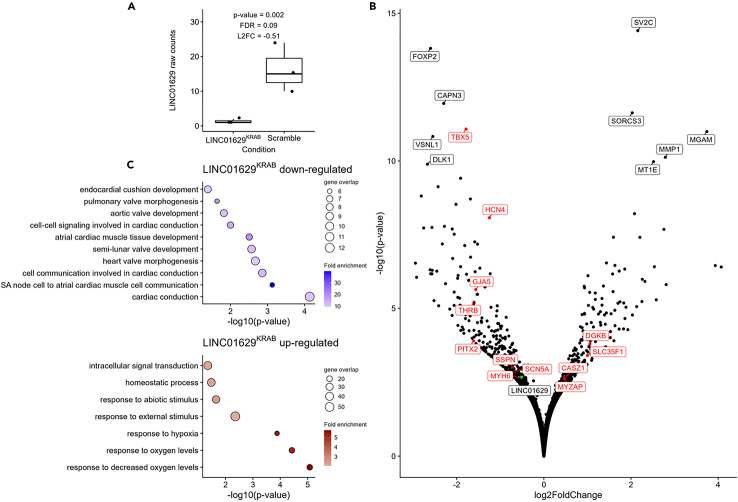
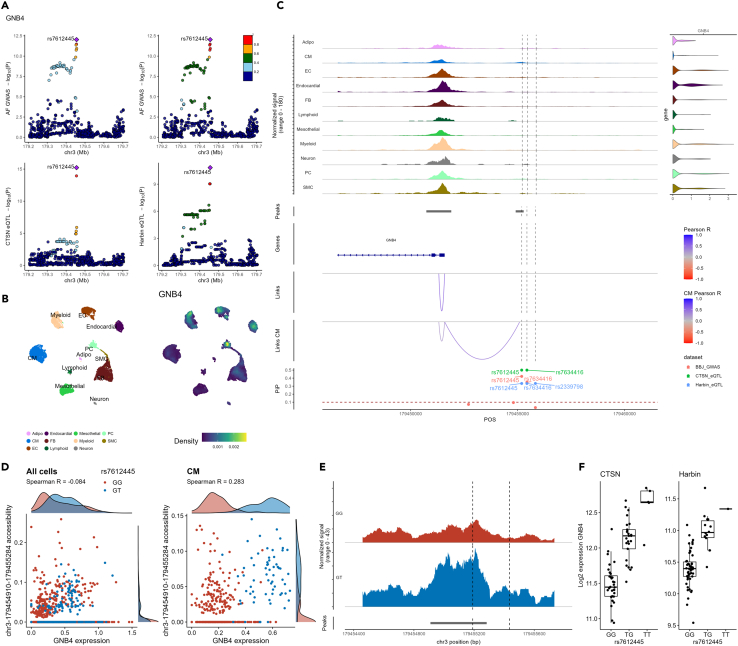
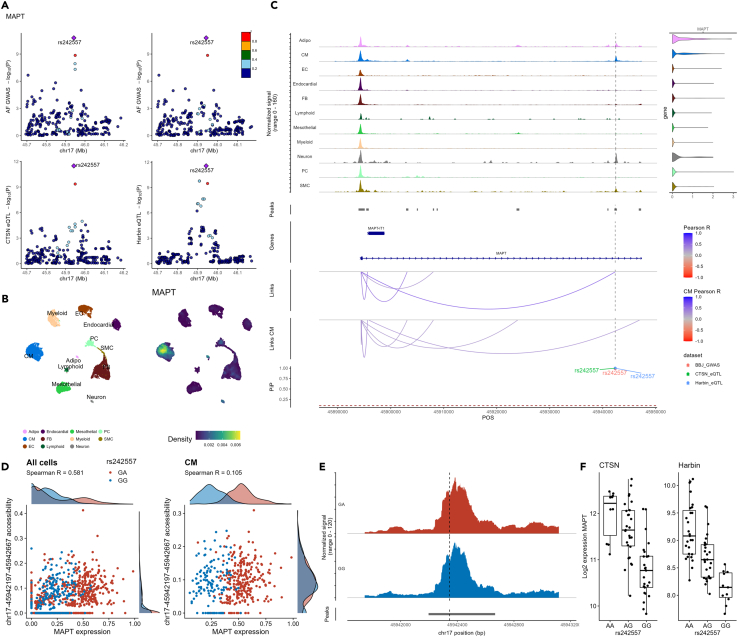
Atrial fibrillation (AF) is the most common arrhythmia in the world. Human genetics can provide strong AF therapeutic candidates, but the identification of the causal genes and their functions remains challenging. Here, we applied an AF fine-mapping strategy that leverages results from a previously published cross-ancestry genome-wide association study (GWAS), expression quantitative trait loci (eQTLs) from left atrial appendages (LAAs) obtained from two cohorts with distinct ancestry, and a paired RNA sequencing (RNA-seq) and ATAC sequencing (ATAC-seq) LAA single-nucleus assay (sn-multiome). At nine AF loci, our co-localization and fine-mapping analyses implicated 14 genes. Data integration identified several candidate causal AF variants, including rs7612445 at and rs242557 at . Finally, we showed that the repression of the strongest AF-associated eQTL gene, , in human embryonic stem cell-derived cardiomyocytes using CRISPR inhibition results in the dysregulation of pathways linked to genes involved in the development of atrial tissue and the cardiac conduction system.
心房颤动(AF)是全球最常见的心律失常。人类遗传学可以提供强大的房颤治疗候选基因,但确定因果基因及其功能仍然具有挑战性。在这里,我们应用了一种房颤精细定位策略,该策略利用了先前发表的跨祖先全基因组关联研究(GWAS)的结果、从两个具有不同祖先的队列中获得的左心耳(LAA)的表达定量性状位点(eQTL),以及配对的RNA测序(RNA-seq)和ATAC测序(ATAC-seq)LAA单核分析(sn-多组学)。在9个房颤位点,我们的共定位和精细定位分析涉及14个基因。数据整合确定了几个候选因果房颤变异体,包括位于 的rs7612445和位于 的rs242557。最后,我们表明,使用CRISPR抑制技术在人类胚胎干细胞衍生的心肌细胞中抑制最强的房颤相关eQTL基因 会导致与心房组织和心脏传导系统发育相关基因的通路失调。